


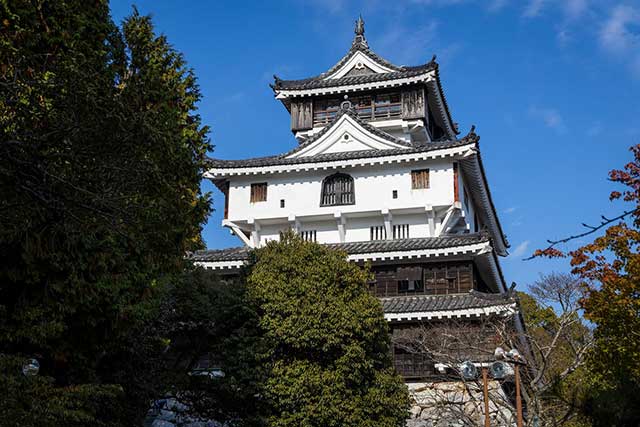
Kikkawa Hiroie (1561–1625) was the grandson of the famous daimyo Mori Motonari and a vassal of the Mori clan. Under Mori Terumoto, he fought in both Korean campaigns and took part in the defense of Ulsan Castle. During the Battle of Sekigahara, Hiroie stood with his 3,000-man force on the side of the Western Coalition; however, even before the battle began, he sent Tokugawa Ieyasu a secret message stating that he did not intend to fight Tokugawa’s troops. As a result of his inaction, 15,000 soldiers under Mori Hidemoto were also unable to enter the battle, since Hiroie blocked their path.
After his victory in the Sekigahara campaign, Ieyasu wanted to confiscate all the lands of the Mori clan and grant two provinces—Nagato and Suo—for Kikkawa Hiroie’s use. However, thanks to Hiroie’s intervention, these two provinces remained with the Mori clan (which saved the Mori clan from complete destruction), while Hiroie received lands in Iwakuni. Later, he became the lord of the Iwakuni domain, but he did not hold the status of daimyo and continued to be considered a vassal of the Mori clan. The reason was that the Iwakuni domain was part of the larger Choshu (Hagi) domain, which was ruled by the Mori, and it was not officially recognized by the shogunate.
Hiroie began building his headquarters— Iwakuni Castle— in 1601 and completed it by 1608. The main baileys of the castle were located on Mount Shiroyama, which was protected on three sides by the Nishikigawa River, which formed a large bend at that point. The central section of the castle occupied an area measuring 100 by 50 meters. A keep was built in the rare Namban-zukuri style (also known as Namban-zukuri, “European style”). A distinctive feature of this style is that one of the floors is significantly larger than the one below it.
As with many late-period mountaintop castles, Iwakuni was developed not only on the mountain itself but also across a broad area at the foot of the mountain (the kyokan). However, the mountain portion of the castle lasted only seven years and was dismantled as early as 1615 in accordance with the Tokugawa shogunate’s decree of “one province, one castle.” Unlike the mountain section, the kyokan area was not dismantled and was used by the Kikkawa clan as a jinya (a small fortress without a main keep) all the way until the Meiji Restoration. This was the administrative center of the Iwakuni domain.
From the mountain portion, what remains today are the ruins of ishigaki stone walls, karabori dry moats, and the foundations of some structures. The castle keep was reconstructed in 1962. It is a four-tiered tower on a massive stone base. Although the reconstruction generally matches surviving descriptions, it was built using non-authentic materials (reinforced concrete) and is not located on the site of the original keep. When planning the reconstruction, it was decided to shift the keep closer to the edge of the mountain so that it would be more visible to tourists from the city.
The preserved base of the original keep (tenshudai) is located slightly off to the side of the current structure. It was restored in 1995. A small museum is housed inside the reconstructed keep. From the later jinya at the foot of the mountain, parts of the earthen ramparts (dorui), water-filled moats (mizubori), plastered earthen walls (dobei), ishigaki stone walls, and the foundations of towers have partially survived. On one of the foundations of a former corner turret, the Kinunkaku Pavilion of the local Kikko Shrine—the Kikkawa clan’s family temple—was built in 1884.
Some elements of former samurai residences from the Edo period have also survived, mainly nagayamon gates. On the grounds of the former jinya stands a monument to Kikkawa Hiroyoshi (1621–1679), the 19th head of the Kikkawa clan, the third commander of Iwakuni Castle, and the grandson of Kikkawa Hiroie. In 2006, the castle was included by the Japan Castle Foundation (Nihon Jokaku Kyokai) in the list of the “100 Fine Castles of Japan.”
In addition to the reconstructed main tower, another well-known attraction of Iwakuni Castle is the beautiful arched Kintaikyo Bridge. Historically, the river separated the samurai settlements and castle structures from the rest of the city. Only samurai were allowed to cross the river via this bridge. Kintaikyo was first built in 1673 and was then rebuilt many times, as was common for bridges in Japan. The current bridge is a reconstruction from 1953.
See also
-
Arato Castle
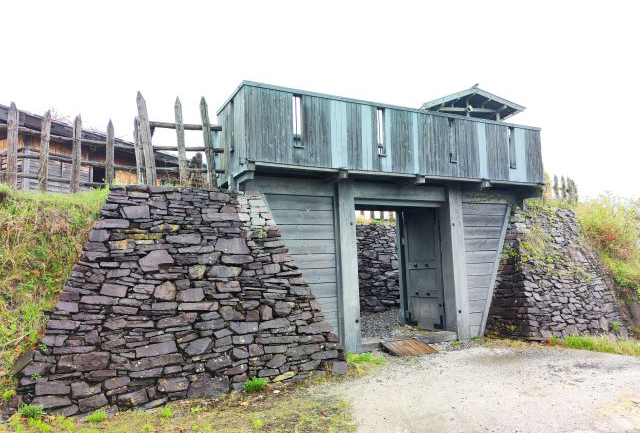
Arato Castle was built in 1524 by the Yamada clan under the orders of their overlord, Murakami, as a small mountain fort. Over time, it gained strategic importance and became a focal point in the conflict between two famous daimyō of the Sengoku period — Takeda Shingen and Murakami Yoshikiyo. This conflict turned the castle into one of the key fortifications in the struggle for control over Shinano Province.
-
Tatsuno Castle
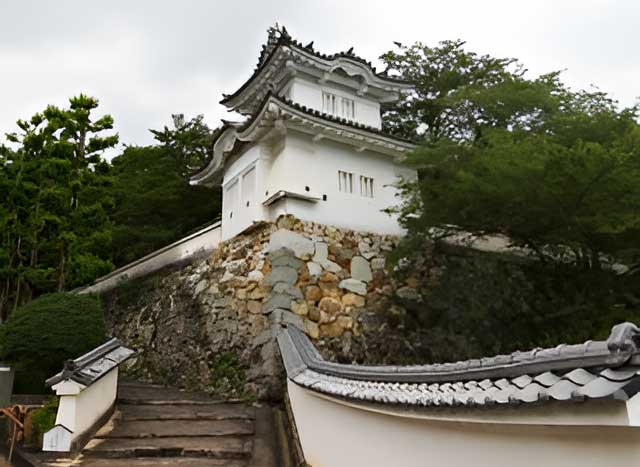
Tatsuno Castle is not a single fortification but rather a complex consisting of two parts: a mountain fortress located at the summit of Mount Keirozan and a flatland-mountain castle situated at its base. The mountain stronghold was built around 1499 by Akamatsu Murahide. During the Muromachi period, the Akamatsu clan was an influential family that, at the height of its power, controlled the provinces of Settsu, Harima, Bizen, and Mimasaka. Murahide’s ancestors were directly involved in the events of the Genkō War in the 14th century and in the subsequent establishment of the Ashikaga shogunate. However, by the 15th century, due to the process of gekokujō, the clan began to lose its position under pressure from rising families, including their former vassals—the Urakami and Bessho clans. In addition, the Akamatsu faced constant pressure from the Amago clan of Izumo Province.
-
Takamatsu Castle
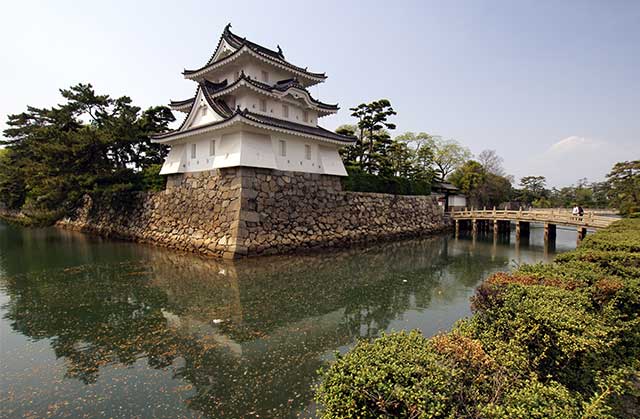
Takamatsu Castle was founded by Ikoma Chikamasa (1526–1603), who was appointed ruler of Takamatsu by Toyotomi Hideyoshi in 1587. The following year, Chikamasa began construction of the castle on the coast of the Inland Sea (Setonaikai), completing it by 1590.
-
Sawayama Castle
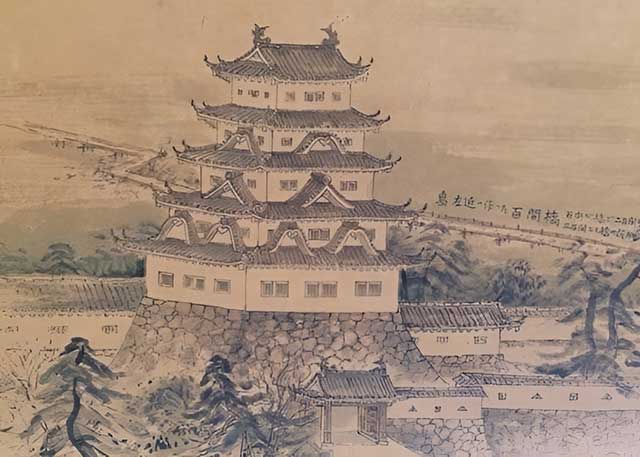
During the Kamakura period, Sabo Tokitsuna, the sixth son of Sasaki Sadatsuna, built a fort on Mount Sawayama. This fort occupied a strategically important position because it allowed control over traffic along the important Tōsandō route, which was later known as Nakasendō. This road connected the capital, Kyoto, with the eastern regions of the country. Due to its location, the fortification held great military importance, and during periods of civil war it repeatedly became the site of fierce battles.
-
Nadzima Castle
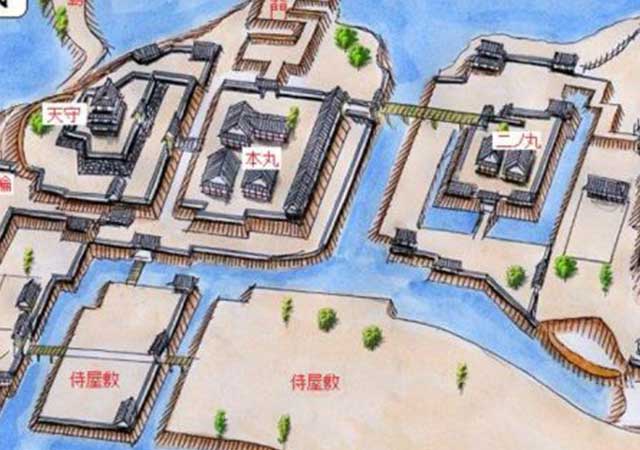
It is believed that the first structures on this site were built by Tachibana Akitoshi (?-1568), head of the Tachibana clan, a branch family of the Ōtomo clan, as auxiliary fortifications for Tachibanayama Castle. In 1587, Toyotomi Hideyoshi established control over the island of Kyushu and granted Chikuzen Province to Kobayakawa Takakage, one of the leading vassals of the Mori clan. Takakage began construction of a new castle on the site of the existing fortifications in 1588. The exact date of completion is unknown, but by the time the invasion of Korea began in 1592, the castle had already been finished, as records note that Toyotomi Hideyoshi stayed there overnight on his way to Hizen Nagoya Castle, which served as the headquarters of the invasion forces.
-
Kubota Castle
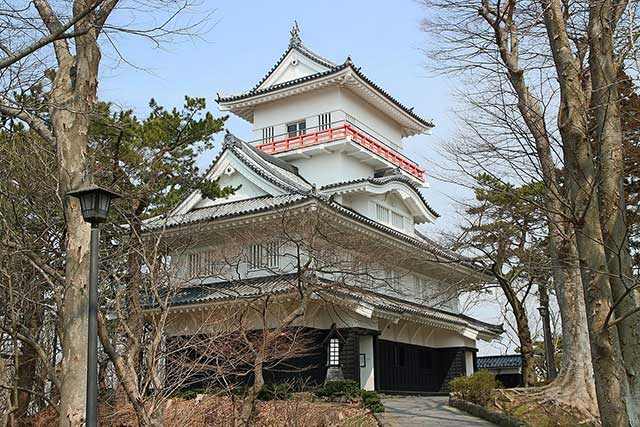
The founder of the castle is considered to be Satake Yoshinobu (1570–1633). Yoshinobu was one of the six great generals of Toyotomi Hideyoshi. During the Odawara Campaign of 1590, he took part in the siege of Oshi Castle under the command of Ishida Mitsunari, with whom Yoshinobu developed a good relationship.
-
Kavanhoe Castle
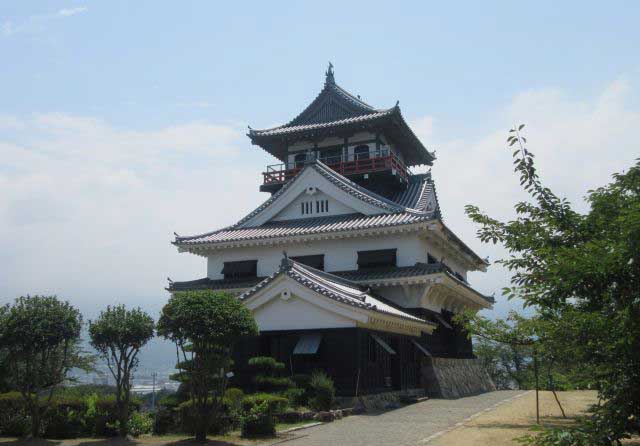
Kawanoe Castle is located on the small Wasi-yama hill near the port area of the Kawanoe district in the city of Shikokuchuo, occupying a central position along the northern coast of Shikoku Island. Kawanoe was also known as Butsuden Castle. The term “butsuden” in Japan refers to temple halls, and for this reason it is believed that a Buddhist temple once stood on the site before the castle was built. Due to its location at the junction of four provinces on Shikoku Island, Kawanoe held significant strategic importance and was repeatedly targeted by rival forces seeking military control over the region.
-
Yokote Castle
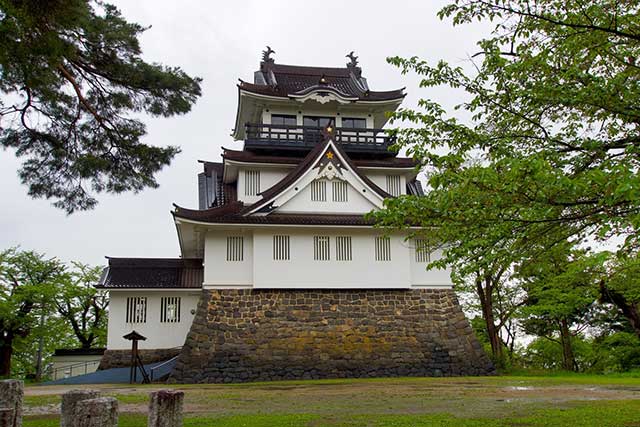
The founder of the castle is considered to be the Onodera clan. The Onodera were originally a minor clan from Shimotsuke Province and served Minamoto no Yoritomo (1147–1199), the founder of the first shogunate. The Onodera distinguished themselves in battle against the Fujiwara clan of the Ōshū branch and were rewarded with lands around Yokote. Around the 14th century, the Onodera moved to Yokote as their permanent residence. Their original stronghold was Numadate Castle, but after a series of clashes with the powerful Nambu clan, they relocated their base to the site of present-day Yokote Castle. It was likely during this time that the first fortifications appeared at the castle.