


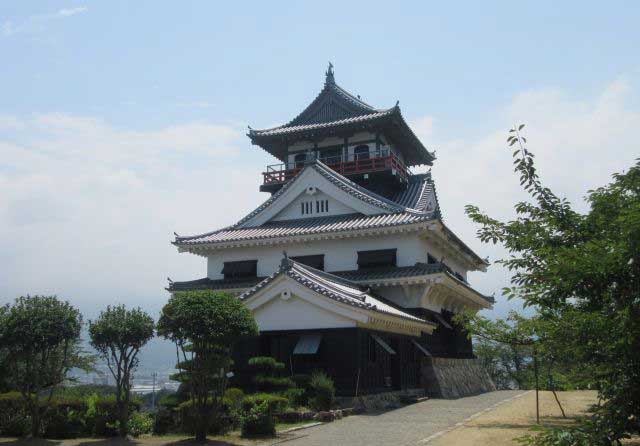
Kawanoe Castle is located on the small Wasi-yama hill near the port area of the Kawanoe district in the city of Shikokuchuo, occupying a central position along the northern coast of Shikoku Island. Kawanoe was also known as Butsuden Castle. The term “butsuden” in Japan refers to temple halls, and for this reason it is believed that a Buddhist temple once stood on the site before the castle was built. Due to its location at the junction of four provinces on Shikoku Island, Kawanoe held significant strategic importance and was repeatedly targeted by rival forces seeking military control over the region.
The original version of the castle was constructed by Doi Yoshimasa in 1337 under the orders of the daimyo of the Kōno clan. Kawanoe was intended to counter the aggression of the neighboring Hosokawa clan. However, in 1342, Hosokawa Yoriharu managed to capture the fortress by storm despite the efforts of the Kōno clan. Nevertheless, the castle was soon returned to Kōno control.
During the Sengoku period, Kawanoe repeatedly became the site of fierce battles. In 1572, the castle was attacked by the Miyoshi clan from Awa Province, but all attempts to storm it were successfully repelled. In 1582, the castle’s commander, Metori Tomoharu, decided to defect to Chōsokabe Motochika, who was considered a promising ruler of Tosa Province at the time. This decision angered the Kōno clan, who executed Tomoharu and replaced him with their own general, Kawakami Yasukatsu. Two years later, the castle was attacked and captured by the forces of Chōsokabe Motochika.
In 1585, Kawanoe fell to the troops of Kobayakawa Takakage during Toyotomi Hideyoshi’s campaign to conquer Shikoku Island. Hideyoshi regarded Kawanoe as an important strategic stronghold and appointed his trusted general Fukushima Masanori as its commander. Under Masanori, the castle was significantly rebuilt and strengthened; it was during his tenure that Kawanoe acquired its stone walls, known as ishigaki.
The final owner of the castle was the well-known military commander Kato Yoshiaki. In 1611, he left the castle, after which it gradually fell into disrepair and was eventually completely destroyed. Today, only portions of the stone walls and traces of earthworks remain from the historic Kawanoe.
In 1988, a three-story reinforced concrete tenshu (main keep), a corner turret, and tower-style gates were constructed on the grounds of the Kawanoe Castle ruins. Since no records of the original historic keep have survived, the present tenshu is essentially an imaginative reconstruction and in appearance more closely resembles a keep from the early Edo period. Inside the reconstructed keep is a museum whose exhibition is primarily based on artifacts from the Edo period.
See also
-
Unknown 1585 Letter Reveals How Toyotomi Hideyoshi Gave Yamato to His Brother and Consolidated Power in Japan
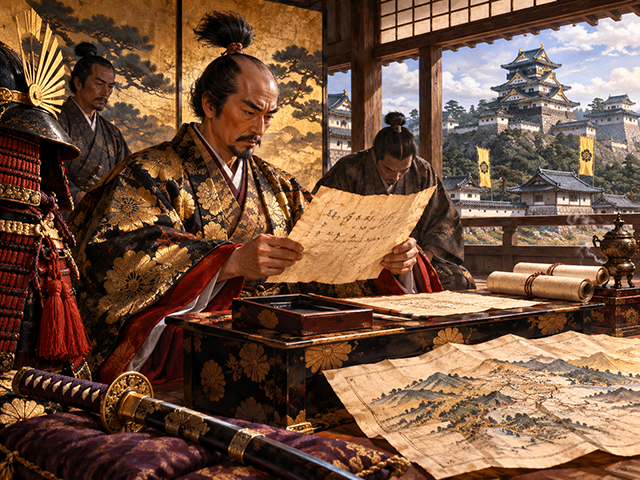
A previously unknown letter from Toyotomi Hideyoshi, one of Japan's great unifiers, has been publicly displayed for the first time. Written in 1585, the document reveals how Hideyoshi granted Yamato Province to his younger brother, Hidenaga, and attempted to resolve complicated questions of loyalty among local samurai families.
-
The 16-Year-Old Samurai Who Crossed the Pacific and Discovered America in 1860
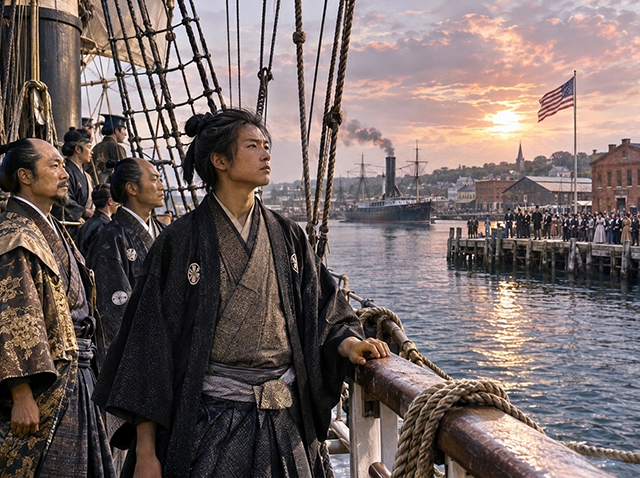
A new historical exhibition in Japan tells the remarkable story of a teenage samurai who crossed the Pacific Ocean aboard the Kanrin Maru at just sixteen years old. His surviving travel writings offer a rare opportunity to experience America in 1860 through the eyes of a young Japanese traveler who witnessed one of the most important diplomatic journeys of his time.
-
Arato Castle
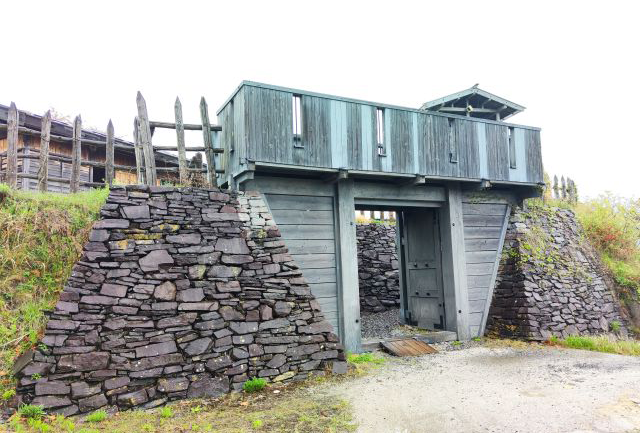
Arato Castle was built in 1524 by the Yamada clan under the orders of their overlord, Murakami, as a small mountain fort. Over time, it gained strategic importance and became a focal point in the conflict between two famous daimyō of the Sengoku period — Takeda Shingen and Murakami Yoshikiyo. This conflict turned the castle into one of the key fortifications in the struggle for control over Shinano Province.
-
Tatsuno Castle
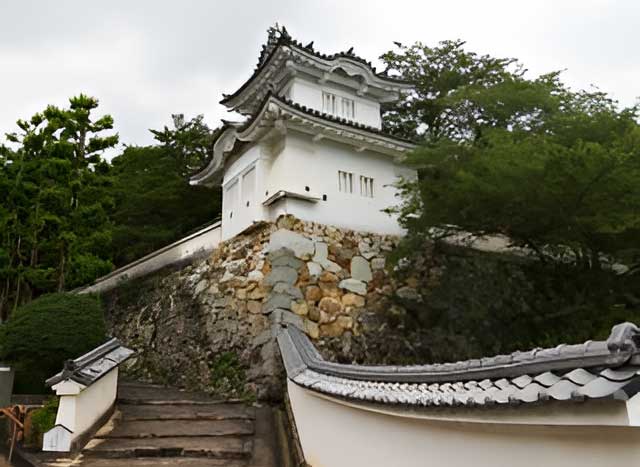
Tatsuno Castle is not a single fortification but rather a complex consisting of two parts: a mountain fortress located at the summit of Mount Keirozan and a flatland-mountain castle situated at its base. The mountain stronghold was built around 1499 by Akamatsu Murahide. During the Muromachi period, the Akamatsu clan was an influential family that, at the height of its power, controlled the provinces of Settsu, Harima, Bizen, and Mimasaka. Murahide’s ancestors were directly involved in the events of the Genkō War in the 14th century and in the subsequent establishment of the Ashikaga shogunate. However, by the 15th century, due to the process of gekokujō, the clan began to lose its position under pressure from rising families, including their former vassals—the Urakami and Bessho clans. In addition, the Akamatsu faced constant pressure from the Amago clan of Izumo Province.
-
Takamatsu Castle
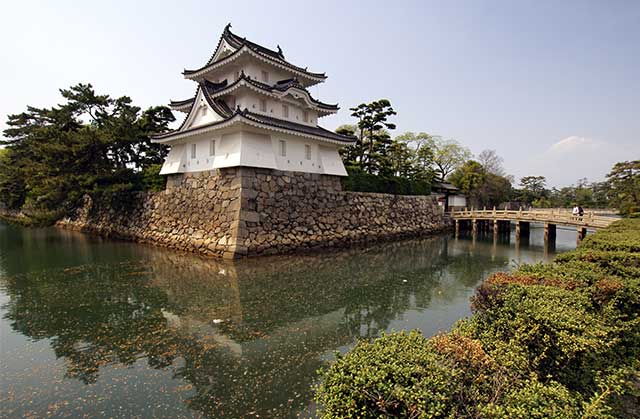
Takamatsu Castle was founded by Ikoma Chikamasa (1526–1603), who was appointed ruler of Takamatsu by Toyotomi Hideyoshi in 1587. The following year, Chikamasa began construction of the castle on the coast of the Inland Sea (Setonaikai), completing it by 1590.
-
Sawayama Castle
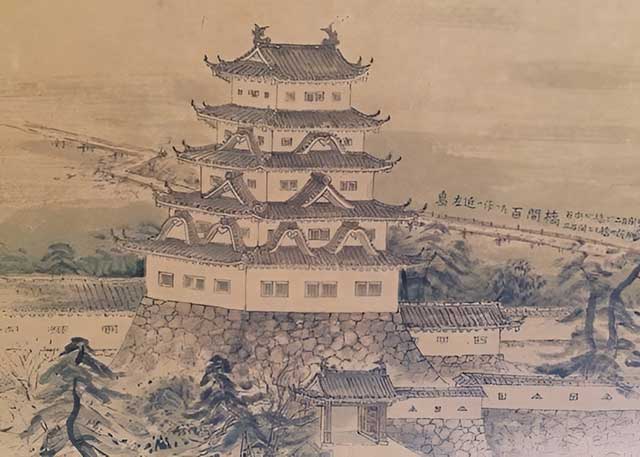
During the Kamakura period, Sabo Tokitsuna, the sixth son of Sasaki Sadatsuna, built a fort on Mount Sawayama. This fort occupied a strategically important position because it allowed control over traffic along the important Tōsandō route, which was later known as Nakasendō. This road connected the capital, Kyoto, with the eastern regions of the country. Due to its location, the fortification held great military importance, and during periods of civil war it repeatedly became the site of fierce battles.
-
Nadzima Castle
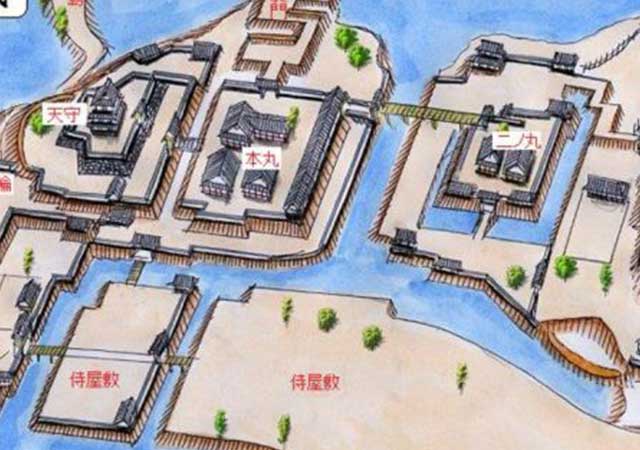
It is believed that the first structures on this site were built by Tachibana Akitoshi (?-1568), head of the Tachibana clan, a branch family of the Ōtomo clan, as auxiliary fortifications for Tachibanayama Castle. In 1587, Toyotomi Hideyoshi established control over the island of Kyushu and granted Chikuzen Province to Kobayakawa Takakage, one of the leading vassals of the Mori clan. Takakage began construction of a new castle on the site of the existing fortifications in 1588. The exact date of completion is unknown, but by the time the invasion of Korea began in 1592, the castle had already been finished, as records note that Toyotomi Hideyoshi stayed there overnight on his way to Hizen Nagoya Castle, which served as the headquarters of the invasion forces.
-
Kubota Castle
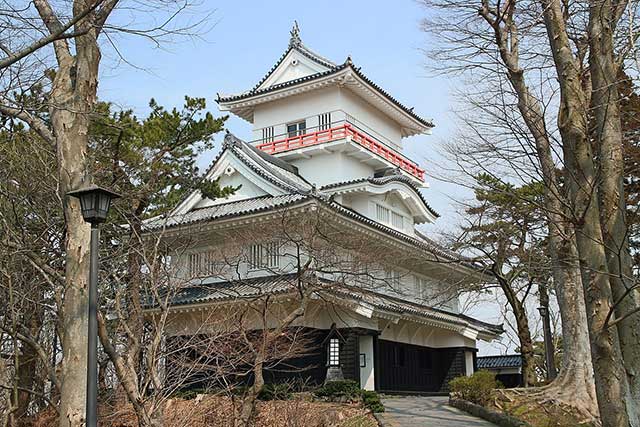
The founder of the castle is considered to be Satake Yoshinobu (1570–1633). Yoshinobu was one of the six great generals of Toyotomi Hideyoshi. During the Odawara Campaign of 1590, he took part in the siege of Oshi Castle under the command of Ishida Mitsunari, with whom Yoshinobu developed a good relationship.