


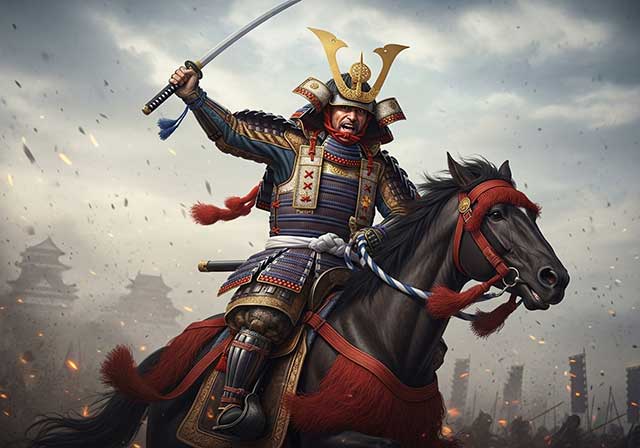
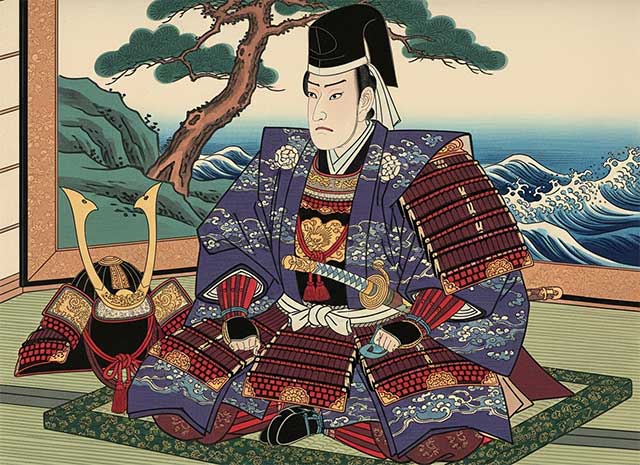
Fukushima Masanori, a samurai from Owari Province, served Toyotomi Hideyoshi and took part in the Battle of Shizugatake, where he distinguished himself so conspicuously that he was awarded the honorary title of one of the “Seven Spears of Shizugatake,” meaning the warriors who had shown the greatest valor in the battle. As a reward for his courage and martial prowess, he was granted land producing an income of 5,000 koku of rice.
During the campaign against the Hōjō clan in 1590, Masanori participated in the attack on Nirayama Castle. Although he was attached to the Tokugawa forces, these troops ultimately failed to capture the fortress. When the Korean War began in 1592–1598, Masanori held lands in Iyo Province on the island of Shikoku and fielded a contingent of about 4,800 men. These troops became part of the so-called Fifth Division, alongside forces from the Chōsokabe clan and Hachisuka Iemasa. During the Korean campaign, Masanori’s contingent was not included in the initial strike forces and was mainly engaged in suppressing guerrilla activity in the occupied provinces.
After the war, Masanori received extensive landholdings in his native Owari Province, yielding an income of 200,000 koku. This provided him with a strong economic foundation and considerable military power. Following the death of Toyotomi Hideyoshi in 1598, Tokugawa Ieyasu strengthened his ties with Masanori by giving him his adopted daughter in marriage. When armed conflict broke out in 1600 between Ishida Mitsunari and Tokugawa Ieyasu, Masanori, like many other commanders who had fought in the Korean War, sided with Ieyasu. Most of them harbored resentment toward Ishida Mitsunari, who lacked notable military talent and had served during the war primarily as an army inspector.
During the campaign, Fukushima Masanori, together with Ikeda Terumasa, laid siege to Gifu Castle in Mino Province. While preparations for the assault were underway, a notable incident occurred: neither Masanori nor Terumasa was willing to yield the right to launch the first attack on the castle, and the situation nearly escalated into a clash between the two commanders. In the end, a compromise was reached—Ikeda agreed to attack the rear gates of the castle, leaving the main gates to Masanori. After the fall of Gifu, Masanori’s forces joined the main army of Tokugawa Ieyasu, and Masanori was given an honorable position in the front ranks. However, his right to open the battle was challenged by Ii Naomasa, who was positioned in the rear guard and who charged the Shimazu forces with a detachment of thirty horsemen. Masanori, known for his hot-tempered and unrestrained nature, undoubtedly took this as an insult, but despite his personal feelings, his troops conducted themselves calmly and honorably, fighting against the army of Ukita Naoie and ultimately breaking its resistance.
After the Battle of Sekigahara, Masanori’s income increased to 498,000 koku. Despite such a generous reward, Tokugawa Ieyasu never fully trusted him, remembering Masanori’s former loyalty to Toyotomi Hideyoshi. When, in 1614–1615, Masanori requested permission to take part in the siege of Osaka Castle, his request was denied, and he was kept in Edo, the capital of the Tokugawa domain. After Ieyasu’s death in 1616, his son and successor as shogun, Tokugawa Hidetada, accused Masanori of poor governance and exiled him to Kawanakajima in Shinano Province, reducing his income to only 45,000 koku.
See also
-
Yamagata Masakage
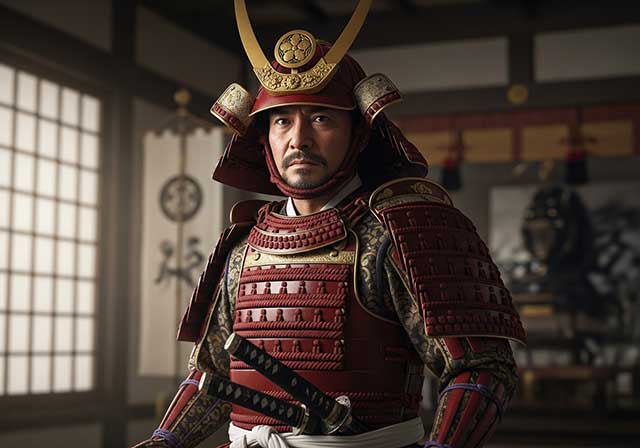
Masakage was one of Takeda Shingen’s most loyal and capable commanders. He was included in the famous list of the “Twenty-Four Generals of Takeda Shingen” and also belonged to the inner circle of four especially trusted warlords known as the Shitennō.
-
Yagyu Munenori
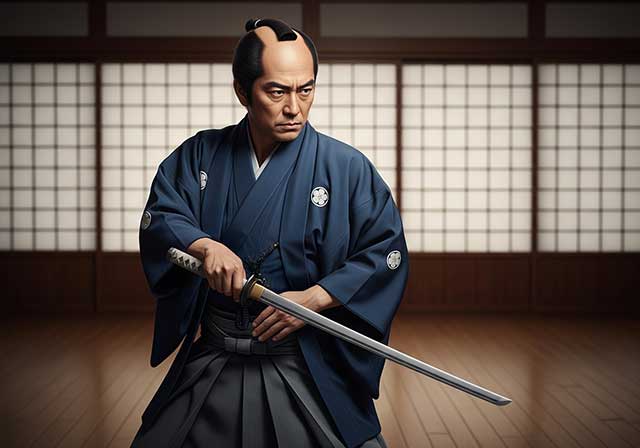
Yagyū Munenori began his service under Tokugawa Ieyasu while his father, Yagyū Muneyoshi, was still at his side. In 1600, Munenori took part in the decisive Battle of Sekigahara. As early as 1601, he was appointed a kenjutsu instructor to Tokugawa Hidetada, Ieyasu’s son, who later became the second shogun of the Tokugawa clan.
-
Yagyu Muneyoshi
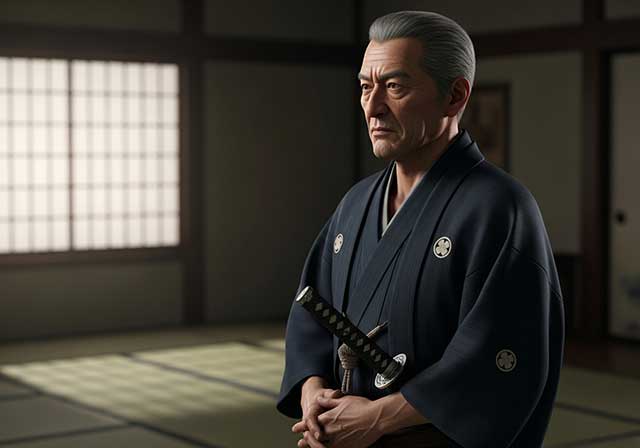
A samurai from Yamato Province, he was born into a family that had been defeated in its struggle against the Tsutsui clan. Muneyoshi first took part in battle at the age of sixteen. Due to circumstances beyond his control, he was forced to enter the service of the Tsutsui house and later served Miyoshi Tōkei. He subsequently came under the command of Matsunaga Hisahide and in time became a vassal first of Oda and later of Toyotomi.
-
Endo Naozune
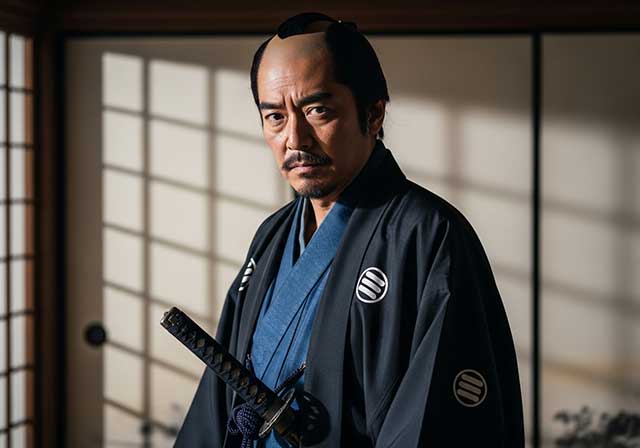
Naozune served under Azai Nagamasa and was one of the clan’s leading vassals, renowned for his bravery and determination. He accompanied Nagamasa during his first meeting with Oda Nobunaga and at that time asked for permission to kill Nobunaga, fearing him as an extremely dangerous man; however, Nagamasa did not grant this request.
-
Hosokawa Sumimoto
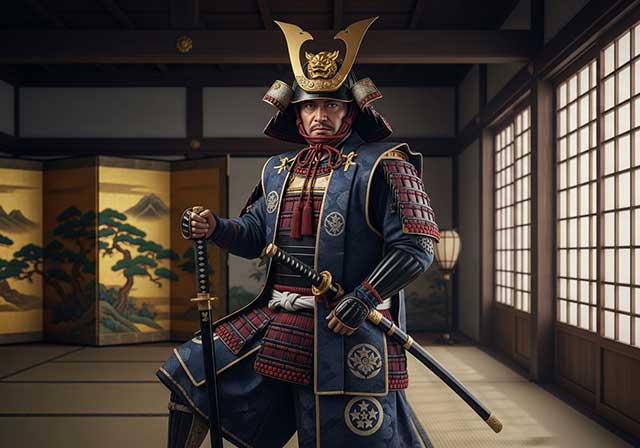
Sumimoto came from the Hosokawa clan: he was the biological son of Hosokawa Yoshiharu and at the same time the adopted son of Hosokawa Masamoto, the heir of Hosokawa Katsumoto, one of the principal instigators of the Ōnin War. Masamoto was homosexual, never married, and had no children of his own. At first he adopted Sumiyuki, a scion of the aristocratic Kujō family, but this choice provoked dissatisfaction and sharp criticism from the senior vassals of the Hosokawa house. As a result, Masamoto changed his decision and proclaimed Sumimoto as his heir, a representative of a collateral branch of the Hosokawa clan that had long been based in Awa Province on the island of Shikoku. Almost immediately after this, the boy became entangled in a complex and bitter web of political intrigue.
-
Honda Masanobu
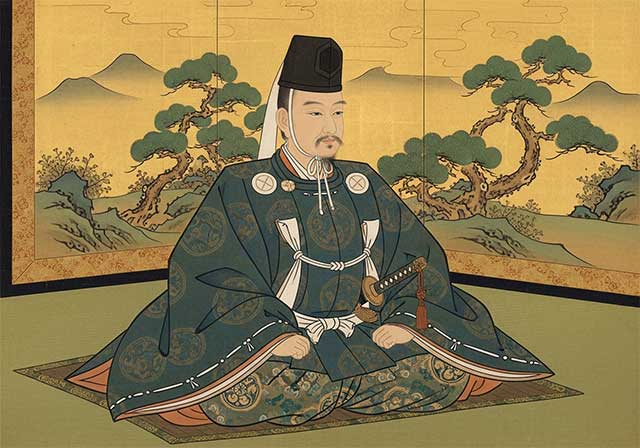
Masanobu initially belonged to the retinue of Tokugawa Ieyasu, but later entered the service of Sakai Shōgen, a daimyo and priest from Ueno. This shift automatically made him an enemy of Ieyasu, who was engaged in conflict with the Ikkō-ikki movement in Mikawa Province. After the Ikkō-ikki were defeated in 1564, Masanobu was forced to flee, but in time he returned and once again entered Ieyasu’s service. He did not gain fame as a military commander due to a wound sustained in his youth; nevertheless, over the following fifty years he consistently remained loyal to Ieyasu.
-
Honda Masazumi
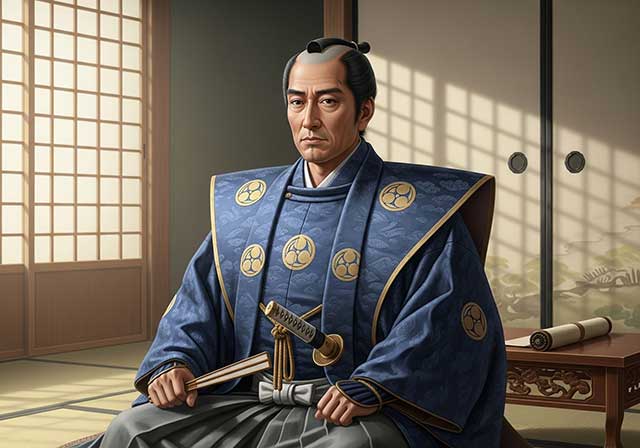
Masazumi was the eldest son of Honda Masanobu. From a young age, he served Tokugawa Ieyasu alongside his father, taking part in the affairs of the Tokugawa house and gradually gaining experience in both military and administrative matters. At the decisive Battle of Sekigahara in 1600, Masazumi was part of the core Tokugawa forces, a clear sign of the high level of trust Ieyasu placed in him. After the campaign ended, he was given a highly sensitive assignment—serving in the guard of the defeated Ishida Mitsunari, one of Tokugawa’s principal enemies—an obligation that required exceptional reliability and caution.
-
Hojo Shigetoki
Hōjō Shigetoki, the third son of Hōjō Yoshitoki, was still very young—only five years old—when his grandfather Tokimasa became the first member of the Hōjō clan to assume the position of shogunal regent.