


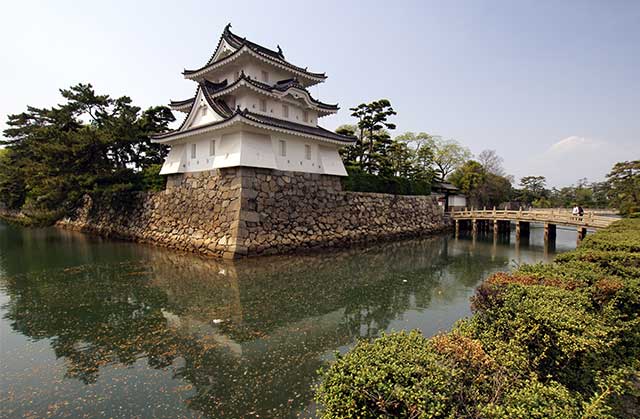
Takamatsu Castle was founded by Ikoma Chikamasa (1526–1603), who was appointed ruler of Takamatsu by Toyotomi Hideyoshi in 1587. The following year, Chikamasa began construction of the castle on the coast of the Inland Sea (Setonaikai), completing it by 1590.
Four generations of the Ikoma clan ruled from this castle. However, in 1639, the 11-year-old Takatoshi was transferred to the remote Dewa Province with a significant reduction in his landholdings. This was a punishment for a conflict that had arisen between the Ikoma clan and its vassals.
The Matsudaira Period and Reconstruction
In 1642, Matsudaira Yorishige (1622–1695), grandson of Tokugawa Ieyasu, took over the castle. He initiated a large-scale reconstruction. By 1670, a new tenshu (main keep) had been built, and in 1671 construction began on two new baileys—Higashinomaru (Eastern Bailey) and Kitanomaru (Northern Bailey). These were completed by the next lord, Matsudaira Yoritsune.
The main gate, Otemon, was relocated from the southern part of the castle to the southeast. A new palace (goten) was built in the third bailey, Sannomaru, and became the administrative center of the Takamatsu domain. The Matsudaira clan controlled the castle until the Meiji Restoration.
Location and Defensive Features
The castle faces the sea on its northern side, while the other three sides were protected by a triple system of moats filled with seawater. Along with Imabari and Nakatsu Castles, Takamatsu Castle is considered one of the most famous “sea castles,” fortifications that used seawater for defense.
Takamatsu and Matsuyama Castles were regarded as the main strongholds of the island of Shikoku.
Architecture and Layout in the Edo Period
During the Edo period, the castle featured an elegant three-tiered, five-story tenshu and twenty different turrets, some of which have survived to the present day.
The castle included several baileys and three semicircular rings of moats—outer, middle, and inner. The total area of the castle grounds was about 660,000 square meters.
Decline and Changes After the Meiji Restoration
After 1869, the castle was abandoned. In 1884, the tenshu was dismantled as it had begun to deteriorate without proper maintenance. The outer moat was filled in soon after the Meiji Restoration, and parts of the middle moat were later built over.
In 1920, the Tamamo Mausoleum was constructed on the site of the tenshu foundation (tenshudai) to enshrine the spirit of Matsudaira Yorishige.
Today, the castle grounds cover only about 80,000 square meters. In 1954, the city took control of the site, and the following year it was designated a National Historic Site. Restoration and preservation work on surviving structures then began.
Many stone walls (ishigaki) of various masonry styles, the inner moat, and part of the middle moat have survived in large numbers.
Surviving Turrets and Gates
The Tsukimi Yagura (“Moon-Viewing Turret”) was built in 1676 as a corner turret of the Kitanomaru bailey. The attached Watari Yagura and the Mizutegomon Gate are reconstructions from the Edo period of the original Umitemon Gate built under the Ikoma clan.
During the Edo period, water reached right up to the turret walls, and the Mizutegomon Gate could be accessed by boat. Thus, the Tsukimi Yagura also served an important role in controlling maritime traffic. In 1955, the turret was dismantled and reconstructed by 1957 as part of a major restoration effort, at a cost of about 17 million yen.
The Ushitora Yagura was built in 1677 as a corner turret in the northeastern part of the Higashinomaru bailey. However, during reconstruction in 1967, it was dismantled and relocated to its current position, where the Taiko Yagura (drum turret) had previously stood.
The Asahimon Gate (“Rising Sun Gate”) was part of a masugata barbican complex that protected the entrance to the Sakuranobaba area. Only the outer gate of the simple korai-mon style has survived.
The Tsukimi Yagura, Watari Yagura, Ushitora Yagura, and Mizutegomon Gate were designated National Treasures in 1947, but lost that status after the 1950 Law for the Protection of Cultural Properties. Today, they are classified as Important Cultural Properties.
Reconstructed Structures and Modern Use
The Hiunkaku Palace, originally built during the Matsudaira period, was dismantled in 1872. In 1915, the twelfth head of the Matsudaira clan, Yorinaga, initiated its reconstruction on the same site. The new palace was completed in 1927. It is nearly half the size of the original and covers an area of 1,916 square meters.
Since 1954, the palace has been used as an exhibition and public space, hosting conferences, tea ceremonies, and ikebana classes. In 2012, Hiunkaku was designated an Important Cultural Property. A Japanese garden surrounds the palace.
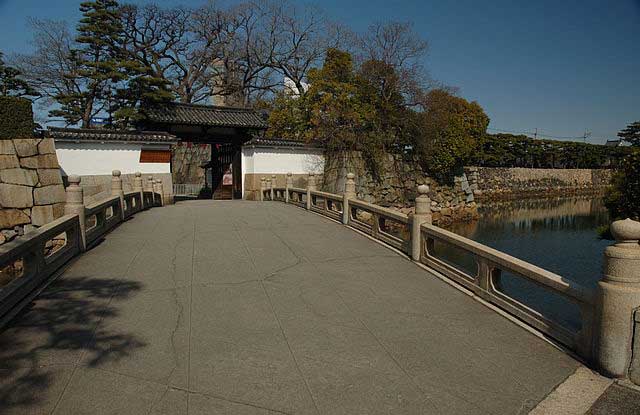
The main bailey, Honmaru, which is encircled by a wide moat, could only be accessed via the Sayabashi Bridge. The bridge was rebuilt several times: around 1823 it was given a roof, in 1884 its wooden supports were replaced with stone, and the most recent reconstruction took place in 2011. After reconstruction of the wall supporting one end of the bridge, the new Sayabashi became slightly longer than its predecessor.
The Hojisho Tower (“time-signal bell tower”) was reconstructed in 1980 to mark the 90th anniversary of Takamatsu’s designation as a city. It is made of reinforced concrete and stands near the port, on land that was once part of the sea. Although it does not replicate the original structure, it houses a historic bell cast in 1653.
The bell has had a long journey: in 1790 it was moved from the castle to a bell tower in the castle town, where it remained until 1871. From 1900 to 1928, it was kept at Yomban Chome Middle School, and in 1930 it was returned to the descendants of the Matsudaira clan.
In 2006, the Japanese Castle Association included Takamatsu Castle in its list of the “100 Fine Castles of Japan.” The castle complex is designated as a National Historic Site and is also known as Tamamo Castle (“Seaweed Castle”).
See also
-
Arato Castle
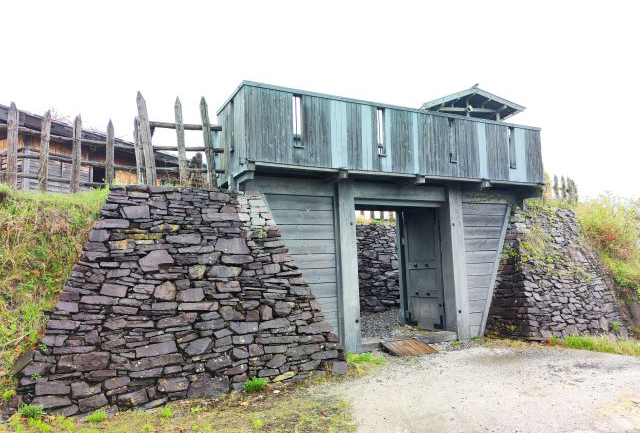
Arato Castle was built in 1524 by the Yamada clan under the orders of their overlord, Murakami, as a small mountain fort. Over time, it gained strategic importance and became a focal point in the conflict between two famous daimyō of the Sengoku period — Takeda Shingen and Murakami Yoshikiyo. This conflict turned the castle into one of the key fortifications in the struggle for control over Shinano Province.
-
Tatsuno Castle
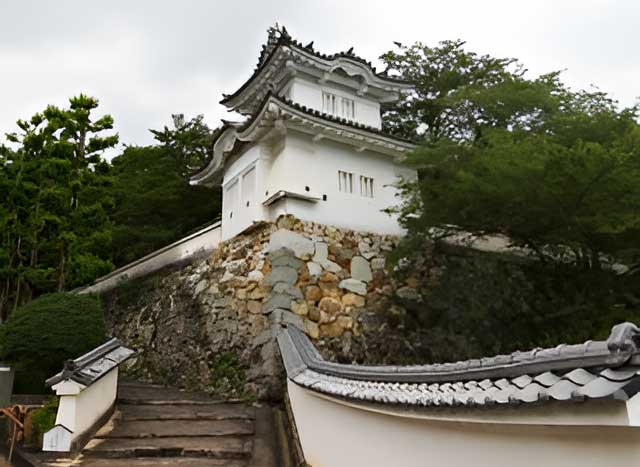
Tatsuno Castle is not a single fortification but rather a complex consisting of two parts: a mountain fortress located at the summit of Mount Keirozan and a flatland-mountain castle situated at its base. The mountain stronghold was built around 1499 by Akamatsu Murahide. During the Muromachi period, the Akamatsu clan was an influential family that, at the height of its power, controlled the provinces of Settsu, Harima, Bizen, and Mimasaka. Murahide’s ancestors were directly involved in the events of the Genkō War in the 14th century and in the subsequent establishment of the Ashikaga shogunate. However, by the 15th century, due to the process of gekokujō, the clan began to lose its position under pressure from rising families, including their former vassals—the Urakami and Bessho clans. In addition, the Akamatsu faced constant pressure from the Amago clan of Izumo Province.
-
Sawayama Castle
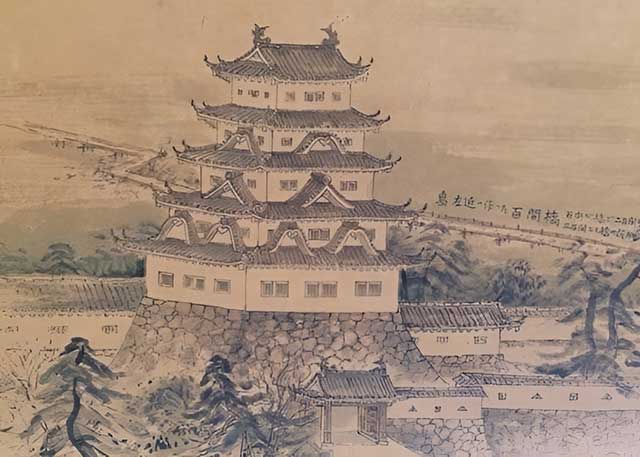
During the Kamakura period, Sabo Tokitsuna, the sixth son of Sasaki Sadatsuna, built a fort on Mount Sawayama. This fort occupied a strategically important position because it allowed control over traffic along the important Tōsandō route, which was later known as Nakasendō. This road connected the capital, Kyoto, with the eastern regions of the country. Due to its location, the fortification held great military importance, and during periods of civil war it repeatedly became the site of fierce battles.
-
Nadzima Castle
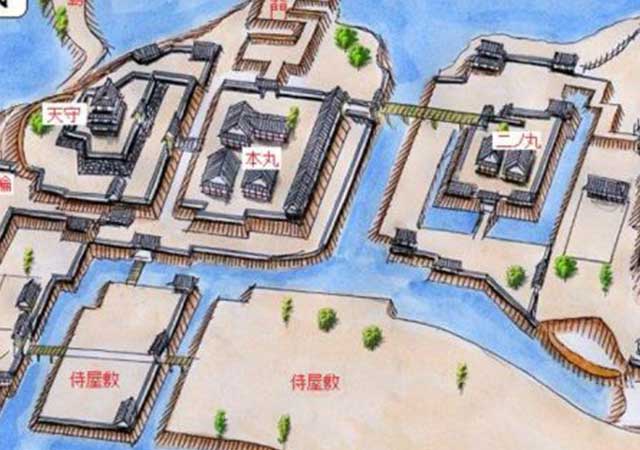
It is believed that the first structures on this site were built by Tachibana Akitoshi (?-1568), head of the Tachibana clan, a branch family of the Ōtomo clan, as auxiliary fortifications for Tachibanayama Castle. In 1587, Toyotomi Hideyoshi established control over the island of Kyushu and granted Chikuzen Province to Kobayakawa Takakage, one of the leading vassals of the Mori clan. Takakage began construction of a new castle on the site of the existing fortifications in 1588. The exact date of completion is unknown, but by the time the invasion of Korea began in 1592, the castle had already been finished, as records note that Toyotomi Hideyoshi stayed there overnight on his way to Hizen Nagoya Castle, which served as the headquarters of the invasion forces.
-
Kubota Castle
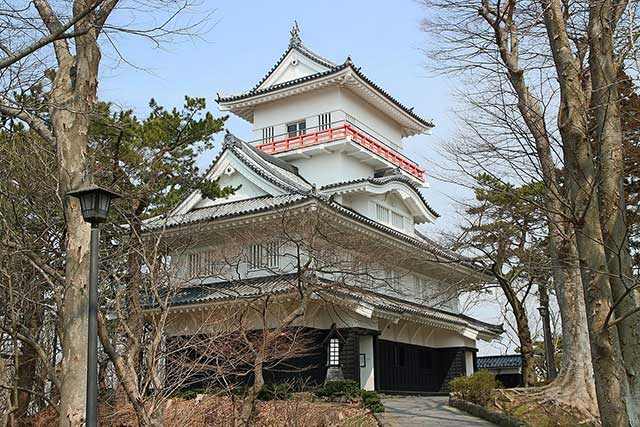
The founder of the castle is considered to be Satake Yoshinobu (1570–1633). Yoshinobu was one of the six great generals of Toyotomi Hideyoshi. During the Odawara Campaign of 1590, he took part in the siege of Oshi Castle under the command of Ishida Mitsunari, with whom Yoshinobu developed a good relationship.
-
Kavanhoe Castle
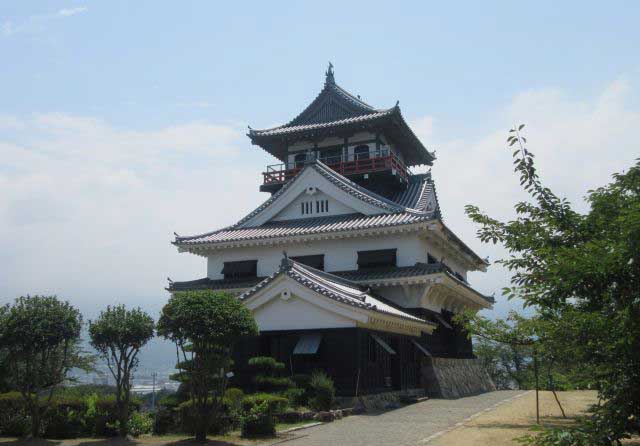
Kawanoe Castle is located on the small Wasi-yama hill near the port area of the Kawanoe district in the city of Shikokuchuo, occupying a central position along the northern coast of Shikoku Island. Kawanoe was also known as Butsuden Castle. The term “butsuden” in Japan refers to temple halls, and for this reason it is believed that a Buddhist temple once stood on the site before the castle was built. Due to its location at the junction of four provinces on Shikoku Island, Kawanoe held significant strategic importance and was repeatedly targeted by rival forces seeking military control over the region.
-
Yokote Castle
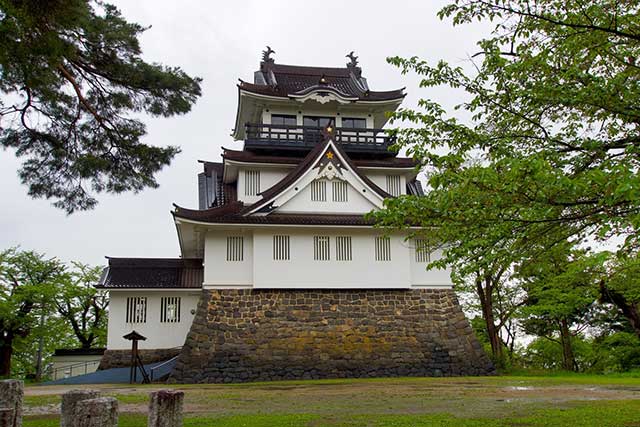
The founder of the castle is considered to be the Onodera clan. The Onodera were originally a minor clan from Shimotsuke Province and served Minamoto no Yoritomo (1147–1199), the founder of the first shogunate. The Onodera distinguished themselves in battle against the Fujiwara clan of the Ōshū branch and were rewarded with lands around Yokote. Around the 14th century, the Onodera moved to Yokote as their permanent residence. Their original stronghold was Numadate Castle, but after a series of clashes with the powerful Nambu clan, they relocated their base to the site of present-day Yokote Castle. It was likely during this time that the first fortifications appeared at the castle.
-
Wakayama Castle
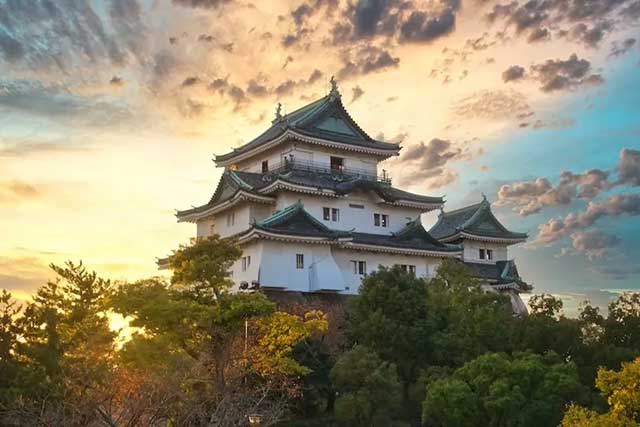
Wakayama Castle was built in 1585, when Toyotomi Hideyoshi ordered his uterine brother, Hashiba (Toyotomi) Hidenaga, to construct a castle on the site of the recently captured Ota Castle. The purpose of this construction was to secure control over the likewise newly conquered Province of Kii. Following an already established tradition, Hidenaga entrusted the project to his castle-building expert, Todo Takatora. Takatora carefully inspected the future castle site, personally drew up several designs, created a model of the planned castle, and took part in the work of laying out the grounds (nawabari). For the construction he brought in more than 10,000 workers and completed the large-scale project within a single year, which was considered extremely fast by the standards of the time.