


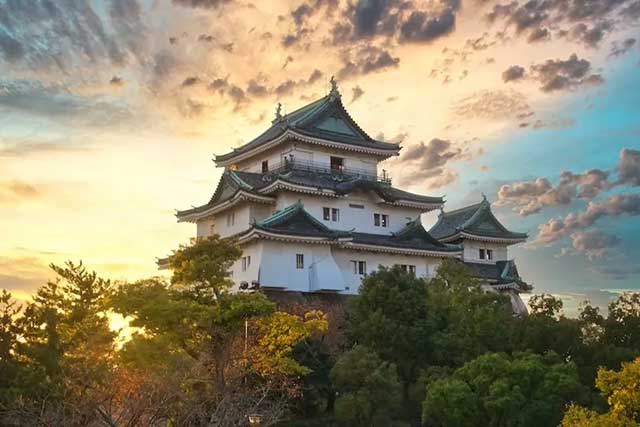
Wakayama Castle was built in 1585, when Toyotomi Hideyoshi ordered his uterine brother, Hashiba (Toyotomi) Hidenaga, to construct a castle on the site of the recently captured Ota Castle. The purpose of this construction was to secure control over the likewise newly conquered Province of Kii. Following an already established tradition, Hidenaga entrusted the project to his castle-building expert, Todo Takatora. Takatora carefully inspected the future castle site, personally drew up several designs, created a model of the planned castle, and took part in the work of laying out the grounds (nawabari). For the construction he brought in more than 10,000 workers and completed the large-scale project within a single year, which was considered extremely fast by the standards of the time.
After the castle was completed, Hidenaga made Yamato Koriyama Castle his base, and appointed Kuwayama Shigeharu as the castellan of Wakayama. After the Battle of Sekigahara in 1600, the castle passed to Asano Yoshinaga (1576–1613). Yoshinaga expanded and rebuilt the castle. As part of these works, he dismantled the old ishigaki stone walls and constructed new ones using higher-quality stone. He also built a three-story donjon covered with black panels, which was connected by roofed corridors to three corner turrets—an arrangement known as the renritsushiki type. The castle also gained two semicircular rings of mizubori moats, supplied with water from the Kinokawa River.
During the Osaka Summer Campaign of 1615, the castle was attacked by forces loyal to Toyotomi Hideyori under the command of Ono Harunaga, Ban Naoyuki, and Okabe Noritsuna. At that time, the castellan of Wakayama was Asano Nagaakira (1586–1632). He managed to defeat the Toyotomi forces in the Battle of Kashii. Naoyuki and Noritsuna were killed, and Harunaga retreated back to Osaka.
In 1619, the Asano clan was transferred to Hiroshima, and Wakayama Castle passed to Tokugawa Ieyasu’s tenth son, Yorinobu (1602–1671). Yorinobu rebuilt the castle for a third time, and once again the castle walls were reconstructed. By 1621 he added a new bailey to the northwest, and later planned to expand the castle to the south, but he was forced to abandon this plan due to rumors of his involvement in the Keian Uprising of 1651. The uprising’s leader, Yui Shosetsu, used Yorinobu’s name in his proclamations without Yorinobu’s consent. Even though the rumors were groundless, Yorinobu chose not to escalate the situation by strengthening his castle’s defensive capabilities.
The Tokugawa clan held the castle until the Meiji Restoration. The original tenshu (main keep) burned down after being struck by lightning in 1846, and in 1850 a new three-story donjon was built. It survived into the 20th century and was designated a National Treasure, but unfortunately it was completely destroyed by American aerial bombardment in 1945.
The donjon complex (the main tower, an attached tower, two corner turrets, gates, and connecting corridor-towers) was reconstructed in 1958 using reinforced concrete. This reconstruction is considered one of the so-called “fake buildings,” since it does not replicate any of the keeps that previously stood on this site. Considering that a sufficient amount of material (photographs, drawings, and descriptions) had been prepared for the structure’s designation as a National Treasure in 1935, the authorities’ decision to erect a concrete imitation looks quite strange.
At the foot of Mount Torafusu, where the donjon is located, visitors are greeted by a large tiger figure on a pedestal. This sculpture was donated to the castle by patrons in 1959. The reason is that as far back as the Middle Ages, the appearance of the castle from the bay was compared to a tiger lying down.
The Okaguchimon Gate has survived to the present day in its original form dating back to 1621. Since 1957 it has been designated an Important Cultural Property. The Oimawashimon Gate is believed to have survived since the 19th century, and its status is “Municipal Cultural Property.” The ishigaki stone walls, building foundations, and some of the moats have also survived.
In 1983, the main Otemon Gate and the Ichinobashi Bridge leading to it were restored. These structures had collapsed in 1909 due to a lack of proper maintenance. An interesting feature of Wakayama Castle is the roofed Ohashiroka Bridge, reconstructed in 2006. It connects the former ninomaru and Nishinomaru baileys. A bridge of this type, built with an incline, is a fairly rare structure in Japanese castle architecture.
The museum inside the donjon can boast a fairly rich collection. The exhibits are mostly from the Edo period, but there are also some particularly interesting items, such as a leather jinbaori.
In 2006, the castle was included by the Japan Castle Foundation (Nihon Jokaku Kyokai) in the list of the “100 Outstanding Castles of Japan.” The castle complex also has the status of a National Historic Site. The castle’s other names are Takegaki and Torafusu.
See also
-
Arato Castle
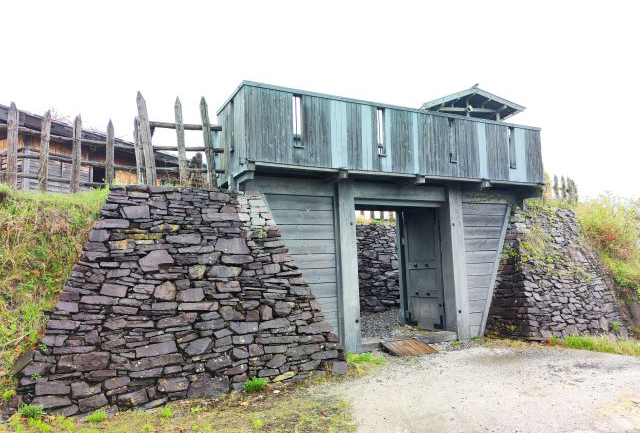
Arato Castle was built in 1524 by the Yamada clan under the orders of their overlord, Murakami, as a small mountain fort. Over time, it gained strategic importance and became a focal point in the conflict between two famous daimyō of the Sengoku period — Takeda Shingen and Murakami Yoshikiyo. This conflict turned the castle into one of the key fortifications in the struggle for control over Shinano Province.
-
Tatsuno Castle
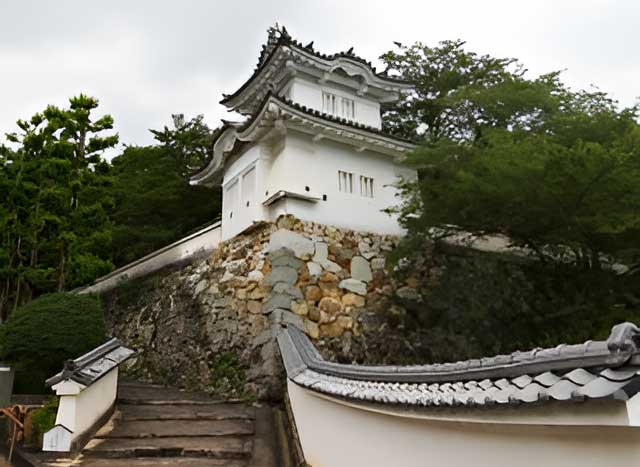
Tatsuno Castle is not a single fortification but rather a complex consisting of two parts: a mountain fortress located at the summit of Mount Keirozan and a flatland-mountain castle situated at its base. The mountain stronghold was built around 1499 by Akamatsu Murahide. During the Muromachi period, the Akamatsu clan was an influential family that, at the height of its power, controlled the provinces of Settsu, Harima, Bizen, and Mimasaka. Murahide’s ancestors were directly involved in the events of the Genkō War in the 14th century and in the subsequent establishment of the Ashikaga shogunate. However, by the 15th century, due to the process of gekokujō, the clan began to lose its position under pressure from rising families, including their former vassals—the Urakami and Bessho clans. In addition, the Akamatsu faced constant pressure from the Amago clan of Izumo Province.
-
Takamatsu Castle
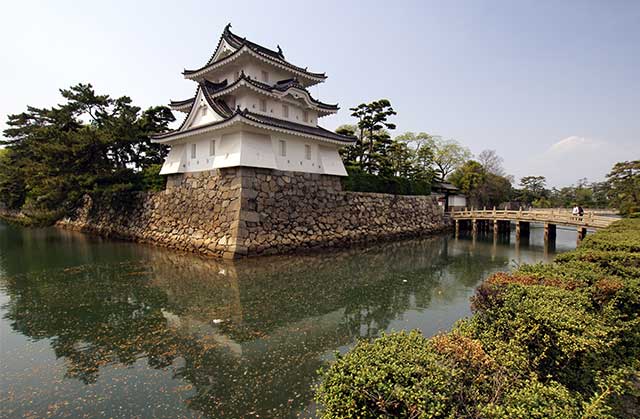
Takamatsu Castle was founded by Ikoma Chikamasa (1526–1603), who was appointed ruler of Takamatsu by Toyotomi Hideyoshi in 1587. The following year, Chikamasa began construction of the castle on the coast of the Inland Sea (Setonaikai), completing it by 1590.
-
Sawayama Castle
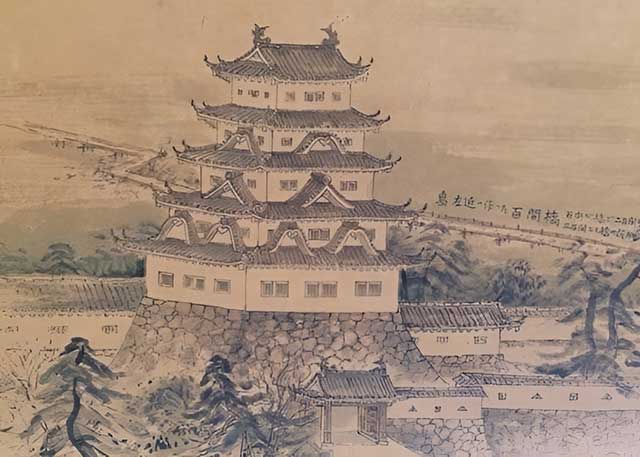
During the Kamakura period, Sabo Tokitsuna, the sixth son of Sasaki Sadatsuna, built a fort on Mount Sawayama. This fort occupied a strategically important position because it allowed control over traffic along the important Tōsandō route, which was later known as Nakasendō. This road connected the capital, Kyoto, with the eastern regions of the country. Due to its location, the fortification held great military importance, and during periods of civil war it repeatedly became the site of fierce battles.
-
Nadzima Castle
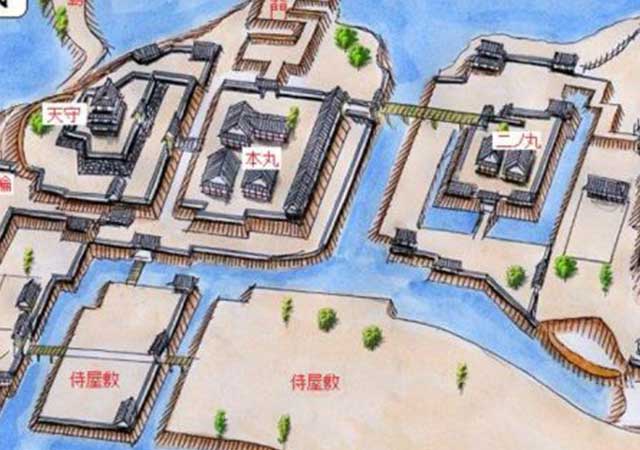
It is believed that the first structures on this site were built by Tachibana Akitoshi (?-1568), head of the Tachibana clan, a branch family of the Ōtomo clan, as auxiliary fortifications for Tachibanayama Castle. In 1587, Toyotomi Hideyoshi established control over the island of Kyushu and granted Chikuzen Province to Kobayakawa Takakage, one of the leading vassals of the Mori clan. Takakage began construction of a new castle on the site of the existing fortifications in 1588. The exact date of completion is unknown, but by the time the invasion of Korea began in 1592, the castle had already been finished, as records note that Toyotomi Hideyoshi stayed there overnight on his way to Hizen Nagoya Castle, which served as the headquarters of the invasion forces.
-
Kubota Castle
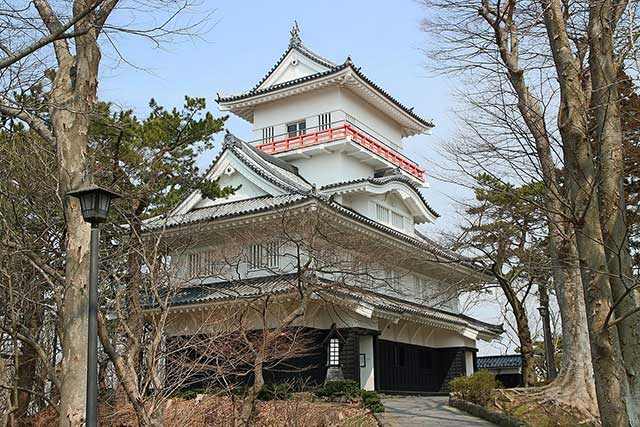
The founder of the castle is considered to be Satake Yoshinobu (1570–1633). Yoshinobu was one of the six great generals of Toyotomi Hideyoshi. During the Odawara Campaign of 1590, he took part in the siege of Oshi Castle under the command of Ishida Mitsunari, with whom Yoshinobu developed a good relationship.
-
Kavanhoe Castle
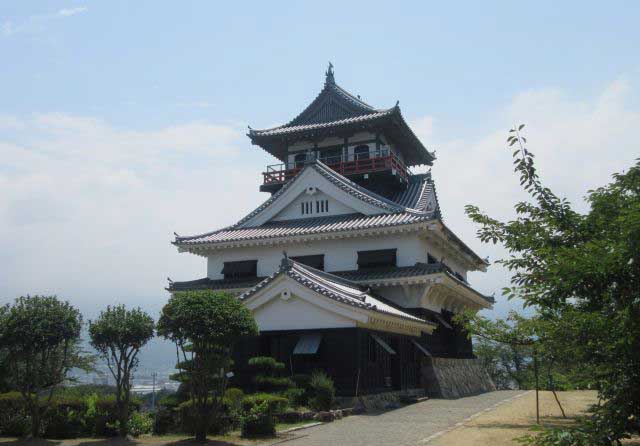
Kawanoe Castle is located on the small Wasi-yama hill near the port area of the Kawanoe district in the city of Shikokuchuo, occupying a central position along the northern coast of Shikoku Island. Kawanoe was also known as Butsuden Castle. The term “butsuden” in Japan refers to temple halls, and for this reason it is believed that a Buddhist temple once stood on the site before the castle was built. Due to its location at the junction of four provinces on Shikoku Island, Kawanoe held significant strategic importance and was repeatedly targeted by rival forces seeking military control over the region.
-
Yokote Castle
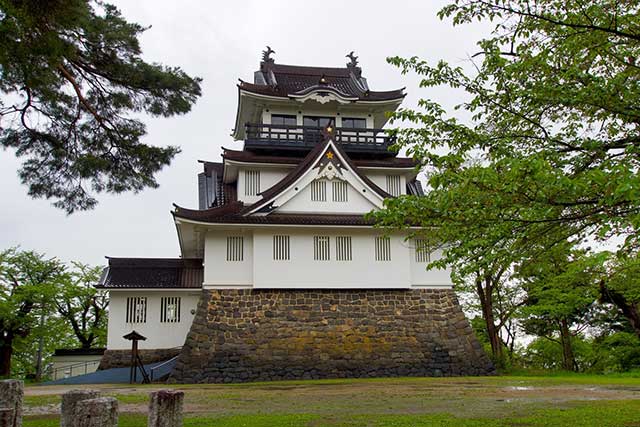
The founder of the castle is considered to be the Onodera clan. The Onodera were originally a minor clan from Shimotsuke Province and served Minamoto no Yoritomo (1147–1199), the founder of the first shogunate. The Onodera distinguished themselves in battle against the Fujiwara clan of the Ōshū branch and were rewarded with lands around Yokote. Around the 14th century, the Onodera moved to Yokote as their permanent residence. Their original stronghold was Numadate Castle, but after a series of clashes with the powerful Nambu clan, they relocated their base to the site of present-day Yokote Castle. It was likely during this time that the first fortifications appeared at the castle.