

Mōri Terumoto (1553–1625) was the grandson and rightful heir of the renowned Mōri Motonari. When Terumoto became the head of the Mōri clan in 1571, he inherited vast territories covering a large part of the San’in and San’yō regions in western Honshū. In addition, the Mōri clan possessed the largest and most technologically advanced naval fleet of its time.
By 1589, Terumoto found his ancestral Yamato Koriyama Castle too cramped and ordered the construction of a new fortress in the delta of the Ōta River. By 1591, the castle was completed, and Terumoto moved his residence there. He relocated his vassals, as well as artisans and merchants, to the new castle town, intending to turn Hiroshima into a major commercial and economic center modeled after Kyoto and Osaka.
During the Sekigahara campaign, Terumoto joined the Western Coalition, which was defeated by the forces of Tokugawa Ieyasu. As a result of this defeat, Terumoto’s main domains—the provinces of Aki and Bingo with a total income of 498,000 koku of rice—were transferred to a former ally of the Toyotomi and Mōri clans, Fukushima Masanori.
However, Masanori was not among the daimyō known for their loyalty to the shogunate, and the Tokugawa government therefore sought any opportunity to weaken his position in the region. Such an opportunity arose in 1617, when a major flood destroyed part of the castle structures. Under Tokugawa shogunate law, daimyō were forbidden to expand, rebuild, or repair castles without special government permission. Masanori repeatedly submitted petitions to the authorities, but each time received the same response: “the matter is under consideration.” In 1619, he decided to carry out reconstruction without permission and thus fell into a carefully prepared trap. For violating the law, his wealthy lands in Hiroshima were confiscated, and Masanori himself was transferred to a low-income domain in what is now Nagano Prefecture.
The castle then came into the possession of Asano Nagaakira. For twelve generations, the Asano clan ruled the castle until the Meiji Restoration. During this period, the fortress was repaired, and the surrounding castle town expanded significantly.
In the Edo period, the castle occupied a vast area. Its fortification system included seven baileys separated by three moats, while the Ōta River provided additional natural defense on the western side.
During the Meiji period, the castle was declared property of the new government. During the Sino-Japanese War of 1894–1895, Hiroshima Castle was used as the campaign headquarters, and Emperor Meiji stayed there for about seven months. Toward the end of the period, the outer moats were filled in, and most of the castle grounds were built over. Today, office buildings and schools occupy the area. The remaining inner moat, the main bailey (Honmaru), and the second bailey (Ninomaru) were designated a “National Historic Site” in 1953.
The castle keep survived in excellent condition until the 20th century and was designated a “National Treasure” in 1931. However, World War II spared neither it nor the city.
The first attempt to reconstruct the keep was made in 1951. The structure was built of wood and was not an exact replica of the original castle, as the tower was erected as part of a Culture and Sports Exhibition. Once the event ended, the keep was dismantled, and this reconstruction stood for only about six months.
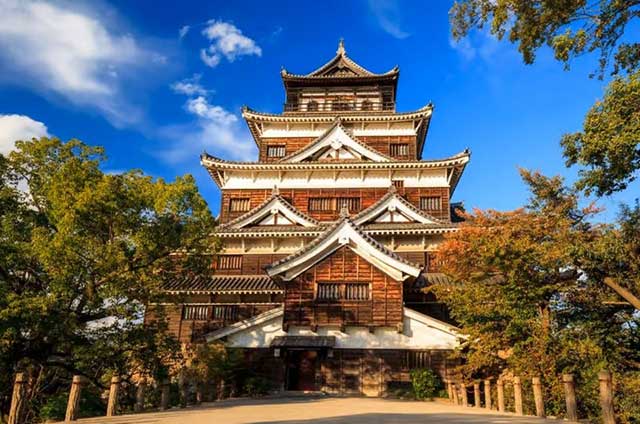
Nevertheless, it played an important role. After the war, many Hiroshima residents wanted to preserve the castle ruins as a memorial to the atomic bombing. However, after the appearance of the “temporary” reconstruction, the citizens voted overwhelmingly in favor of rebuilding the keep. A new keep made of reinforced concrete was completed in 1958.
It is a five-story tower with a total height of 39 meters, including its base. Inside the keep is a local history museum. Unfortunately, the current keep is once again not an exact reproduction of the historical original, and for many years there have been ongoing debates about replacing it with a more authentic reconstruction.
In addition to the keep, several structures of the second bailey, Ninomaru, were reconstructed. This bailey in Hiroshima is unusually small in area and resembles an umadashi barbican more than a full-fledged defensive line. The restored structures include a bridge, the Omote Gomon gate, the Hirayagura corner turret, the long connecting Tamon’yagura turret, and the Taikoyagura drum tower.
Taikoyagura drum towers were primarily used to signal the time, but during sieges the Taiko drum was also used to transmit military signals, such as orders for defenders to assemble at a specific location. Very few Japanese castles can boast reconstructed towers of this type.
There are several theories regarding the origin of the castle’s and the city’s name. The settlement where Terumoto built his castle was called Gokamura, meaning “five villages.” Seeking a more harmonious name, Terumoto took the character “hiro” from the name of Ōe no Hiromoto, an ancestor of the Mōri clan, and the character “shima” from the name of Fukushima Motonaga, who identified the site for the castle’s construction.
According to another theory, the castle was named after a large island in the Ōta River delta, since “Hiroshima” literally means “wide island.” The castle also has a nickname, Rijō, meaning “Carp Castle,” which arose from an association with the name of a nearby area, Koi-no-ura, or “Carp Coast.” In 2006, the Japan Castle Foundation (Nihon Jōkaku Kyōkai) included Hiroshima Castle in its list of the “100 Outstanding Castles of Japan.”
See also
-
Arato Castle
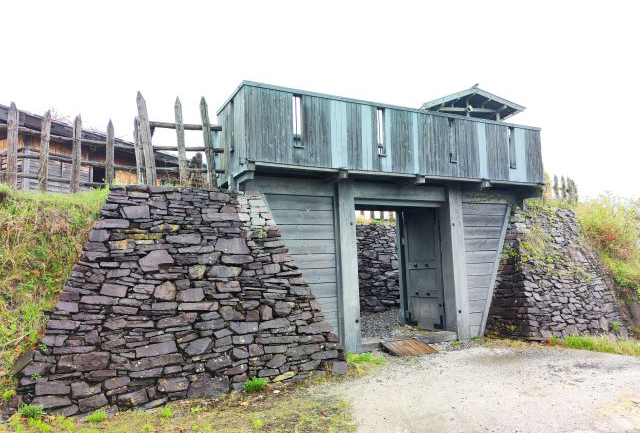
Arato Castle was built in 1524 by the Yamada clan under the orders of their overlord, Murakami, as a small mountain fort. Over time, it gained strategic importance and became a focal point in the conflict between two famous daimyō of the Sengoku period — Takeda Shingen and Murakami Yoshikiyo. This conflict turned the castle into one of the key fortifications in the struggle for control over Shinano Province.
-
Tatsuno Castle
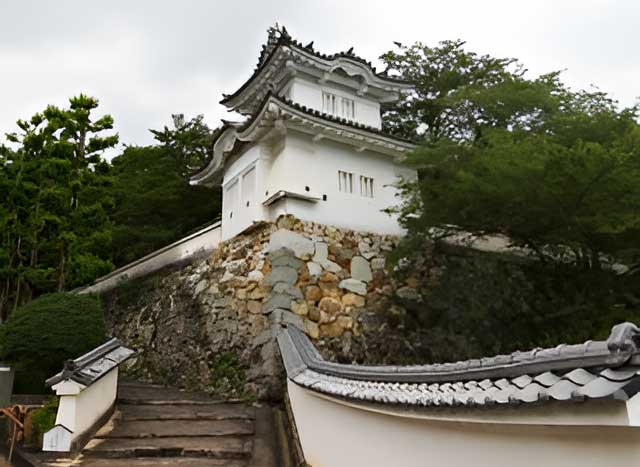
Tatsuno Castle is not a single fortification but rather a complex consisting of two parts: a mountain fortress located at the summit of Mount Keirozan and a flatland-mountain castle situated at its base. The mountain stronghold was built around 1499 by Akamatsu Murahide. During the Muromachi period, the Akamatsu clan was an influential family that, at the height of its power, controlled the provinces of Settsu, Harima, Bizen, and Mimasaka. Murahide’s ancestors were directly involved in the events of the Genkō War in the 14th century and in the subsequent establishment of the Ashikaga shogunate. However, by the 15th century, due to the process of gekokujō, the clan began to lose its position under pressure from rising families, including their former vassals—the Urakami and Bessho clans. In addition, the Akamatsu faced constant pressure from the Amago clan of Izumo Province.
-
Takamatsu Castle
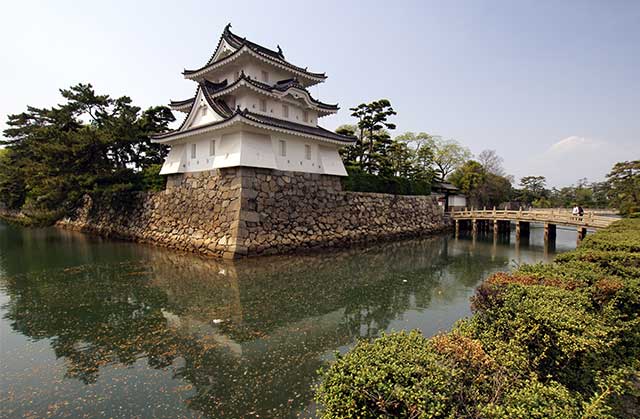
Takamatsu Castle was founded by Ikoma Chikamasa (1526–1603), who was appointed ruler of Takamatsu by Toyotomi Hideyoshi in 1587. The following year, Chikamasa began construction of the castle on the coast of the Inland Sea (Setonaikai), completing it by 1590.
-
Sawayama Castle
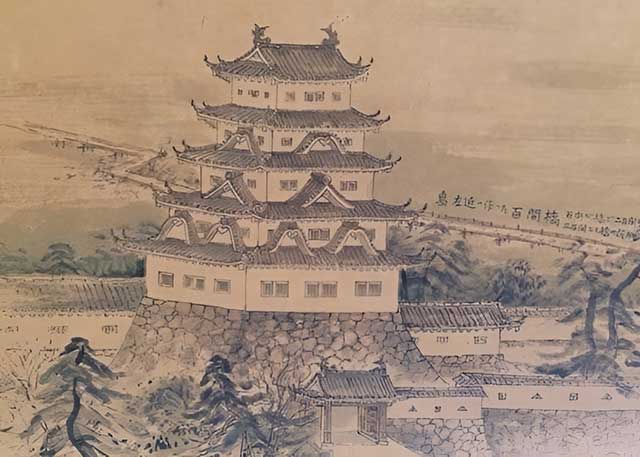
During the Kamakura period, Sabo Tokitsuna, the sixth son of Sasaki Sadatsuna, built a fort on Mount Sawayama. This fort occupied a strategically important position because it allowed control over traffic along the important Tōsandō route, which was later known as Nakasendō. This road connected the capital, Kyoto, with the eastern regions of the country. Due to its location, the fortification held great military importance, and during periods of civil war it repeatedly became the site of fierce battles.
-
Nadzima Castle
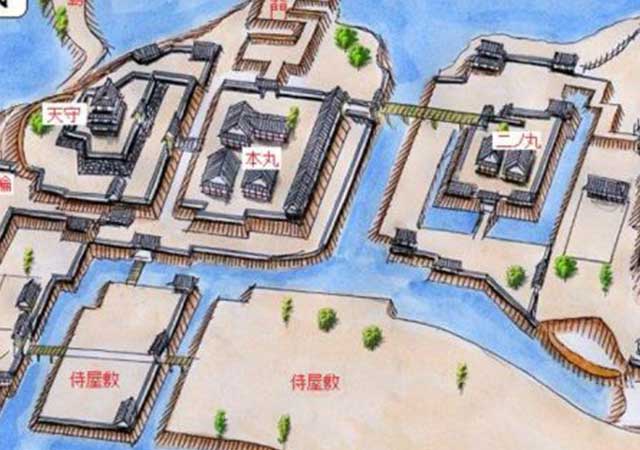
It is believed that the first structures on this site were built by Tachibana Akitoshi (?-1568), head of the Tachibana clan, a branch family of the Ōtomo clan, as auxiliary fortifications for Tachibanayama Castle. In 1587, Toyotomi Hideyoshi established control over the island of Kyushu and granted Chikuzen Province to Kobayakawa Takakage, one of the leading vassals of the Mori clan. Takakage began construction of a new castle on the site of the existing fortifications in 1588. The exact date of completion is unknown, but by the time the invasion of Korea began in 1592, the castle had already been finished, as records note that Toyotomi Hideyoshi stayed there overnight on his way to Hizen Nagoya Castle, which served as the headquarters of the invasion forces.
-
Kubota Castle
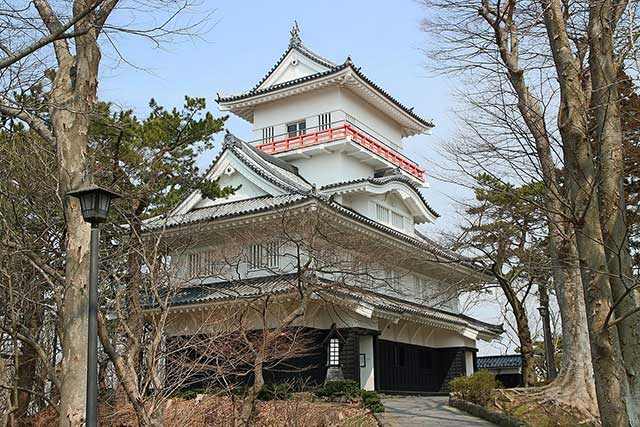
The founder of the castle is considered to be Satake Yoshinobu (1570–1633). Yoshinobu was one of the six great generals of Toyotomi Hideyoshi. During the Odawara Campaign of 1590, he took part in the siege of Oshi Castle under the command of Ishida Mitsunari, with whom Yoshinobu developed a good relationship.
-
Kavanhoe Castle
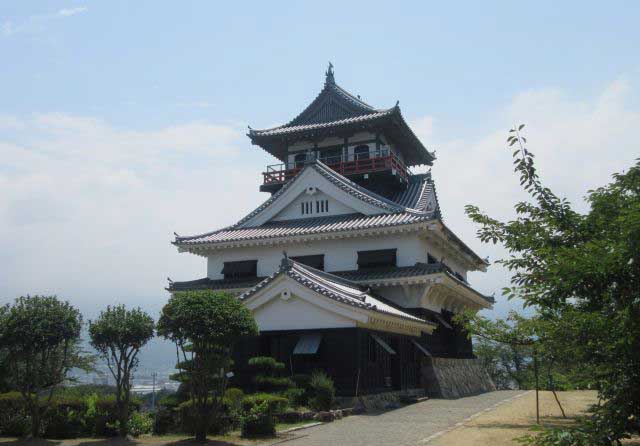
Kawanoe Castle is located on the small Wasi-yama hill near the port area of the Kawanoe district in the city of Shikokuchuo, occupying a central position along the northern coast of Shikoku Island. Kawanoe was also known as Butsuden Castle. The term “butsuden” in Japan refers to temple halls, and for this reason it is believed that a Buddhist temple once stood on the site before the castle was built. Due to its location at the junction of four provinces on Shikoku Island, Kawanoe held significant strategic importance and was repeatedly targeted by rival forces seeking military control over the region.
-
Yokote Castle
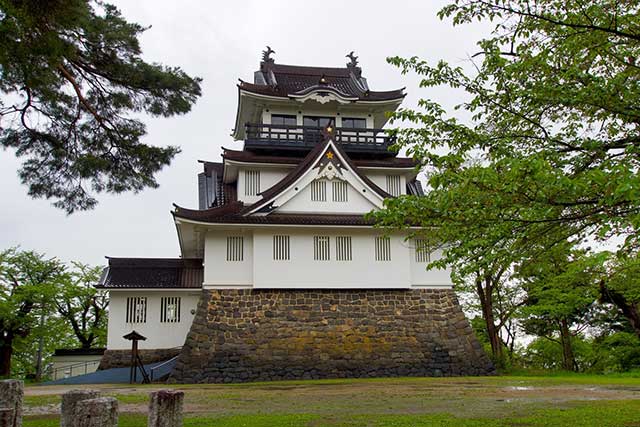
The founder of the castle is considered to be the Onodera clan. The Onodera were originally a minor clan from Shimotsuke Province and served Minamoto no Yoritomo (1147–1199), the founder of the first shogunate. The Onodera distinguished themselves in battle against the Fujiwara clan of the Ōshū branch and were rewarded with lands around Yokote. Around the 14th century, the Onodera moved to Yokote as their permanent residence. Their original stronghold was Numadate Castle, but after a series of clashes with the powerful Nambu clan, they relocated their base to the site of present-day Yokote Castle. It was likely during this time that the first fortifications appeared at the castle.