


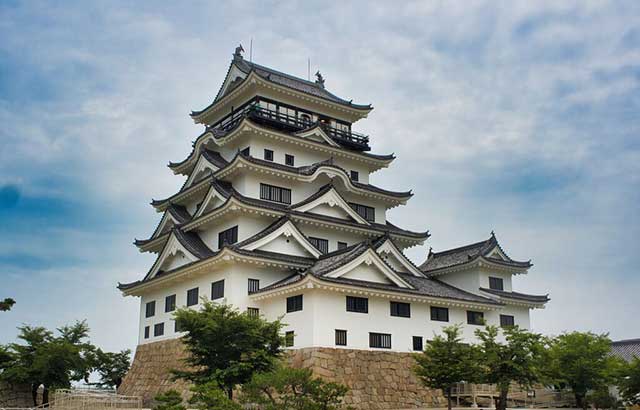
After the defeat of Toyotomi Hideyori’s supporters in the Osaka Campaigns of 1614–1615, many clans in Japan still remained not fully loyal to the Tokugawa shogunate, especially in the western Chūgoku region. Mizuno Katsunari (1564–1651), a cousin of Tokugawa Ieyasu, became the first of the Tokugawa house’s close retainers, the so-called fudai daimyō, to be relocated to this strategically important area.
At first, Katsunari settled in Kannabe Castle, which had served as the main stronghold of the former province of Bungo. However, Kannabe was a typical mountain castle, from which it was difficult to effectively administer and control the lands granted to Katsunari. After obtaining permission from the shogunate, he moved his residence to the village of Nogami, since its coastal location offered significant strategic advantages. From there, it was convenient to keep watch over the subdued but potentially unreliable tozama daimyō in Hiroshima and Okayama, as well as to control the important transportation artery known as the San’yō Road.
Katsunari enjoyed full support from the Tokugawa house, including generous financial backing. As in the construction of Nijō Castle, the building of Fukuyama made extensive use of materials and entire structures from Fushimi Castle, which had once belonged to Toyotomi Hideyoshi and later to Tokugawa Ieyasu. In addition, materials from Kannabe Castle were also reused. This made it possible to construct a large-scale fortress in a relatively short period of time, despite the fact that construction was temporarily suspended in 1620 due to a major flood. The castle was finally completed in 1622.
On its northern side, the castle bordered the Komaru and Tenjin hills, while to the south it faced the Seto Inland Sea. Fukuyama was considered one of the most powerful castles of the Edo period. Its defensive system included seven three-story yagura towers, fifteen smaller towers, ten gates, and high stone walls (ishigaki) topped with earthen ramparts (dobei) or roofed corridors known as tamon-yagura.
Additional protection was provided by two moats, an outer and an inner one, which curved around the castle from the south. Water was supplied to the moats through a wide canal dug to connect them to the sea. The jōkamachi castle town that developed around the fortress was also incorporated into the overall defensive system.
After the shogunate issued the 1615 decree of “One province, one castle,” the construction of new main keeps (tenshu) required special permission, which is why many Edo-period castles lacked a central tower. Katsunari received such permission, indicating the high importance of Fukuyama to the Tokugawa shogunate. A five-tiered, six-story donjon was built in the northern part of the castle. It belonged to the fukugōshiki type, as a smaller auxiliary tower was attached to it.
The Mizuno clan ruled Fukuyama Castle and the Fukuyama Domain for five generations, until 1698. Since the last daimyō of the Mizuno line left no heirs, the domain came under the direct control of the shogunate. From 1700 to 1710, the domain was governed by Matsudaira Tadamasa, after which control of the castle was transferred to the Abe clan. Ten generations of the Abe clan held Fukuyama Castle until the Meiji government issued the decree for the dismantling of castles in 1873.
Between 1730 and 1750, part of the palace buildings of the main bailey, known as the honmaru goten, were relocated to the Abe clan’s residence in Edo. During the Bakumatsu period, in 1865, Abe Masakata, the ninth daimyō of the Fukuyama Domain, took part in the second punitive expedition against the Chōshū Domain. While preparations for this campaign were underway, a gunpowder explosion occurred in the Kushigata-yagura tower, causing a fire that destroyed the neighboring Yari-yagura and Teppō-yagura towers. During the Boshin War of 1868, the castle was attacked by imperial loyalist forces, but it did not suffer serious damage, as the Abe clan decided to side with the emperor.
After the abolition of the feudal domain system and the issuance of the castle dismantlement decree, most of Fukuyama Castle’s buildings were sold off to local residents and taken apart. The outer moat was filled in and built over, and in 1891 a railway station was constructed on the site of the inner moat.
Nevertheless, some structures of the main bailey, including the donjon, escaped demolition. They came under the ownership of the city and later the prefecture. In 1897, at the request of local residents, the buildings, which had fallen into disrepair by that time, were repaired at the prefecture’s expense.
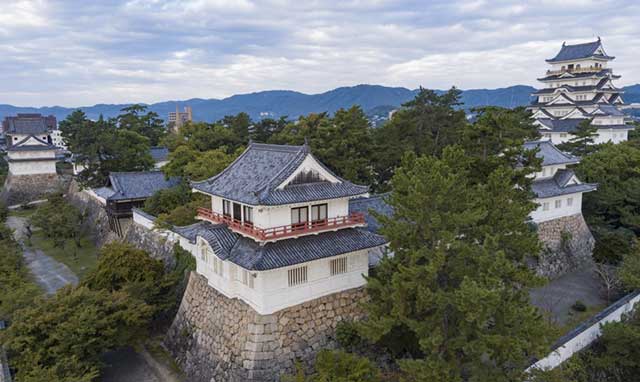
With the enactment of the 1929 Law for the Preservation of National Treasures, several surviving structures received official protected status: the tenshu donjon was designated a National Treasure in 1931, while the Fushimi-yagura tower, the Sujigane-gomon gate, and the Goyūdono bathhouse received the same status in 1933. In 1936, the entire castle complex within the boundaries of the former main bailey was designated a National Historic Site.
However, a large portion of the structures that had survived the Meiji era, including the donjon, were destroyed during the bombing by American aircraft on August 8, 1945.
Only two structures of the second bailey, the ninomaru, have survived to the present day in their original form: the Fushimi-yagura tower and the Sujigane-gomon gate, both of which had originally been transferred from Fushimi Castle. Under the new 1950 Law for the Protection of Cultural Properties, they were designated Important Cultural Properties and underwent major restoration work in 1952–1953.
In 1964, the castle complex within the boundaries of the main bailey (honmaru) and the second bailey (ninomaru) was once again designated a National Historic Site. For this purpose, the land of the ninomaru, which had previously been occupied by private buildings, was purchased.
In 1966, to mark the fiftieth anniversary of Fukuyama’s designation as a city, several structures of the main bailey were reconstructed, including the donjon, the Tsukimi-yagura tower, and the Goyūdono bathhouse.
The donjon was rebuilt in reinforced concrete and takes the form of a five-tiered, six-story tower with an attached structure. Although its overall appearance resembles the prewar version, the reconstructed donjon is not an exact replica of the original.
In 1973, the Kagami-yagura, or Mirror Tower, was reconstructed, followed in 1979 by the Shōrō bell tower.
In 2022, the 400th anniversary of the completion of the historic Fukuyama Castle, the authorities carried out a major renovation of the reconstructed donjon, significantly altering its external appearance. The most notable change was the covering of the north side of the tower with black iron panels.
The northern side of the castle had traditionally been considered the most vulnerable, and for that reason the donjon had originally been reinforced with such armor panels specifically on its northern face. This type of one-sided armoring was not found in any other Japanese castle. Only a single photograph of Fukuyama Castle from the north side, taken in 1891, has survived, showing these panels; they are believed to have been added in the late Edo period.
In 2006, Fukuyama Castle was included by the Japan Castle Foundation (Nihon Jōkaku Kyōkai) in its list of the “100 Fine Castles of Japan.” The castle is also known by the names Hisamatsu and Iyo.
See also
-
Arato Castle
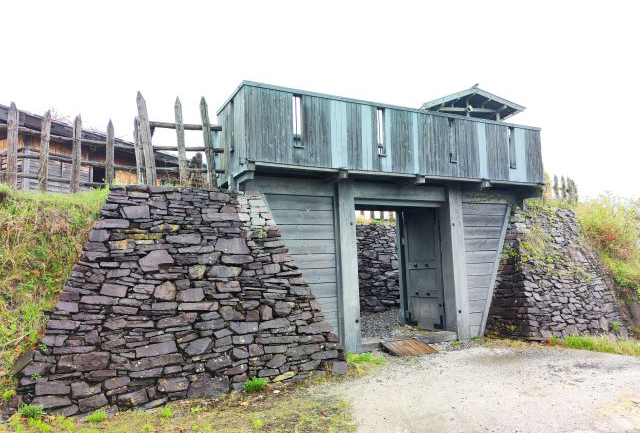
Arato Castle was built in 1524 by the Yamada clan under the orders of their overlord, Murakami, as a small mountain fort. Over time, it gained strategic importance and became a focal point in the conflict between two famous daimyō of the Sengoku period — Takeda Shingen and Murakami Yoshikiyo. This conflict turned the castle into one of the key fortifications in the struggle for control over Shinano Province.
-
Tatsuno Castle
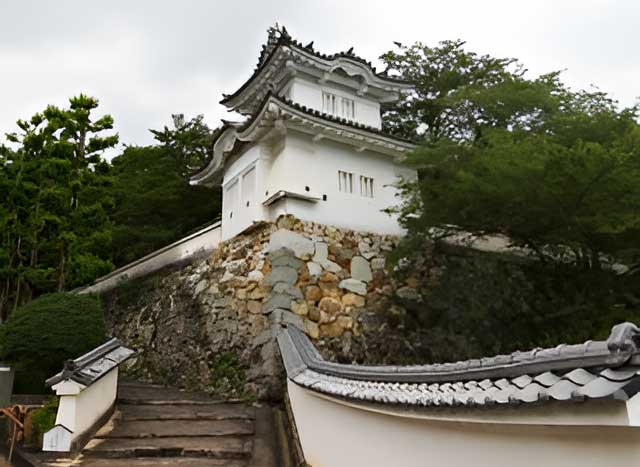
Tatsuno Castle is not a single fortification but rather a complex consisting of two parts: a mountain fortress located at the summit of Mount Keirozan and a flatland-mountain castle situated at its base. The mountain stronghold was built around 1499 by Akamatsu Murahide. During the Muromachi period, the Akamatsu clan was an influential family that, at the height of its power, controlled the provinces of Settsu, Harima, Bizen, and Mimasaka. Murahide’s ancestors were directly involved in the events of the Genkō War in the 14th century and in the subsequent establishment of the Ashikaga shogunate. However, by the 15th century, due to the process of gekokujō, the clan began to lose its position under pressure from rising families, including their former vassals—the Urakami and Bessho clans. In addition, the Akamatsu faced constant pressure from the Amago clan of Izumo Province.
-
Takamatsu Castle
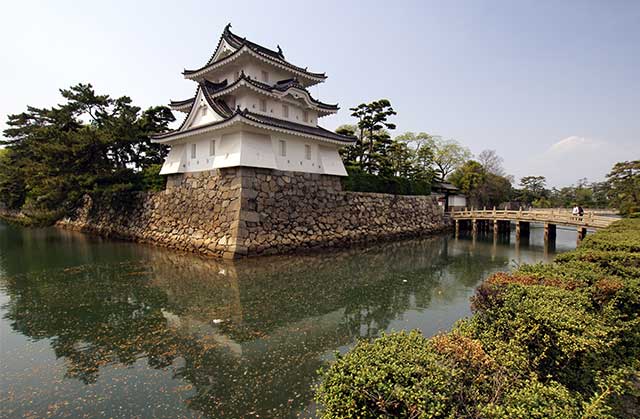
Takamatsu Castle was founded by Ikoma Chikamasa (1526–1603), who was appointed ruler of Takamatsu by Toyotomi Hideyoshi in 1587. The following year, Chikamasa began construction of the castle on the coast of the Inland Sea (Setonaikai), completing it by 1590.
-
Sawayama Castle
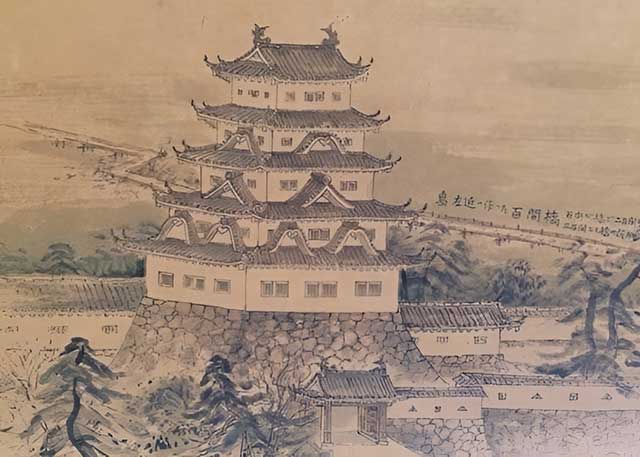
During the Kamakura period, Sabo Tokitsuna, the sixth son of Sasaki Sadatsuna, built a fort on Mount Sawayama. This fort occupied a strategically important position because it allowed control over traffic along the important Tōsandō route, which was later known as Nakasendō. This road connected the capital, Kyoto, with the eastern regions of the country. Due to its location, the fortification held great military importance, and during periods of civil war it repeatedly became the site of fierce battles.
-
Nadzima Castle
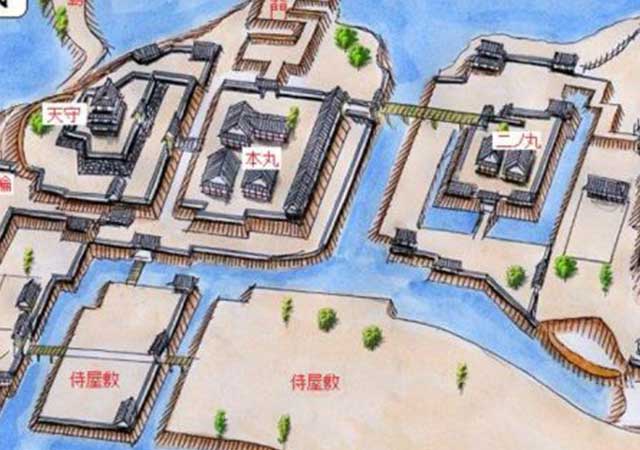
It is believed that the first structures on this site were built by Tachibana Akitoshi (?-1568), head of the Tachibana clan, a branch family of the Ōtomo clan, as auxiliary fortifications for Tachibanayama Castle. In 1587, Toyotomi Hideyoshi established control over the island of Kyushu and granted Chikuzen Province to Kobayakawa Takakage, one of the leading vassals of the Mori clan. Takakage began construction of a new castle on the site of the existing fortifications in 1588. The exact date of completion is unknown, but by the time the invasion of Korea began in 1592, the castle had already been finished, as records note that Toyotomi Hideyoshi stayed there overnight on his way to Hizen Nagoya Castle, which served as the headquarters of the invasion forces.
-
Kubota Castle
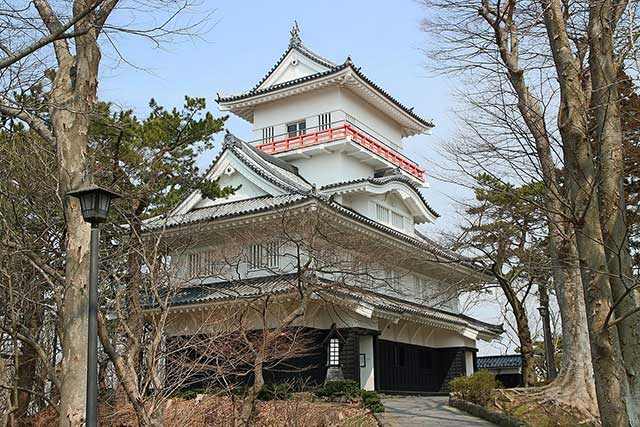
The founder of the castle is considered to be Satake Yoshinobu (1570–1633). Yoshinobu was one of the six great generals of Toyotomi Hideyoshi. During the Odawara Campaign of 1590, he took part in the siege of Oshi Castle under the command of Ishida Mitsunari, with whom Yoshinobu developed a good relationship.
-
Kavanhoe Castle
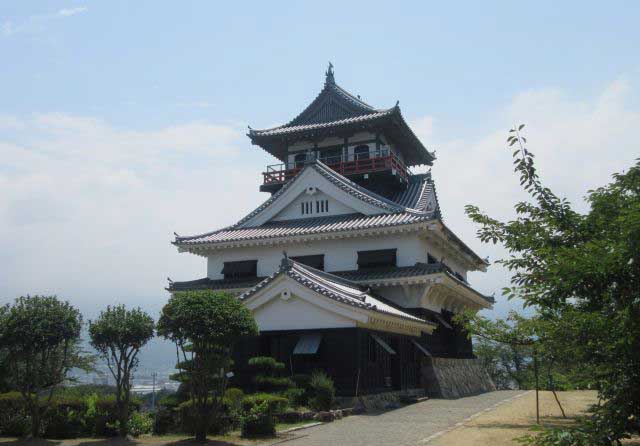
Kawanoe Castle is located on the small Wasi-yama hill near the port area of the Kawanoe district in the city of Shikokuchuo, occupying a central position along the northern coast of Shikoku Island. Kawanoe was also known as Butsuden Castle. The term “butsuden” in Japan refers to temple halls, and for this reason it is believed that a Buddhist temple once stood on the site before the castle was built. Due to its location at the junction of four provinces on Shikoku Island, Kawanoe held significant strategic importance and was repeatedly targeted by rival forces seeking military control over the region.
-
Yokote Castle
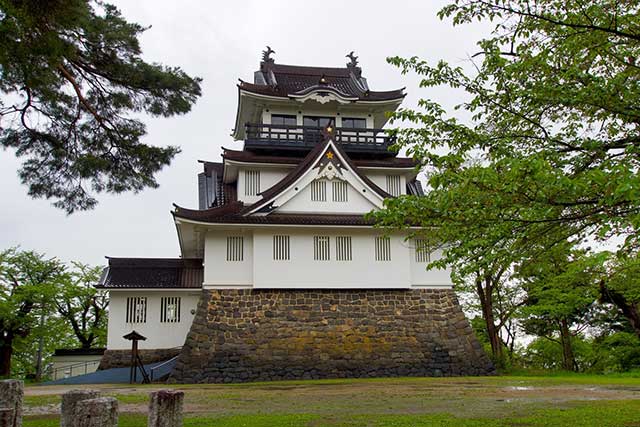
The founder of the castle is considered to be the Onodera clan. The Onodera were originally a minor clan from Shimotsuke Province and served Minamoto no Yoritomo (1147–1199), the founder of the first shogunate. The Onodera distinguished themselves in battle against the Fujiwara clan of the Ōshū branch and were rewarded with lands around Yokote. Around the 14th century, the Onodera moved to Yokote as their permanent residence. Their original stronghold was Numadate Castle, but after a series of clashes with the powerful Nambu clan, they relocated their base to the site of present-day Yokote Castle. It was likely during this time that the first fortifications appeared at the castle.