

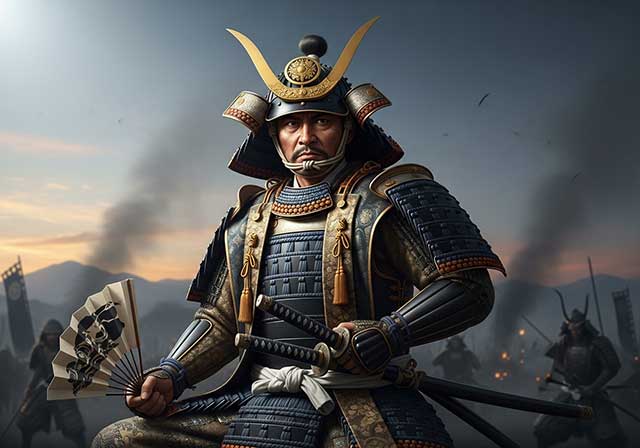
Tachibana Dōsetsu is the name by which Hetsugi Akitsura is more widely known; the name of this lineage is also found read as Hekki or Bekki. For a long period, Akitsura served the Ōtomo clan, the daimyō of Bungo Province, and took part in wars against the Ōuchi family, the principal enemies of the Ōtomo in northwestern Kyushu. In the 1560s, Akitsura seized the castle of the Tachibana clan, which had rebelled against the Ōtomo, and thereafter adopted the surname Tachibana. Around the same time, he took Buddhist vows and assumed the name Dōsetsu, which means “Snowy Road.”
Dōsetsu’s domains were located in Chikuzen Province, at the junction of the lands of the Mōri clan (who had displaced the Ōuchi in 1555), the Ōtomo, and the Shimazu, northeast of what is now the city of Fukuoka. For many years, Dōsetsu fought on the side of the Ōtomo and was regarded as one of the most prudent and experienced advisors to the daimyō Ōtomo Sōrin. However, after the severe defeat suffered by the Ōtomo army in 1578 at the Battle of Mimigawa, serious tensions arose between Dōsetsu and Sōrin, most likely connected to the active spread of Christianity in Bungo and other territories under Ōtomo rule. Tachibana Dōsetsu composed an “open letter” addressed to the most influential vassals of the Ōtomo clan, in which he sharply criticized the Christianization of Ōtomo lands. In this letter, he accused Sōrin of pursuing policies that had turned the samurai of Bungo away from “praying to the gods and the Buddha, defending faith and virtue, and following the way of the bow and the arrow.” According to Dōsetsu, what was happening in Bungo was unheard of since ancient times: “young and old, men and women are converted into followers of something like an Indian sect; temples and shrines are destroyed; images of the Buddha and the gods are drowned in rivers or burned.”
Despite such a harsh denunciation, Dōsetsu remained loyal to the Ōtomo clan, something that could not be said of many other vassals, who began to seek the patronage of either the Shimazu or the Ryūzōji. In time, the crisis eased, and in 1584 Ōtomo Sōrin was even able to assemble an army to subdue Ryūzōji Masaie, the heir of the recently killed Ryūzōji Takanobu. Command of the army was entrusted to Tachibana Dōsetsu, considered the most capable commander of the Ōtomo, but this campaign proved to be his last: in 1585, Dōsetsu was killed during the assault on Neko Fortress. The Ōtomo army retreated to Bungo, and soon afterward the rule of Ōtomo Sōrin came to an inglorious end.
According to tradition, Tachibana Dōsetsu took part in thirty-seven battles over the course of his life and was wounded many times. After one of these injuries, he was left partially paralyzed, yet he continued to participate in battles and military campaigns; for his ferocious character, he even earned the nickname Oni Dōsetsu—“Demon Dōsetsu.” Dōsetsu had no sons, and therefore bequeathed his domains to his daughter, Tachibana Ginchiyo. At the same time, he adopted Senkumaru, the son of Takahashi Shigetane, another vassal of the Ōtomo clan. Senkumaru later married Ginchiyo and became the head of the Tachibana clan under the name Muneshige.
See also
-
Takeda Nobuyoshi
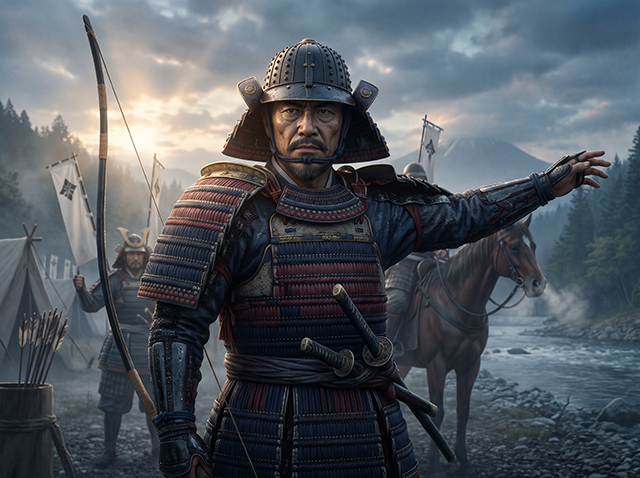
Takeda Nobuyoshi (1128–1186 or later) was a prominent Japanese samurai lord of the late Heian and early Kamakura periods and the founder of the Takeda clan.
-
Tokugawa Iemochi
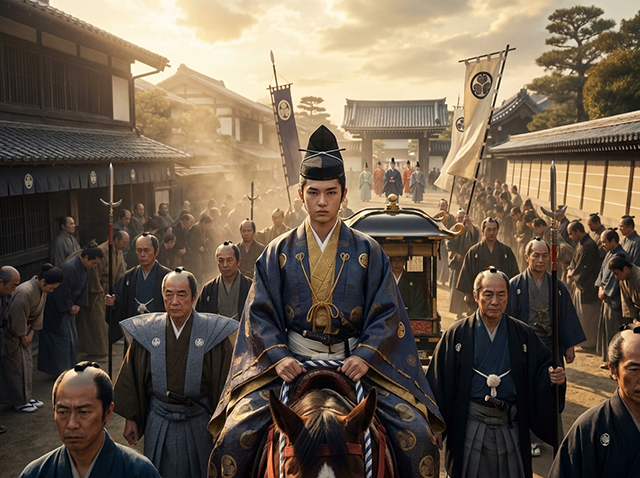
Tokugawa Iemochi (1846–1866) was the fourteenth shōgun of the Tokugawa shogunate and ruled from 1858 until his death. His reign came during the turbulent final years of the shogunate, when Japan faced growing Western pressure and serious internal political conflict.
-
Tokugawa Ienari
Tokugawa Ienari (1773–1841) was the eleventh shōgun of the Tokugawa shogunate and ruled from 1787 to 1837, making him the longest-serving Tokugawa shōgun. He was a great-grandson of the eighth shōgun, Tokugawa Yoshimune.
-
Matsudaira Nobuyasu
Matsudaira Nobuyasu was only twenty years old when his father ordered him to commit seppuku. The reason was not a defeat in battle, but a crisis inside the Tokugawa family that had become too dangerous to ignore.
-
Yamagata Masakage
Masakage was one of Takeda Shingen’s most loyal and capable commanders. He was included in the famous list of the “Twenty-Four Generals of Takeda Shingen” and also belonged to the inner circle of four especially trusted warlords known as the Shitennō.
-
Yagyu Munenori
Yagyū Munenori began his service under Tokugawa Ieyasu while his father, Yagyū Muneyoshi, was still at his side. In 1600, Munenori took part in the decisive Battle of Sekigahara. As early as 1601, he was appointed a kenjutsu instructor to Tokugawa Hidetada, Ieyasu’s son, who later became the second shogun of the Tokugawa clan.
-
Yagyu Muneyoshi
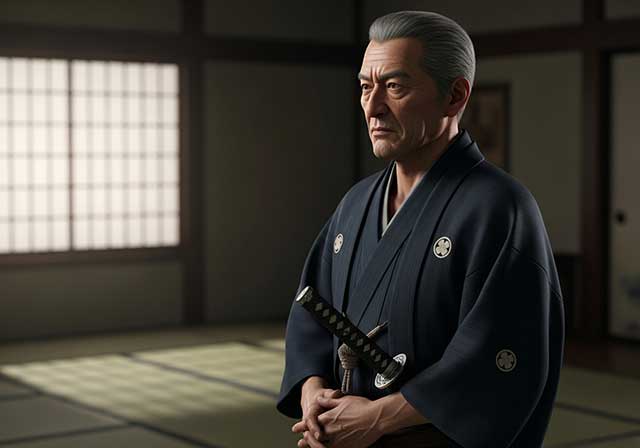
A samurai from Yamato Province, he was born into a family that had been defeated in its struggle against the Tsutsui clan. Muneyoshi first took part in battle at the age of sixteen. Due to circumstances beyond his control, he was forced to enter the service of the Tsutsui house and later served Miyoshi Tōkei. He subsequently came under the command of Matsunaga Hisahide and in time became a vassal first of Oda and later of Toyotomi.
-
Endo Naozune
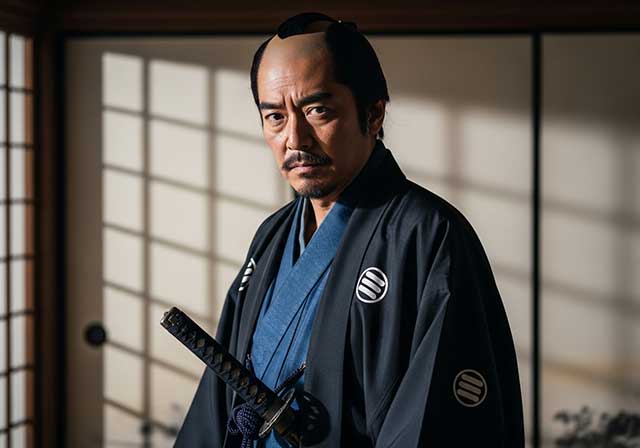
Naozune served under Azai Nagamasa and was one of the clan’s leading vassals, renowned for his bravery and determination. He accompanied Nagamasa during his first meeting with Oda Nobunaga and at that time asked for permission to kill Nobunaga, fearing him as an extremely dangerous man; however, Nagamasa did not grant this request.