


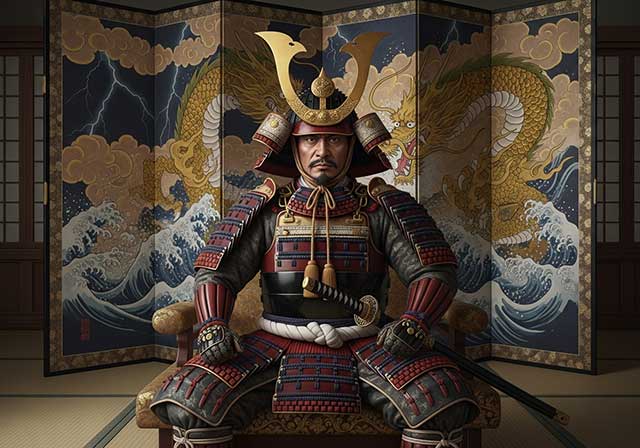
Takanobu was the eldest son of Ryūzōji Takaie and the great-grandson of Ryūzōji Iekane. His father was killed by a man named Baba Yoritiku in 1544. At a young age, Takanobu took Buddhist vows and received the monastic name Engetsu. However, around the age of eighteen, he returned to secular life, and in 1548, after the death of Ryūzōji Tanehide, he became the head of both branches of the Ryūzōji family.
Although some vassals doubted Takanobu’s abilities and proposed appointing Tanehide’s son, Ryūzōji Ienari, as the clan leader, Takanobu proved himself to be a capable ruler and commander. In 1553, he rose against Shō Tokinao, and the following year captured his castle at Saga, forcing Tokinao to flee to the neighboring province of Chikugo. In 1556, Takanobu caught up with his rival and killed him. Soon afterward, he brought nearly all of Hizen Province under his control, except for the southwestern region of Sonogi, where the Arima and Ōmura families resisted him.
In the late 1550s, Takanobu entered into conflict with the powerful Ōtomo clan, which controlled Bungo Province, located east of his native Hizen. In 1560, Ōtomo Sōrin, the clan’s leader, sent a large army—according to some sources up to sixty thousand men, though this figure is likely inflated at least threefold—under the command of his son Sadataka to surround Takanobu’s Saga Castle.
Takanobu himself had only about five thousand warriors. Surrounded on all sides, his vassals were at a loss until one of them, Nabeshima Naoshige (1537–1619), suggested making a nighttime raid on the enemy camp. The idea was risky, and most commanders opposed it. However, the decisive voice came from Takanobu’s mother, who sharply told her son: “You’re acting like a mouse before a cat! If you consider yourself a true samurai, attack the enemy at night, staking your life on victory or death!”
After this, a nighttime raid was launched: Naoshige’s men slipped silently through the Ōtomo encirclement and positioned themselves behind Sadataka’s headquarters on the slope of Mount Imayama. At six in the morning, they opened fire with arquebuses on the command post, and in the ensuing clash, Sadataka was killed. While Naoshige was dealing with him and his unit, the rest of Takanobu’s forces attacked the main Ōtomo army. Although most of the Ōtomo troops did not suffer heavy losses, the death of their commander caused panic, and the enemy forces were forced to retreat.
The Battle of Imayama not only saved Takanobu from what seemed an inevitable defeat but also gave him the opportunity to establish control over most of Hizen. Throughout the 1570s, he consolidated his dominance in the province, subduing or intimidating several southwestern lords, including Gotō Takaakira, Matsura Takanobu, and Arima Harunobu. Ōmura Sumitada resisted for a long time, but after the invasions of 1578 and 1579, he was compelled by circumstance to swear loyalty to Takanobu at Saga Castle. However, shortly before this, Ōmura had transferred control of the port of Nagasaki to the Jesuits.
Another Ōtomo defeat, suffered eight years later at the hands of the Shimazu clan at the Battle of Mimigawa, allowed Takanobu to seize the eastern territories of Hizen and begin an advance into Hyūga Province. In 1579, he defeated the Ōtomo forces in Chikugo Province, finally eliminating the threat posed by his longtime rival, Ōtomo Sōrin.
Takanobu was a ruthless schemer, and in 1579 he invited the former Ryūzōji vassal Kamachi Shigenami to a sarugaku performance, where he ordered him killed. This allowed him to seize the powerful Yanagawa Castle in Chikugo, which had belonged to Kamachi. The act appeared especially dishonorable because Kamachi Shigenami had served Ryūzōji Ienari during the latter’s war with Baba Yoritiku in 1544–1545. Unsurprisingly, this incident shocked many Ryūzōji vassals, causing their attitude toward their lord to change significantly.
After 1580, Takanobu entered into conflict with the Shimazu over Higo Province while simultaneously attempting to expel Arima Harunobu from the Shimabara region of Hizen. At the same time, by establishing himself in Bungo, he became a threat to Satsuma, the Shimazu homeland, drawing their attention. Starting in 1582, the Shimazu actively supported Arima Harunobu—the only independent daimyō in Hizen—in resisting the Ryūzōji attacks. In 1584, Takanobu marched against Harunobu with an army of about twenty thousand men, while Harunobu’s modest forces were reinforced only by a small band of Shimazu samurai under the command of Iehisa. In the Battle of Okita-Nawate, the Shimazu swordsmen broke into Takanobu’s command post and cut down him and his bodyguards, after which the Ryūzōji army fled. Following Takanobu’s death, his son Masaie was forced to submit to the Shimazu clan.
Takanobu bore the nickname Hizen-no-Kuma—“The Bear of Hizen”—partly because he liked to wear a bearskin over his armor and partly because of his fierce, fiery temperament. By the end of his life, Takanobu had become heavily addicted to alcohol, and by 1580 he was an irredeemable drunk, showing signs of dementia and a massive belly. He grew so large that he could no longer ride a horse, and for the Battle of Okita-Nawate, he had to be carried to the battlefield in a palanquin.
See also
-
Takeda Nobuyoshi
Takeda Nobuyoshi (1128–1186 or later) was a prominent Japanese samurai lord of the late Heian and early Kamakura periods and the founder of the Takeda clan.
-
Tokugawa Iemochi

Tokugawa Iemochi (1846–1866) was the fourteenth shōgun of the Tokugawa shogunate and ruled from 1858 until his death. His reign came during the turbulent final years of the shogunate, when Japan faced growing Western pressure and serious internal political conflict.
-
Tokugawa Ienari
Tokugawa Ienari (1773–1841) was the eleventh shōgun of the Tokugawa shogunate and ruled from 1787 to 1837, making him the longest-serving Tokugawa shōgun. He was a great-grandson of the eighth shōgun, Tokugawa Yoshimune.
-
Matsudaira Nobuyasu
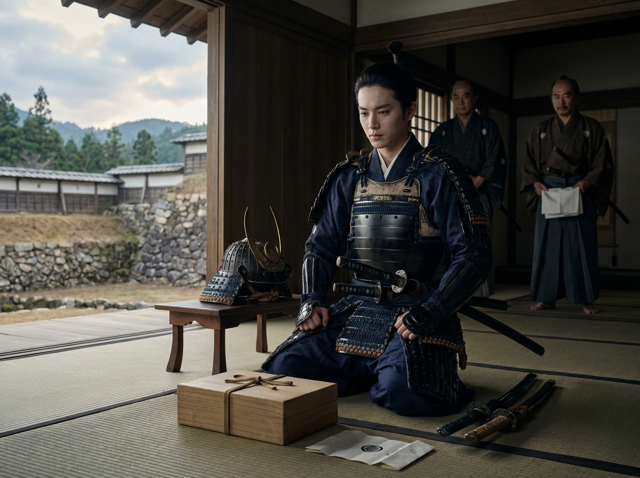
Matsudaira Nobuyasu was only twenty years old when his father ordered him to commit seppuku. The reason was not a defeat in battle, but a crisis inside the Tokugawa family that had become too dangerous to ignore.
-
Yamagata Masakage
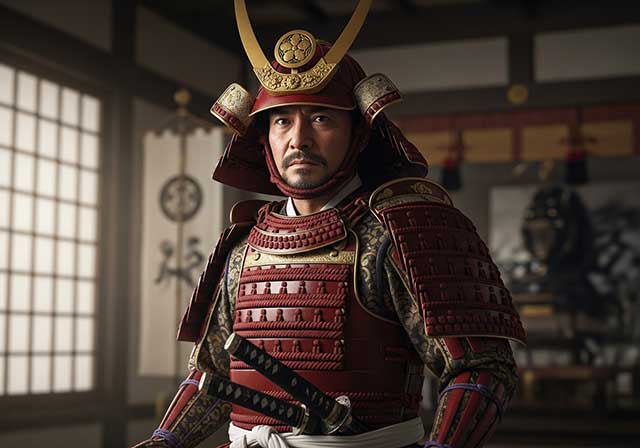
Masakage was one of Takeda Shingen’s most loyal and capable commanders. He was included in the famous list of the “Twenty-Four Generals of Takeda Shingen” and also belonged to the inner circle of four especially trusted warlords known as the Shitennō.
-
Yagyu Munenori
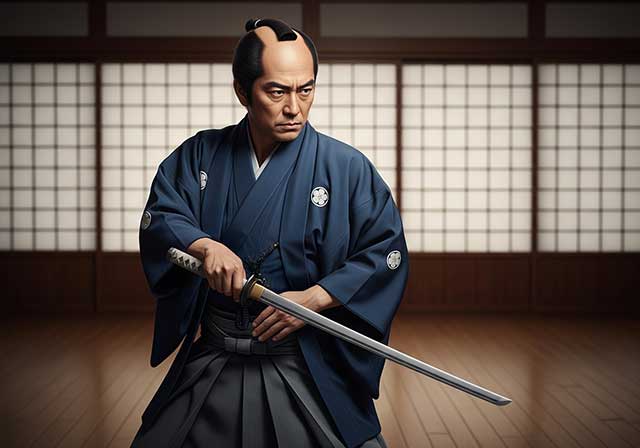
Yagyū Munenori began his service under Tokugawa Ieyasu while his father, Yagyū Muneyoshi, was still at his side. In 1600, Munenori took part in the decisive Battle of Sekigahara. As early as 1601, he was appointed a kenjutsu instructor to Tokugawa Hidetada, Ieyasu’s son, who later became the second shogun of the Tokugawa clan.
-
Yagyu Muneyoshi
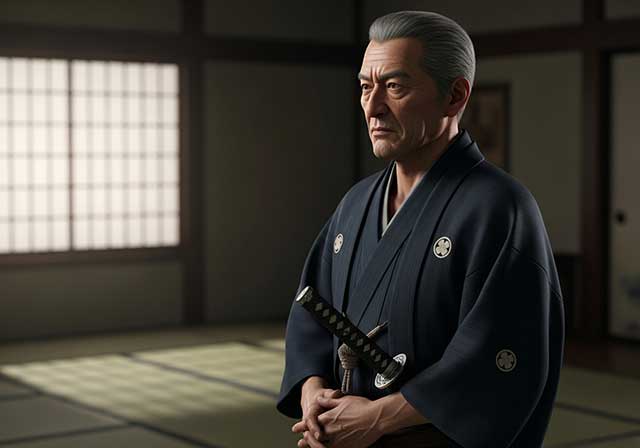
A samurai from Yamato Province, he was born into a family that had been defeated in its struggle against the Tsutsui clan. Muneyoshi first took part in battle at the age of sixteen. Due to circumstances beyond his control, he was forced to enter the service of the Tsutsui house and later served Miyoshi Tōkei. He subsequently came under the command of Matsunaga Hisahide and in time became a vassal first of Oda and later of Toyotomi.
-
Endo Naozune
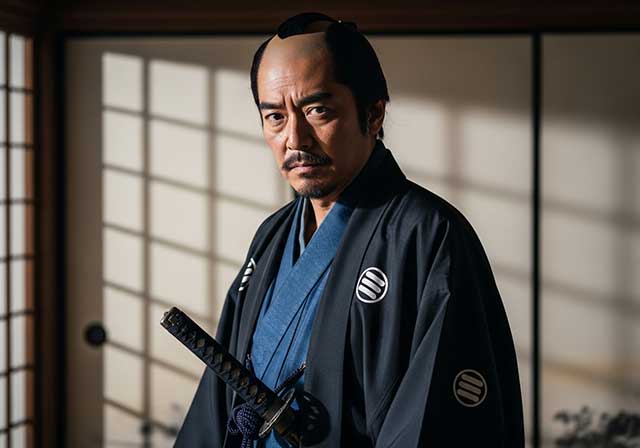
Naozune served under Azai Nagamasa and was one of the clan’s leading vassals, renowned for his bravery and determination. He accompanied Nagamasa during his first meeting with Oda Nobunaga and at that time asked for permission to kill Nobunaga, fearing him as an extremely dangerous man; however, Nagamasa did not grant this request.