


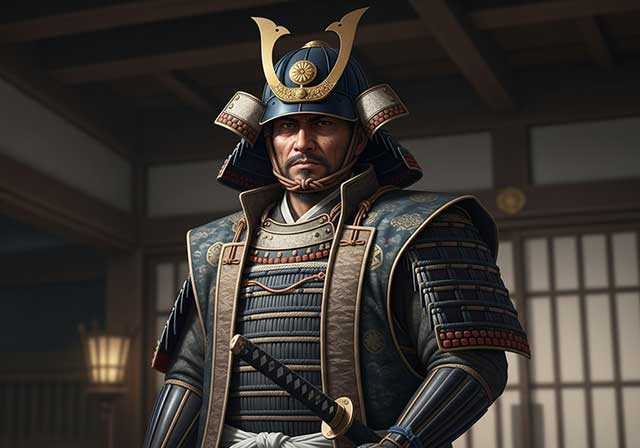
Hattori Hanzō, also known by the name Hattori Masanari, was the third son of Hattori Yasunaga, a samurai who served the Matsudaira clan. In his childhood he was called Tigachi Hanzō. His father held the highest rank in the shinobi hierarchy, that of jōnin, and Hanzō followed in his father’s footsteps, choosing the same path.
Although Hattori was born in Mikawa Province, which was the domain of the Matsudaira clan and later became the territory of the Tokugawa clan, he maintained close and extensive ties with Iga Province, which was considered the homeland of the Hattori clan.
In 1558, when Hanzō had not yet reached the age of sixteen, he proved himself a brave and skilled warrior during a nighttime attack on Udo Castle, located in Nishi District of Mikawa Province. That night, Hanzō led a detachment of approximately fifty to sixty shinobi saboteurs who secretly infiltrated the enemy stronghold, killed the guards, and set fire to the castle in several places, after which the enemy was forced to surrender. For this outstanding feat, Tokugawa Ieyasu rewarded Hanzō with a precious spear, which the descendants of the Hattori family preserve to this day as a sacred relic.
In 1562, Hanzō distinguished himself by rescuing Ieyasu’s daughters from Kaminogo Castle, where they were being held hostage. In January 1569, acting on Tokugawa’s orders, he captured Kakegawa Castle in Tōtōmi Province. During the fighting at the Battle of Anegawa in 1570 and at Mikatagahara in 1572, Hanzō, thanks to his exceptional abilities, accomplished many feats and displayed remarkable fearlessness, for which he received the nickname “Hanzō the Devil,” or Oni no Hanzō. He was regarded as a recognized master of military strategy and spear fighting.
In 1579, Hanzō was appointed as one of the assistants to Ieyasu’s eldest son, Tokugawa Nobuyasu, in carrying out ritual suicide; however, he was unable to carry out this task out of respect for Nobuyasu.
In 1582, after the death of Oda Nobunaga, Hanzō accompanied Tokugawa Ieyasu during his extremely dangerous escape from Sakai to Mikawa through provinces filled with the followers of the traitor Akechi Mitsuhide, who were hunting for Ieyasu. At Hanzō’s suggestion, their route passed through Iga Province, where he had many loyal and trustworthy associates. As a result, Ieyasu managed to reach Mikawa safely, unlike, for example, Anayama Baiketsu. Anayama Baiketsu, who had first served Takeda Shingen and later defected to Ieyasu, chose a different route to Mikawa and was ultimately killed by Mitsuhide’s men.
Thanks to his knowledge of the actions and intentions of various daimyō, as well as his outstanding talent as a military commander, Hattori Hanzō earned great respect from Tokugawa Ieyasu and was appointed head of the secret service, the ommitsu-gashira. While leading this service, Hanzō established positions known as “gardeners” (oniwa-ban) within Ieyasu’s castle, assigning the most experienced shinobi to these posts. These “gardeners” performed the duties of bodyguards and scouts, capable both of dealing with spies and of carrying out covert operations in enemy territory.
In 1590, Hanzō took part in the siege of Odawara Castle, the stronghold of the Hōjō clan, for which he was granted an estate in Tōtōmi Province with an annual income of eight thousand koku of rice.
After Tokugawa’s headquarters was moved in June of the same year to Edo, the future capital of Japan, Tokyo, Ieyasu, in gratitude for Hanzō’s loyalty, granted him the rank of hatamoto, that is, a direct vassal of the daimyō, increased his income by another eight thousand koku of rice, and bestowed upon him a residence located in front of one of the gates of Edo Castle. These gates later became known as Hanzō-mon, the “Hanzō Gate.” During this period, Hanzō had under his command one hundred and fifty yoriki police officers and three hundred dōshin guards. Around the same time, he accepted the honorary title of Iwami no Kami.
Hattori Hanzō died at the age of fifty-five in 1596. His heir was his son, Iwami no Kami Masanari. The name Masanari was written with different characters than his father’s name. The younger Masanari served as the head of security of Edo Castle and was killed in 1615 in battle with the defenders of Osaka Castle.
See also
-
Takeda Nobuyoshi
Takeda Nobuyoshi (1128–1186 or later) was a prominent Japanese samurai lord of the late Heian and early Kamakura periods and the founder of the Takeda clan.
-
Tokugawa Iemochi

Tokugawa Iemochi (1846–1866) was the fourteenth shōgun of the Tokugawa shogunate and ruled from 1858 until his death. His reign came during the turbulent final years of the shogunate, when Japan faced growing Western pressure and serious internal political conflict.
-
Tokugawa Ienari
Tokugawa Ienari (1773–1841) was the eleventh shōgun of the Tokugawa shogunate and ruled from 1787 to 1837, making him the longest-serving Tokugawa shōgun. He was a great-grandson of the eighth shōgun, Tokugawa Yoshimune.
-
Matsudaira Nobuyasu
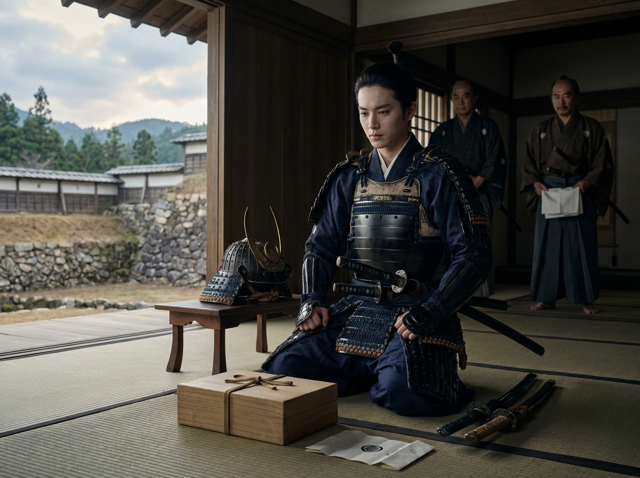
Matsudaira Nobuyasu was only twenty years old when his father ordered him to commit seppuku. The reason was not a defeat in battle, but a crisis inside the Tokugawa family that had become too dangerous to ignore.
-
Yamagata Masakage
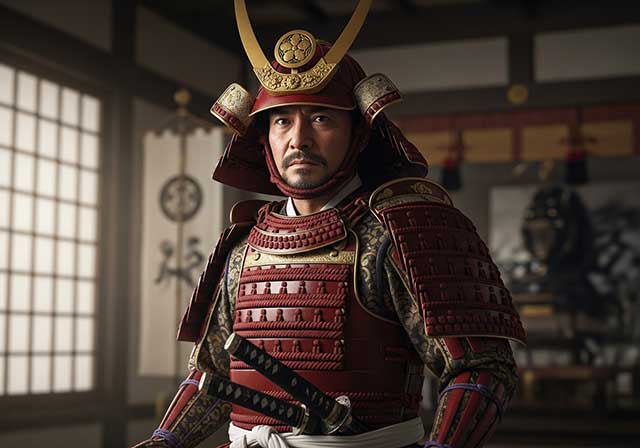
Masakage was one of Takeda Shingen’s most loyal and capable commanders. He was included in the famous list of the “Twenty-Four Generals of Takeda Shingen” and also belonged to the inner circle of four especially trusted warlords known as the Shitennō.
-
Yagyu Munenori
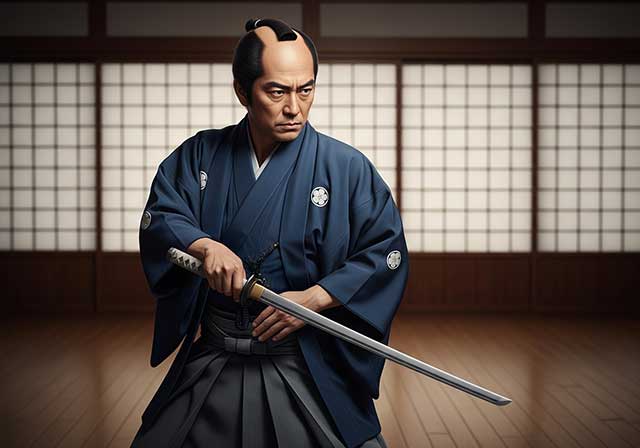
Yagyū Munenori began his service under Tokugawa Ieyasu while his father, Yagyū Muneyoshi, was still at his side. In 1600, Munenori took part in the decisive Battle of Sekigahara. As early as 1601, he was appointed a kenjutsu instructor to Tokugawa Hidetada, Ieyasu’s son, who later became the second shogun of the Tokugawa clan.
-
Yagyu Muneyoshi
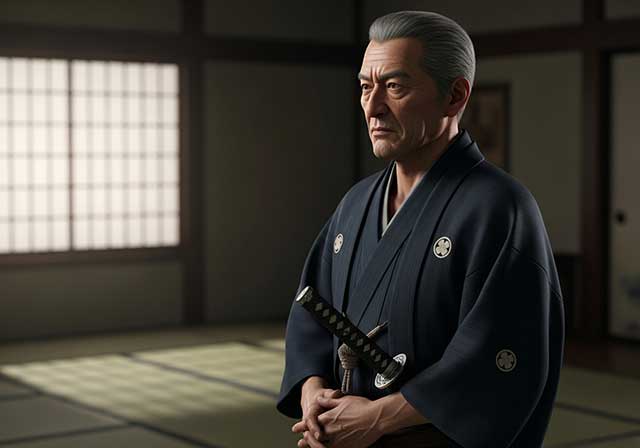
A samurai from Yamato Province, he was born into a family that had been defeated in its struggle against the Tsutsui clan. Muneyoshi first took part in battle at the age of sixteen. Due to circumstances beyond his control, he was forced to enter the service of the Tsutsui house and later served Miyoshi Tōkei. He subsequently came under the command of Matsunaga Hisahide and in time became a vassal first of Oda and later of Toyotomi.
-
Endo Naozune
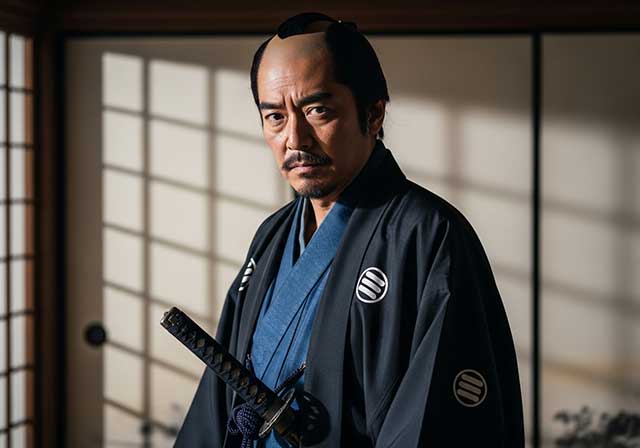
Naozune served under Azai Nagamasa and was one of the clan’s leading vassals, renowned for his bravery and determination. He accompanied Nagamasa during his first meeting with Oda Nobunaga and at that time asked for permission to kill Nobunaga, fearing him as an extremely dangerous man; however, Nagamasa did not grant this request.