


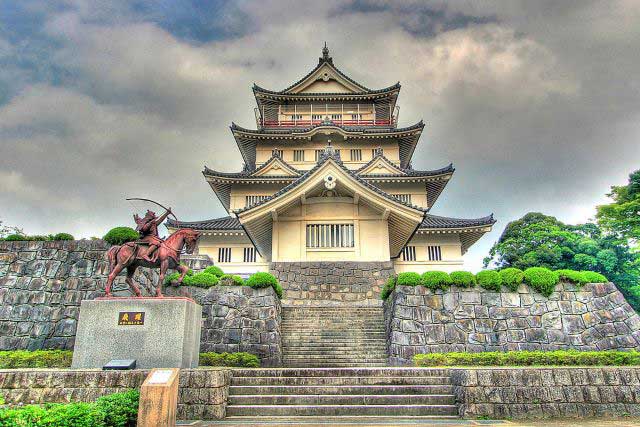
The founder of the Chiba clan is considered to be Chiba Tsunesige (1083–1180), who in 1126 moved his residence to the Inohana area and built a strongly fortified stronghold there. Although Tsunesige himself came from the Taira clan, the Chiba clan later supported Minamoto no Yoritomo, the future founder of the first shogunate.
Tsunesige’s son and successor, Chiba Tsunetane (1118–1201), fought on the Minamoto side during the Genpei War, taking part in particular in the Battle of Fujikawa in 1180 and the Battle of Ichinotani in 1184.
For their contributions to the establishment of the Kamakura shogunate, the Chiba clan was granted the provinces of Shimosa and Kazusa. During the Kamakura period, the Chiba were regarded as one of the most powerful and influential clans. In the Muromachi period, alongside houses such as the Utsunomiya and Satake, they were counted among the “Eight Traditional Clans of the Kanto Region.”
Nearly every new lord of Chiba Castle expanded and strengthened it, and as a result the castle became one of the most formidable fortresses of its time.
However, internal conflicts within the clan gradually weakened the Chiba house and ultimately led to its decline in the mid-fifteenth century. During the so-called Kyotoku Incident—a series of armed clashes from 1454 to 1482 over control of the Kanto region among the Ashikaga, Uesugi, and other clans—Chiba Castle was attacked in 1455 by the forces of Hara Tanefusa, a former vassal of the Chiba clan.
In the same year, another blow was dealt to the Chiba clan by Makuwari Yasutane of a related family. He defeated the remaining heirs of the Chiba clan, took the Chiba surname for himself, and proclaimed himself the fourteenth head of the Chiba house. He built a new castle, Motosakura Castle, in the nearby town of Sakura. Chiba Castle was abandoned, and today only traces of earthen fortifications remain.
The history of the castle remains a subject of debate among modern scholars. According to another theory, Chiba Castle was originally founded by the Hara clan, while the Chiba maintained only a small fortified residence nearby.
In 1861, the ruins of Chiba Castle were selected as one of the “Eight Scenic Views of Chiba.” In 1909, the site was opened to the public, and in 1959 the “Inohana Historical Park” was established on the site of the ruins.
In 1967, a massive five-story donjon made of reinforced concrete was built in Inohana Park. It has no connection to the historical castle, as towers of this type did not yet exist in the fifteenth century. It should be noted that, unlike many other so-called bastard castles, this structure is honestly designated by the city authorities as a “historical museum in the form of a medieval castle,” rather than a reconstruction. In other words, the local community is not attempting to capitalize on the claim of having reconstructed a historical castle, and such honesty can only be praised.
The museum houses a solid collection of artifacts, and the observation deck on the fifth floor offers an excellent view of the surrounding area—on clear days, even Mount Fuji can be seen.
The castle complex is designated as a “municipal historical site.” Another name for the castle is Inohana.
See also
-
Arato Castle
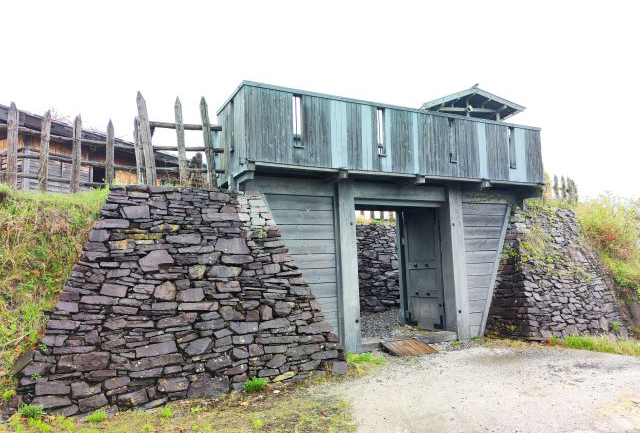
Arato Castle was built in 1524 by the Yamada clan under the orders of their overlord, Murakami, as a small mountain fort. Over time, it gained strategic importance and became a focal point in the conflict between two famous daimyō of the Sengoku period — Takeda Shingen and Murakami Yoshikiyo. This conflict turned the castle into one of the key fortifications in the struggle for control over Shinano Province.
-
Tatsuno Castle
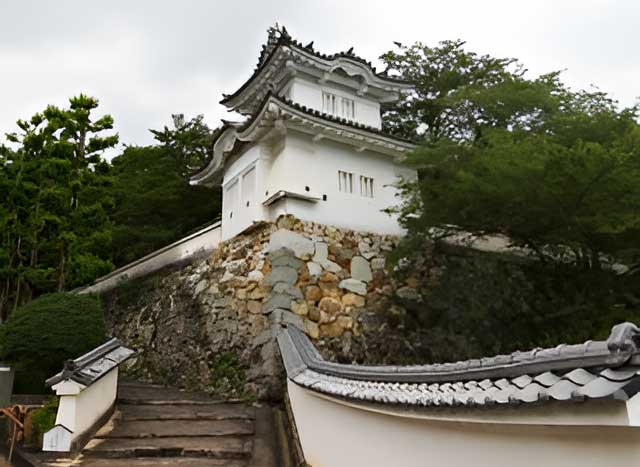
Tatsuno Castle is not a single fortification but rather a complex consisting of two parts: a mountain fortress located at the summit of Mount Keirozan and a flatland-mountain castle situated at its base. The mountain stronghold was built around 1499 by Akamatsu Murahide. During the Muromachi period, the Akamatsu clan was an influential family that, at the height of its power, controlled the provinces of Settsu, Harima, Bizen, and Mimasaka. Murahide’s ancestors were directly involved in the events of the Genkō War in the 14th century and in the subsequent establishment of the Ashikaga shogunate. However, by the 15th century, due to the process of gekokujō, the clan began to lose its position under pressure from rising families, including their former vassals—the Urakami and Bessho clans. In addition, the Akamatsu faced constant pressure from the Amago clan of Izumo Province.
-
Takamatsu Castle
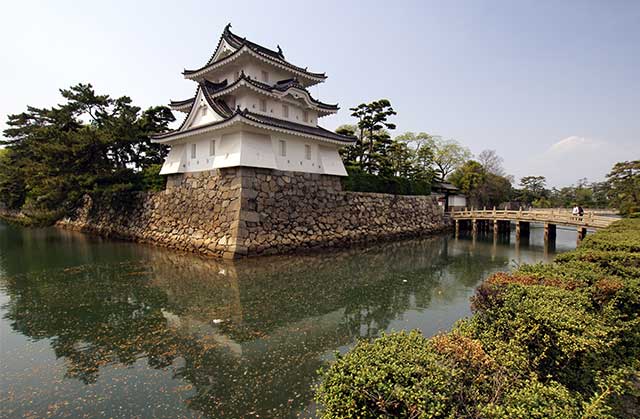
Takamatsu Castle was founded by Ikoma Chikamasa (1526–1603), who was appointed ruler of Takamatsu by Toyotomi Hideyoshi in 1587. The following year, Chikamasa began construction of the castle on the coast of the Inland Sea (Setonaikai), completing it by 1590.
-
Sawayama Castle
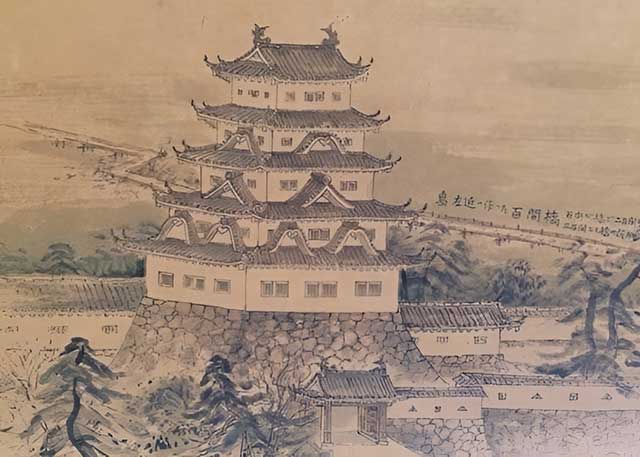
During the Kamakura period, Sabo Tokitsuna, the sixth son of Sasaki Sadatsuna, built a fort on Mount Sawayama. This fort occupied a strategically important position because it allowed control over traffic along the important Tōsandō route, which was later known as Nakasendō. This road connected the capital, Kyoto, with the eastern regions of the country. Due to its location, the fortification held great military importance, and during periods of civil war it repeatedly became the site of fierce battles.
-
Nadzima Castle
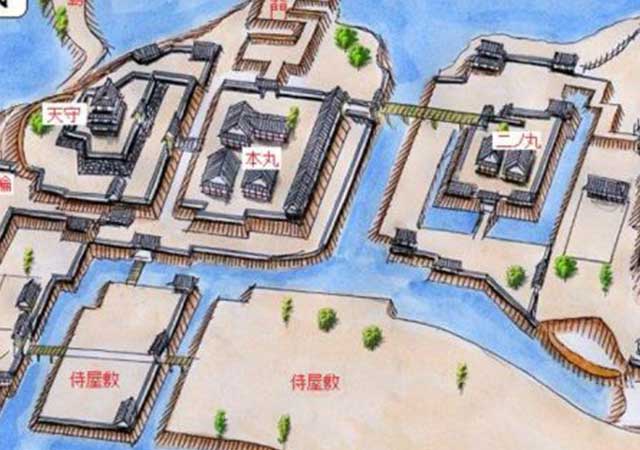
It is believed that the first structures on this site were built by Tachibana Akitoshi (?-1568), head of the Tachibana clan, a branch family of the Ōtomo clan, as auxiliary fortifications for Tachibanayama Castle. In 1587, Toyotomi Hideyoshi established control over the island of Kyushu and granted Chikuzen Province to Kobayakawa Takakage, one of the leading vassals of the Mori clan. Takakage began construction of a new castle on the site of the existing fortifications in 1588. The exact date of completion is unknown, but by the time the invasion of Korea began in 1592, the castle had already been finished, as records note that Toyotomi Hideyoshi stayed there overnight on his way to Hizen Nagoya Castle, which served as the headquarters of the invasion forces.
-
Kubota Castle
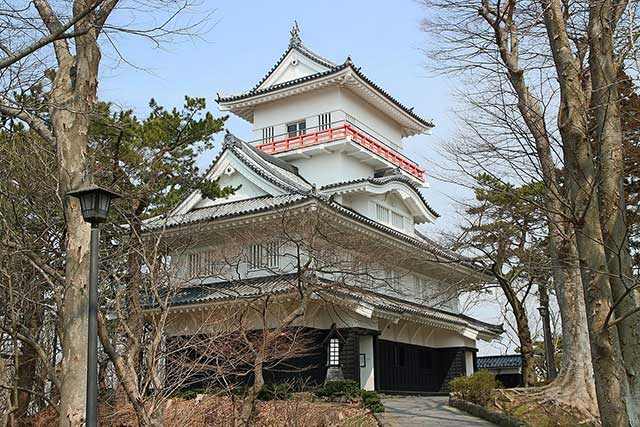
The founder of the castle is considered to be Satake Yoshinobu (1570–1633). Yoshinobu was one of the six great generals of Toyotomi Hideyoshi. During the Odawara Campaign of 1590, he took part in the siege of Oshi Castle under the command of Ishida Mitsunari, with whom Yoshinobu developed a good relationship.
-
Kavanhoe Castle
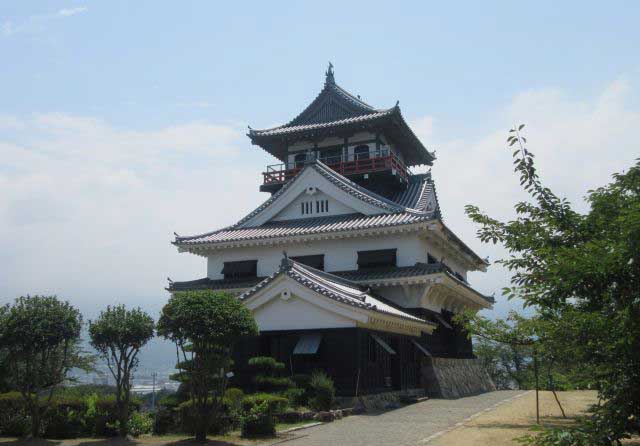
Kawanoe Castle is located on the small Wasi-yama hill near the port area of the Kawanoe district in the city of Shikokuchuo, occupying a central position along the northern coast of Shikoku Island. Kawanoe was also known as Butsuden Castle. The term “butsuden” in Japan refers to temple halls, and for this reason it is believed that a Buddhist temple once stood on the site before the castle was built. Due to its location at the junction of four provinces on Shikoku Island, Kawanoe held significant strategic importance and was repeatedly targeted by rival forces seeking military control over the region.
-
Yokote Castle
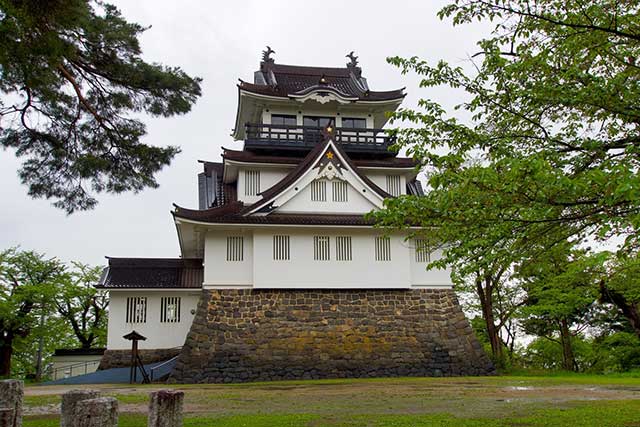
The founder of the castle is considered to be the Onodera clan. The Onodera were originally a minor clan from Shimotsuke Province and served Minamoto no Yoritomo (1147–1199), the founder of the first shogunate. The Onodera distinguished themselves in battle against the Fujiwara clan of the Ōshū branch and were rewarded with lands around Yokote. Around the 14th century, the Onodera moved to Yokote as their permanent residence. Their original stronghold was Numadate Castle, but after a series of clashes with the powerful Nambu clan, they relocated their base to the site of present-day Yokote Castle. It was likely during this time that the first fortifications appeared at the castle.