

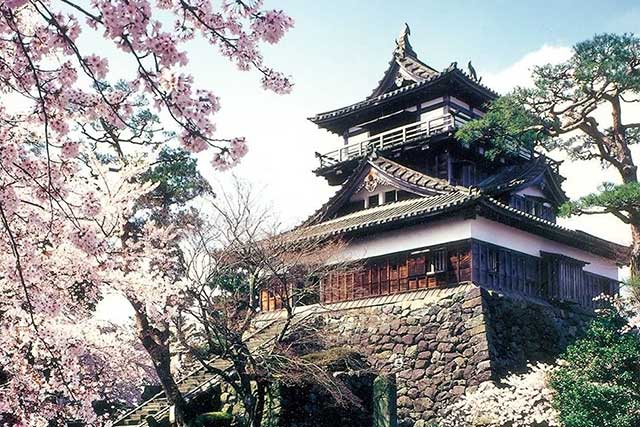
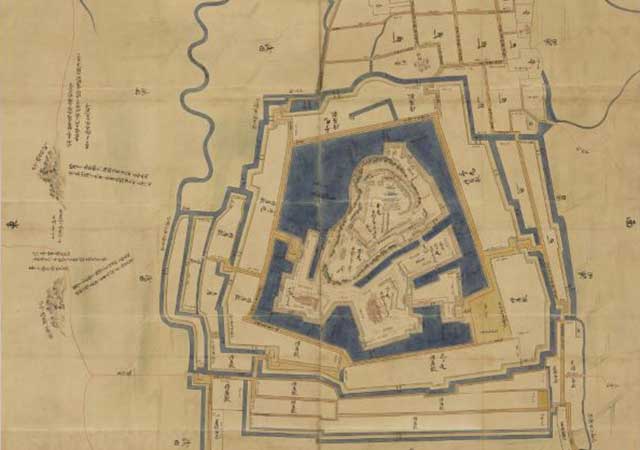
Maruoka Castle is located in the central part of the former city of Maruoka, which is now part of the city of Sakai. This area lies in the northeastern part of Fukui Prefecture. The castle was built on the bank of the Kuzuryu River, on the side opposite Fukui City, which once served as the administrative center of the former Echizen Province. Thanks to its location, Maruoka held significant strategic importance, as it controlled two major routes at once: the Hokurikudo highway leading from Kaga Province and the Mino Kaido road connecting these lands with Mino Province.
The first fortification on this site appeared at the beginning of the 16th century. It was built by one of the vassals of the Ogasawara clan, which at that time ruled Echizen Province. However, during the prolonged and bloody wars of the Sengoku period, the castle was completely destroyed and ceased to exist for some time.
In 1575, Oda Nobunaga, regarded as Japan’s first unifier, crushed the resistance of the Ikko-ikki religious leagues and captured Echizen Province. He then entrusted control of these lands to his general Shibata Katsuie (1521–1583). Katsuie established his residence at Kitanosho Castle in Fukui City and appointed his nephew and adopted son, Shibata Katsutoyo, as provincial governor.
At first, Katsutoyo intended to restore the mountain castle of Toyohara, which had previously belonged to the Ikko-ikki. However, he encountered serious difficulties transporting building materials into the mountainous area. As a result, he decided to construct a new castle at Maruoka. Construction began in 1576 and continued for nearly two decades.
Legends Associated with the Construction of the Castle
Several well-known legends are connected with Maruoka Castle. One of them dates back to the construction of the donjon. For a long time, the foundation of the main tower could not be made stable: the stones would not hold, and the masonry kept collapsing. The builders then decided to resort to the ancient ritual of hitobashira, which literally means “human pillar.” This custom involved human sacrifice, in which a person was buried alive within one of the supports of the future structure in order to appease the spirits and ensure the building’s stability. Such rituals existed not only in Japan but also in China and other parts of Asia. As a rule, people agreed to such a sacrifice voluntarily, guided by religious beliefs. In Maruoka, the role was taken by a one-eyed widow whose son was working on the castle’s construction.
Another legend is connected with the castle’s second name, Kasumigajo, meaning “Castle of Mist.” According to legend, once when a large army attempted to storm the fortress, a gigantic snake appeared and breathed out a thick mist that protected the castle. It is said that ever since then, whenever enemies tried to locate and capture Maruoka, it was always concealed by a dense fog.
The Meiji Reforms and the Loss of the Castle Buildings
In 1871, the Meiji government issued an edict ordering the dismantling of samurai castles, regarding them as “relics of feudalism.” Almost all of the structures of Maruoka Castle were taken apart, and only the donjon survived. For some time it remained the property of the Arima clan, but in 1901 it was purchased by the municipal government of Maruoka.
On June 28, 1948, one of the most powerful earthquakes in Japan’s history struck Fukui Prefecture. As a result of the destruction, 3,769 people lost their lives, and many buildings were destroyed. The donjon of Maruoka Castle also failed to withstand the disaster and collapsed.
Restoration work was completed by 1955. More than 80 percent of the materials from the original tower were reused during reconstruction, allowing the authorities to classify the donjon as authentic. However, a number of experts dispute this authenticity, since some elements were reused for different purposes than originally intended; for example, certain former columns were repurposed as beams.
For a long time, it was believed that the donjon of Maruoka had survived unchanged since the time of Shibata Katsutoyo’s construction. This belief allowed Maruoka to claim the title of the oldest surviving castle in Japan, competing with Inuyama and Matsumoto castles.
However, studies conducted in recent years at the request of the Sakai city administration have seriously challenged this view. According to a report published on March 26, 2019, chemical and isotopic analyses showed that the main wooden structures date to the 1620s. One theory suggests that the castle was completely rebuilt around 1628, while another holds that only the upper floors were reconstructed in the 1620s.
Architectural Features of the Donjon
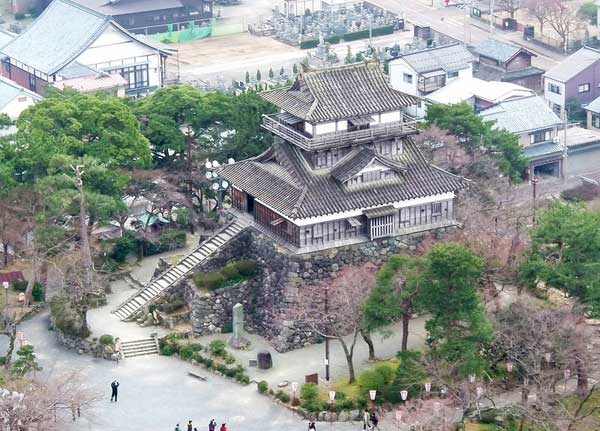
The donjon of Maruoka Castle belongs to the simplest architectural type, known as dokuritsushiki, in which the main tower stands alone and is not connected to other buildings. It rises on a hill in the middle of a relatively flat plain and takes the form of a two-tiered, three-story tower approximately 33 meters high.
Unlike most Japanese castles, whose roofs are covered with terracotta tiles, Maruoka’s roof is made of stone tiles. This choice is explained by the fact that stone better withstands the sharp temperature fluctuations characteristic of this region of Japan. The donjon is considered the oldest surviving tower with an observation deck on the top floor. In terms of size and interior layout, it closely resembles the donjon of Inuyama Castle.
The moat that surrounded the two main courtyards of the castle had a pentagonal shape. It was filled in during the Meiji period, but the current city administration is considering plans to restore it. The outer moats have only partially survived and today exist in the form of city canals.
Cultural Heritage Status
Since 1950, the donjon of Maruoka Castle has been designated an Important Cultural Property. In 2013, the Sakai city administration established a special organization aimed at obtaining National Treasure status for the castle. As of today, only five castles in Japan hold this designation. A strong argument in Maruoka’s favor is the fact that it was already recognized as a National Treasure in 1934. In addition, in 2006 the Japan Castle Association included Maruoka Castle in its list of the “100 Fine Castles of Japan.”
Several other surviving structures associated with Maruoka Castle were relocated to different locations in the 19th century. One of the gates was moved to the grounds of a private residence in the former castle town. Two other gates are located at Kozenji Temple in Komatsu City and Renshoji Temple in Awara City.
Today, a public park occupies the castle grounds. At the foot of the hill stands a small museum dedicated to the history of the owners of Maruoka Castle.
More than 400 cherry blossom trees are planted in the park surrounding the castle. The traditional hanami festival, dedicated to viewing cherry blossoms, is held during the first three weeks of April. During this period, the blooming trees are illuminated in the evenings by approximately 300 paper lanterns. In 1990, the park was included in the list of the top 100 places in Japan for cherry blossom viewing.
See also
-
Arato Castle
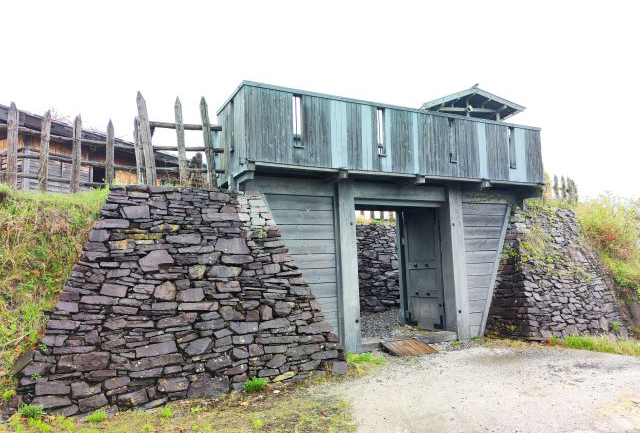
Arato Castle was built in 1524 by the Yamada clan under the orders of their overlord, Murakami, as a small mountain fort. Over time, it gained strategic importance and became a focal point in the conflict between two famous daimyō of the Sengoku period — Takeda Shingen and Murakami Yoshikiyo. This conflict turned the castle into one of the key fortifications in the struggle for control over Shinano Province.
-
Tatsuno Castle
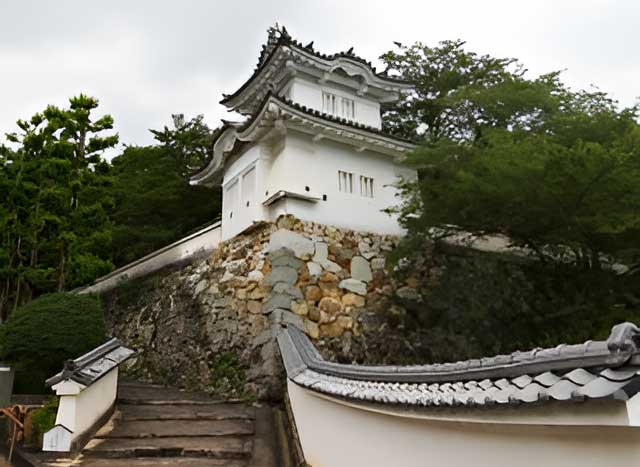
Tatsuno Castle is not a single fortification but rather a complex consisting of two parts: a mountain fortress located at the summit of Mount Keirozan and a flatland-mountain castle situated at its base. The mountain stronghold was built around 1499 by Akamatsu Murahide. During the Muromachi period, the Akamatsu clan was an influential family that, at the height of its power, controlled the provinces of Settsu, Harima, Bizen, and Mimasaka. Murahide’s ancestors were directly involved in the events of the Genkō War in the 14th century and in the subsequent establishment of the Ashikaga shogunate. However, by the 15th century, due to the process of gekokujō, the clan began to lose its position under pressure from rising families, including their former vassals—the Urakami and Bessho clans. In addition, the Akamatsu faced constant pressure from the Amago clan of Izumo Province.
-
Takamatsu Castle
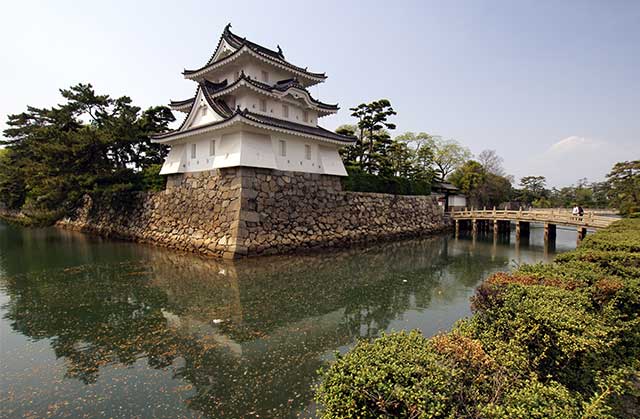
Takamatsu Castle was founded by Ikoma Chikamasa (1526–1603), who was appointed ruler of Takamatsu by Toyotomi Hideyoshi in 1587. The following year, Chikamasa began construction of the castle on the coast of the Inland Sea (Setonaikai), completing it by 1590.
-
Sawayama Castle
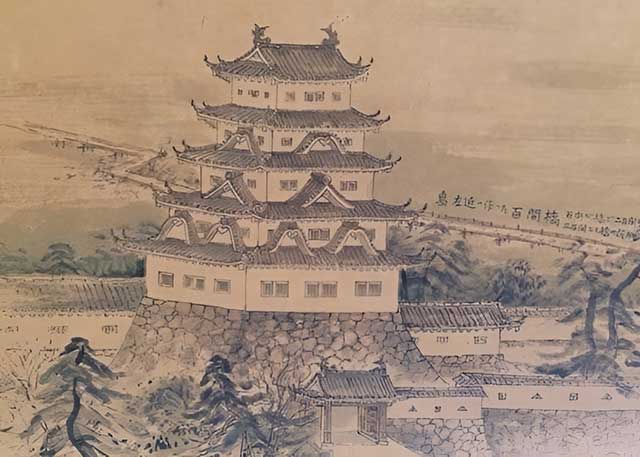
During the Kamakura period, Sabo Tokitsuna, the sixth son of Sasaki Sadatsuna, built a fort on Mount Sawayama. This fort occupied a strategically important position because it allowed control over traffic along the important Tōsandō route, which was later known as Nakasendō. This road connected the capital, Kyoto, with the eastern regions of the country. Due to its location, the fortification held great military importance, and during periods of civil war it repeatedly became the site of fierce battles.
-
Nadzima Castle
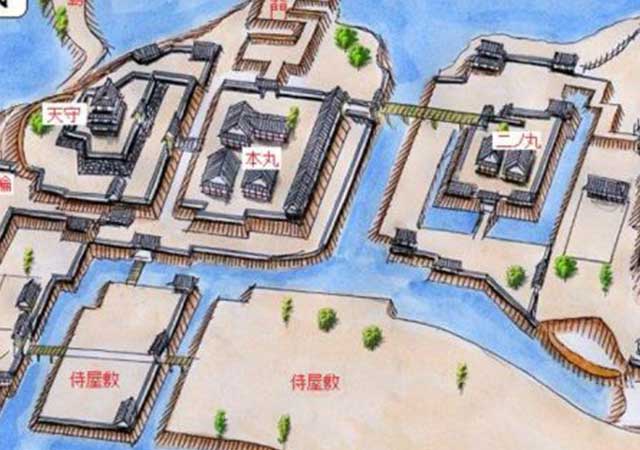
It is believed that the first structures on this site were built by Tachibana Akitoshi (?-1568), head of the Tachibana clan, a branch family of the Ōtomo clan, as auxiliary fortifications for Tachibanayama Castle. In 1587, Toyotomi Hideyoshi established control over the island of Kyushu and granted Chikuzen Province to Kobayakawa Takakage, one of the leading vassals of the Mori clan. Takakage began construction of a new castle on the site of the existing fortifications in 1588. The exact date of completion is unknown, but by the time the invasion of Korea began in 1592, the castle had already been finished, as records note that Toyotomi Hideyoshi stayed there overnight on his way to Hizen Nagoya Castle, which served as the headquarters of the invasion forces.
-
Kubota Castle
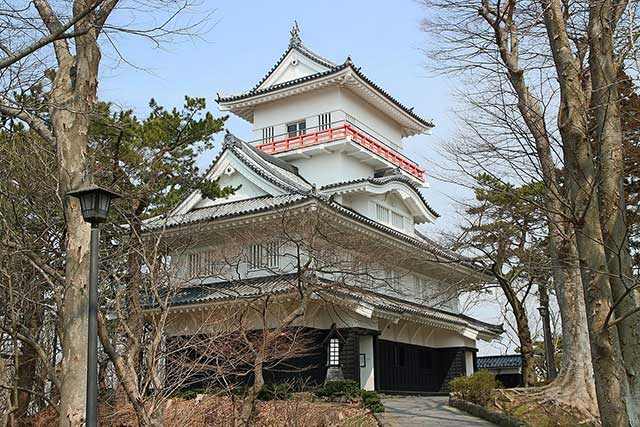
The founder of the castle is considered to be Satake Yoshinobu (1570–1633). Yoshinobu was one of the six great generals of Toyotomi Hideyoshi. During the Odawara Campaign of 1590, he took part in the siege of Oshi Castle under the command of Ishida Mitsunari, with whom Yoshinobu developed a good relationship.
-
Kavanhoe Castle
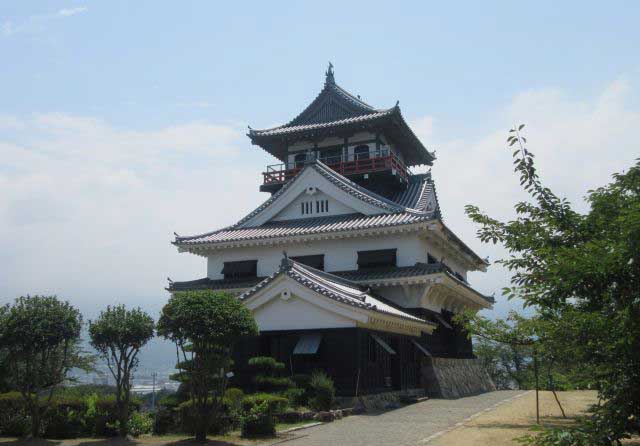
Kawanoe Castle is located on the small Wasi-yama hill near the port area of the Kawanoe district in the city of Shikokuchuo, occupying a central position along the northern coast of Shikoku Island. Kawanoe was also known as Butsuden Castle. The term “butsuden” in Japan refers to temple halls, and for this reason it is believed that a Buddhist temple once stood on the site before the castle was built. Due to its location at the junction of four provinces on Shikoku Island, Kawanoe held significant strategic importance and was repeatedly targeted by rival forces seeking military control over the region.
-
Yokote Castle
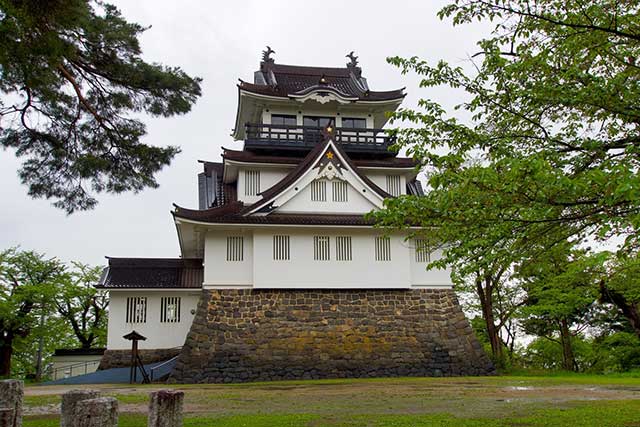
The founder of the castle is considered to be the Onodera clan. The Onodera were originally a minor clan from Shimotsuke Province and served Minamoto no Yoritomo (1147–1199), the founder of the first shogunate. The Onodera distinguished themselves in battle against the Fujiwara clan of the Ōshū branch and were rewarded with lands around Yokote. Around the 14th century, the Onodera moved to Yokote as their permanent residence. Their original stronghold was Numadate Castle, but after a series of clashes with the powerful Nambu clan, they relocated their base to the site of present-day Yokote Castle. It was likely during this time that the first fortifications appeared at the castle.