


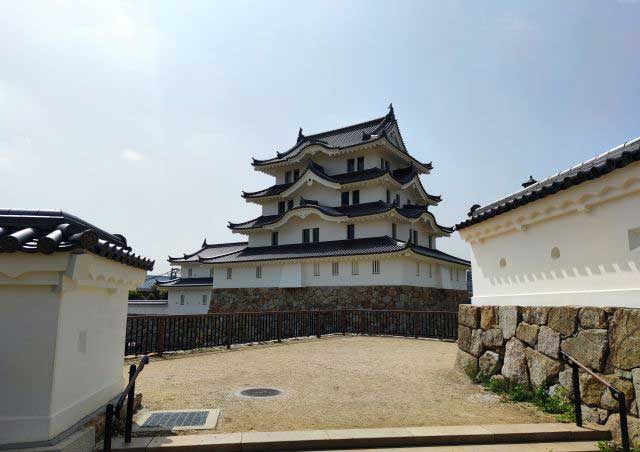
The founding year of Amagasaki Castle is traditionally considered to be 1617, when Toda Ujikané built his castle here, making it the administrative center of the Amagasaki Domain. However, as early as the Sengoku period, a fortress built by the Hosokawa clan already stood on this site. After the fall of Itami Castle in 1579, Araki Murashige—formerly a vassal of Oda Nobunaga who had rebelled against him—fled to this earlier castle.
Because Amagasaki Castle was constructed during the peaceful Edo period, it was never subjected to military attacks. After Toda Ujikané, ownership of the castle passed to the Aoyama clan in 1635, and from 1711 until the end of the Edo period it was held by the Sakurai branch of the Matsudaira clan.
Throughout its history, Amagasaki suffered repeatedly from fires. In 1846, the palace of the main bailey, the Hommaru Goten, was completely destroyed by fire, but it was later rebuilt.
In 1873, in accordance with an edict issued by the new Meiji government, the castle was dismantled. All of its buildings were put up for auction, with merchants from Osaka becoming the main buyers. The structures were taken apart and transported elsewhere, but their subsequent fate is now unknown. Stones from the castle walls were reused in the construction of a breakwater in Osaka Bay.
Part of the daimyō’s residence survived and was used as the main hall of Shinshō-in Temple, but it was destroyed during the air raids of 1945.
Amagasaki Castle occupied a strategically advantageous position between the Omotsugawa and Shōgegawa rivers, which flowed into Osaka Bay. After construction was completed, ships from the bay could enter the castle directly via the rivers and moats.
Amagasaki consisted of several baileys separated by wide water-filled moats known as mizubori and stone walls called ishigaki. The castle had its own four-story tenshu donjon located at a corner of the main bailey, several two-story yagura turrets, and three additional three-story towers positioned at the corners of the main hommaru bailey. The hommaru itself was square in shape, with sides measuring approximately 115 meters. Three bridges led into the main bailey, each controlled by masugata barbicans.
Today, the site of the former main hommaru bailey is occupied by the buildings of Meijō Municipal Elementary School. Most of the other baileys have been lost to urban development. Only a small northern section of the former castle grounds is now preserved as part of Amagasaki Castle Ruins Park. The city board of education has conducted archaeological excavations at the castle ruins more than twenty times, and the artifacts that were discovered are displayed in the city’s historical museum.
In 2015, a local entrepreneur established a foundation with the goal of reconstructing the castle’s donjon. Part of the necessary funding was raised through donations from local residents. Construction work began in 2016 and was completed in 2019. In addition to the donjon, sections of stone ishigaki walls and earthen dobei walls were also built.
Although the reconstructed donjon generally resembles the main tower depicted in surviving plans, it is considered a so-called “fake” reconstruction, as it was not built on the original site of the historical donjon—it stands instead in the area of the former Nishi-sannomaru bailey—differs in several details from the original, and is made of reinforced concrete. This last point in particular has drawn criticism in light of the growing movement in Japan to replace postwar reinforced-concrete “reconstructions” of donjons with more authentic wooden structures.
The interior of the donjon houses informational displays on the history of the castle and the region, as well as various installations and interactive exhibition areas.
See also
-
Arato Castle
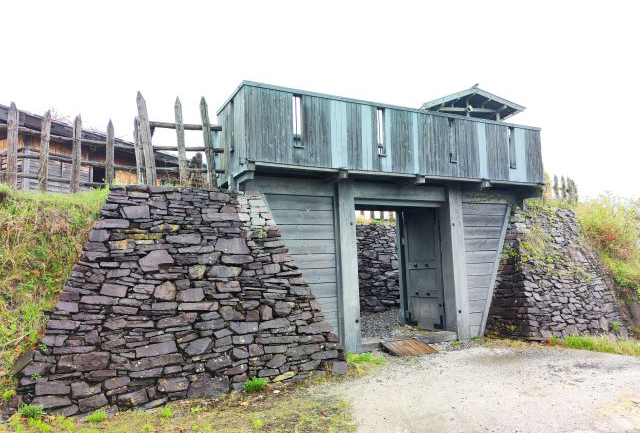
Arato Castle was built in 1524 by the Yamada clan under the orders of their overlord, Murakami, as a small mountain fort. Over time, it gained strategic importance and became a focal point in the conflict between two famous daimyō of the Sengoku period — Takeda Shingen and Murakami Yoshikiyo. This conflict turned the castle into one of the key fortifications in the struggle for control over Shinano Province.
-
Tatsuno Castle
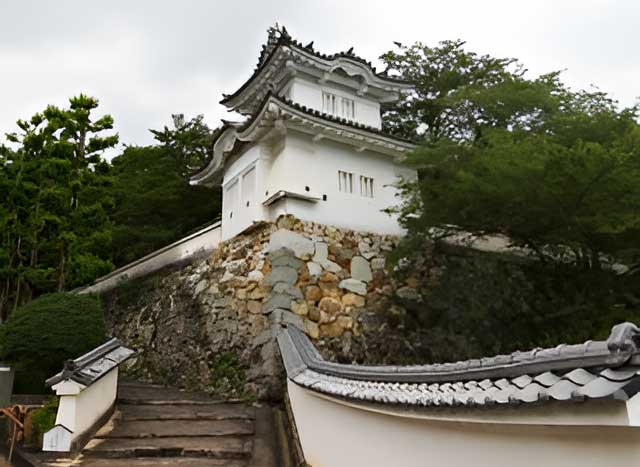
Tatsuno Castle is not a single fortification but rather a complex consisting of two parts: a mountain fortress located at the summit of Mount Keirozan and a flatland-mountain castle situated at its base. The mountain stronghold was built around 1499 by Akamatsu Murahide. During the Muromachi period, the Akamatsu clan was an influential family that, at the height of its power, controlled the provinces of Settsu, Harima, Bizen, and Mimasaka. Murahide’s ancestors were directly involved in the events of the Genkō War in the 14th century and in the subsequent establishment of the Ashikaga shogunate. However, by the 15th century, due to the process of gekokujō, the clan began to lose its position under pressure from rising families, including their former vassals—the Urakami and Bessho clans. In addition, the Akamatsu faced constant pressure from the Amago clan of Izumo Province.
-
Takamatsu Castle
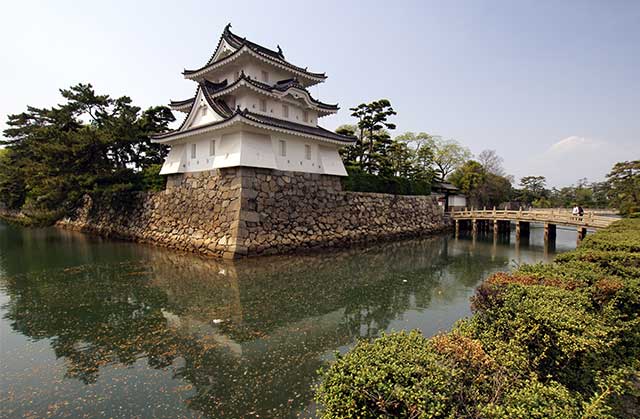
Takamatsu Castle was founded by Ikoma Chikamasa (1526–1603), who was appointed ruler of Takamatsu by Toyotomi Hideyoshi in 1587. The following year, Chikamasa began construction of the castle on the coast of the Inland Sea (Setonaikai), completing it by 1590.
-
Sawayama Castle
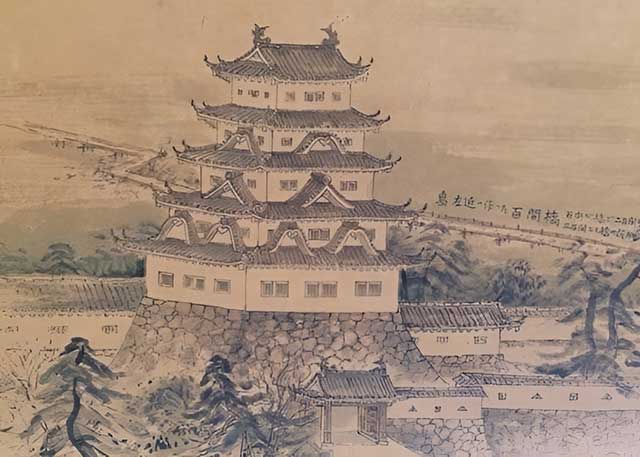
During the Kamakura period, Sabo Tokitsuna, the sixth son of Sasaki Sadatsuna, built a fort on Mount Sawayama. This fort occupied a strategically important position because it allowed control over traffic along the important Tōsandō route, which was later known as Nakasendō. This road connected the capital, Kyoto, with the eastern regions of the country. Due to its location, the fortification held great military importance, and during periods of civil war it repeatedly became the site of fierce battles.
-
Nadzima Castle
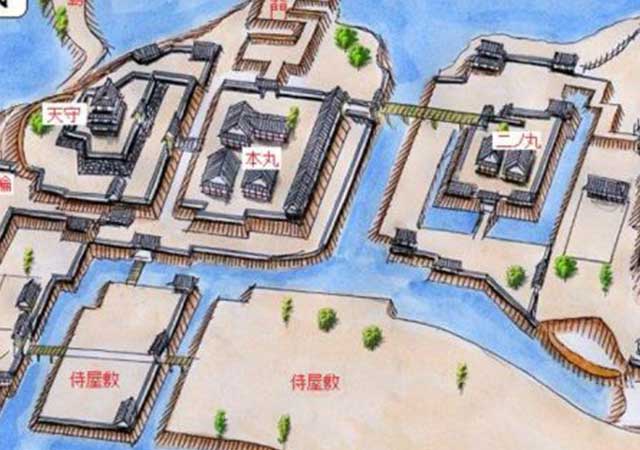
It is believed that the first structures on this site were built by Tachibana Akitoshi (?-1568), head of the Tachibana clan, a branch family of the Ōtomo clan, as auxiliary fortifications for Tachibanayama Castle. In 1587, Toyotomi Hideyoshi established control over the island of Kyushu and granted Chikuzen Province to Kobayakawa Takakage, one of the leading vassals of the Mori clan. Takakage began construction of a new castle on the site of the existing fortifications in 1588. The exact date of completion is unknown, but by the time the invasion of Korea began in 1592, the castle had already been finished, as records note that Toyotomi Hideyoshi stayed there overnight on his way to Hizen Nagoya Castle, which served as the headquarters of the invasion forces.
-
Kubota Castle
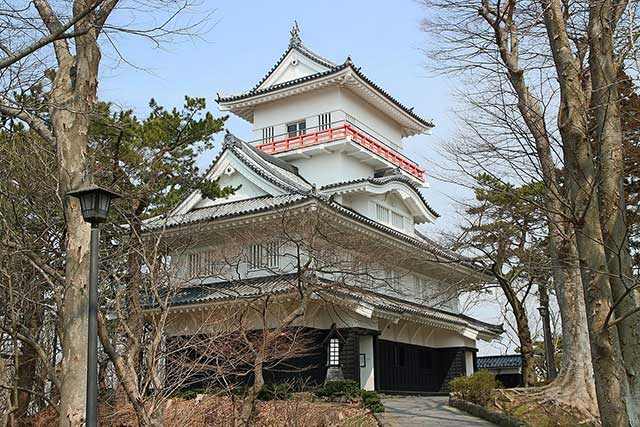
The founder of the castle is considered to be Satake Yoshinobu (1570–1633). Yoshinobu was one of the six great generals of Toyotomi Hideyoshi. During the Odawara Campaign of 1590, he took part in the siege of Oshi Castle under the command of Ishida Mitsunari, with whom Yoshinobu developed a good relationship.
-
Kavanhoe Castle
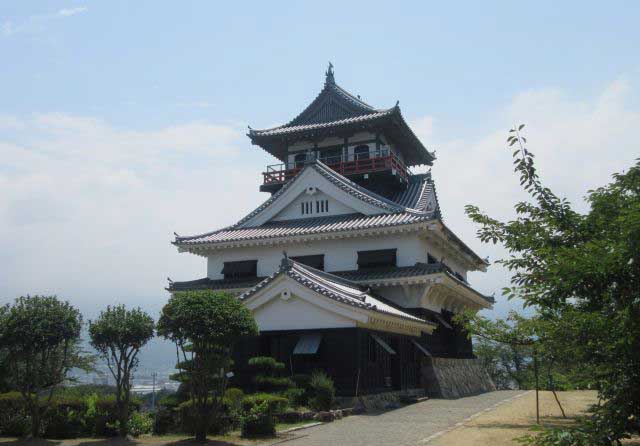
Kawanoe Castle is located on the small Wasi-yama hill near the port area of the Kawanoe district in the city of Shikokuchuo, occupying a central position along the northern coast of Shikoku Island. Kawanoe was also known as Butsuden Castle. The term “butsuden” in Japan refers to temple halls, and for this reason it is believed that a Buddhist temple once stood on the site before the castle was built. Due to its location at the junction of four provinces on Shikoku Island, Kawanoe held significant strategic importance and was repeatedly targeted by rival forces seeking military control over the region.
-
Yokote Castle
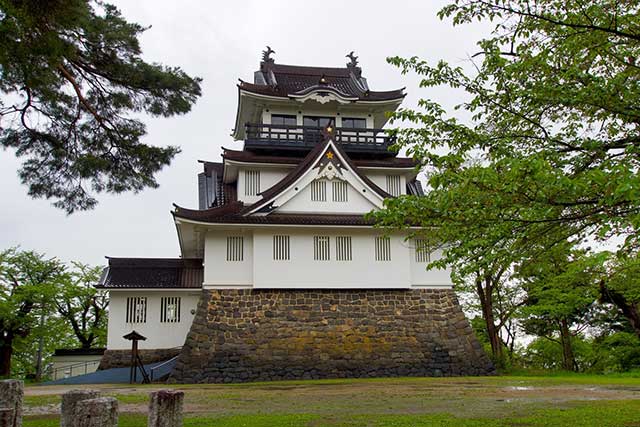
The founder of the castle is considered to be the Onodera clan. The Onodera were originally a minor clan from Shimotsuke Province and served Minamoto no Yoritomo (1147–1199), the founder of the first shogunate. The Onodera distinguished themselves in battle against the Fujiwara clan of the Ōshū branch and were rewarded with lands around Yokote. Around the 14th century, the Onodera moved to Yokote as their permanent residence. Their original stronghold was Numadate Castle, but after a series of clashes with the powerful Nambu clan, they relocated their base to the site of present-day Yokote Castle. It was likely during this time that the first fortifications appeared at the castle.