


Gozen is regarded as one of the few historically documented examples of true female warriors of feudal Japan, known as onna-musha or onna-bugeisha. Although Japanese history records countless women who at various times were forced to take up arms—for example, in defense of their castles—Tomoe Gozen was, without any doubt, a genuinely skilled and accomplished fighter. She was the wife of Kiso (Minamoto) Yoshinaka, although The Tale of the Heike describes her more as a female vassal. Yoshinaka rose in rebellion against the Taira clan and, in 1184, captured Kyoto after his victory at the Battle of Kurikawa. After the Taira were driven into the western provinces, Yoshinaka began insistently asserting that he alone was worthy of assuming leadership of the Minamoto clan and taking on the mantle of its head.
This behavior caused growing dissatisfaction and led Minamoto no Yoritomo to move against Yoshinaka. In the decisive confrontation, Yoshinaka and Gozen faced Yoritomo’s forces in the desperate and bloody Battle of Awazu, during which Gozen is said to have taken at least one enemy head.
The Tale of the Heike describes Tomoe Gozen in the following way: “…Tomoe was exceptionally beautiful, with snow-white skin, long hair, and refined, charming features. She was also a superb archer, and in sword combat she was worth a hundred warriors. She was ready to face demons or gods alike, on horseback or on foot. Tomoe possessed extraordinary skill in breaking the wildest horses and could descend steep mountain slopes without injury. In every battle, Yoshinaka always sent her forward as his foremost captain, clad in excellent armor and armed with a great sword and a powerful bow. And she always performed more feats of valor than anyone else in his army…”
The Tale of the Heike goes on to say that Gozen was among the five last survivors of the Battle of Awazu, and that Yoshinaka, sensing that his death was near, ordered her to flee. She obeyed with great reluctance and, before departing, struck down one of Minamoto’s warriors—Onda no Hachiro Moroshige—cut off his head, and escaped safely. Some sources claim that Gozen actually died in the battle alongside her husband, while others maintain that she survived, traveled to the western provinces, and eventually became a Buddhist nun.
See also
-
Tokugawa Iemochi
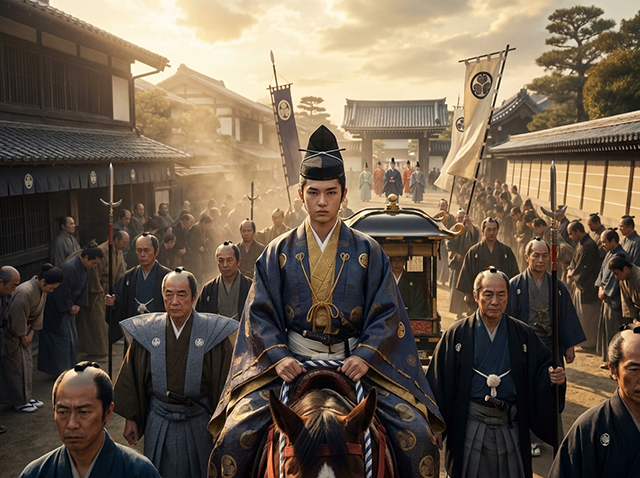
Tokugawa Iemochi (1846–1866) was the fourteenth shōgun of the Tokugawa shogunate and ruled from 1858 until his death. His reign came during the turbulent final years of the shogunate, when Japan faced growing Western pressure and serious internal political conflict.
-
Tokugawa Ienari
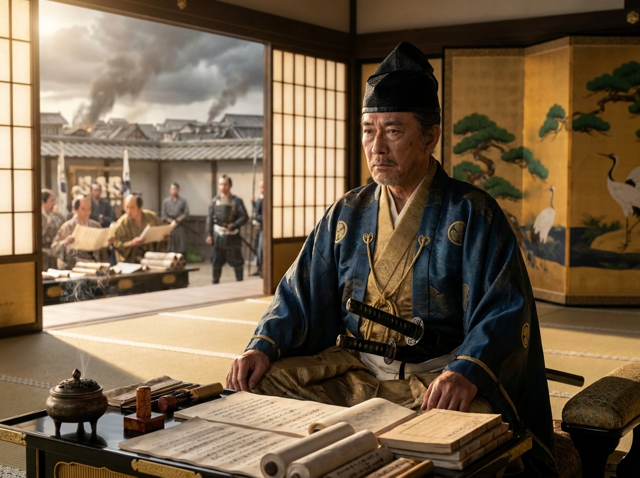
Tokugawa Ienari (1773–1841) was the eleventh shōgun of the Tokugawa shogunate and ruled from 1787 to 1837, making him the longest-serving Tokugawa shōgun. He was a great-grandson of the eighth shōgun, Tokugawa Yoshimune.
-
Matsudaira Nobuyasu
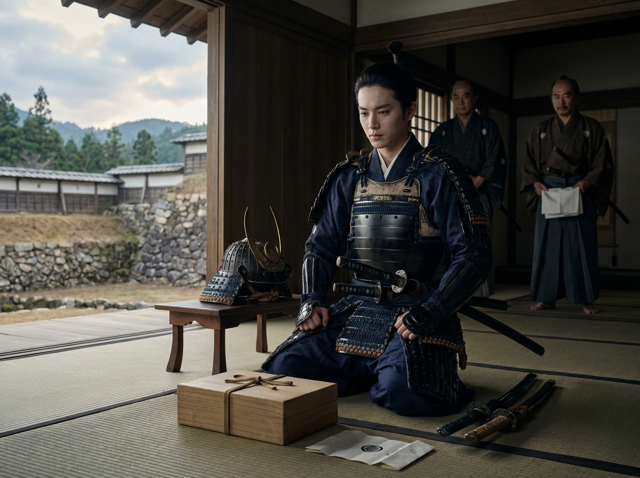
Matsudaira Nobuyasu was only twenty years old when his father ordered him to commit seppuku. The reason was not a defeat in battle, but a crisis inside the Tokugawa family that had become too dangerous to ignore.
-
Yamagata Masakage
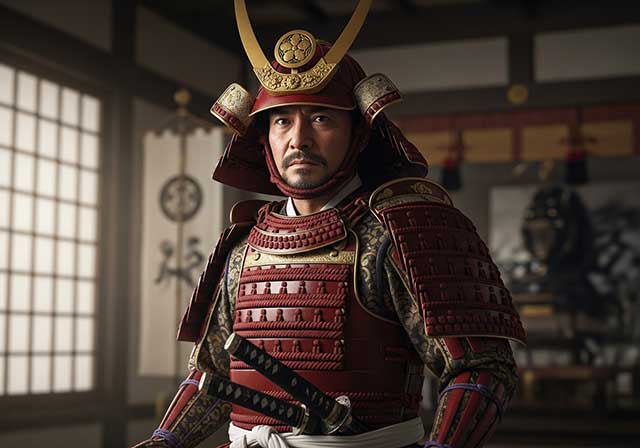
Masakage was one of Takeda Shingen’s most loyal and capable commanders. He was included in the famous list of the “Twenty-Four Generals of Takeda Shingen” and also belonged to the inner circle of four especially trusted warlords known as the Shitennō.
-
Yagyu Munenori
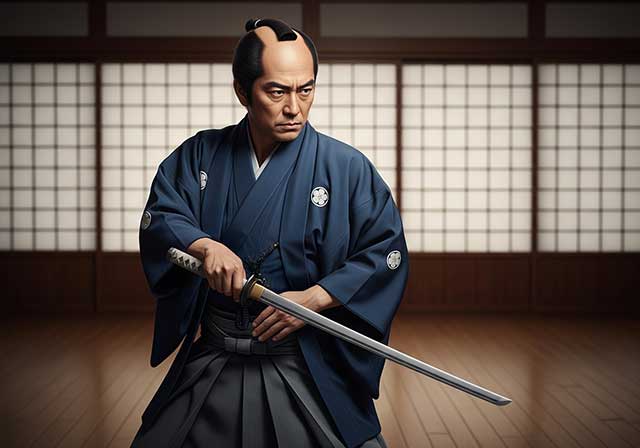
Yagyū Munenori began his service under Tokugawa Ieyasu while his father, Yagyū Muneyoshi, was still at his side. In 1600, Munenori took part in the decisive Battle of Sekigahara. As early as 1601, he was appointed a kenjutsu instructor to Tokugawa Hidetada, Ieyasu’s son, who later became the second shogun of the Tokugawa clan.
-
Yagyu Muneyoshi
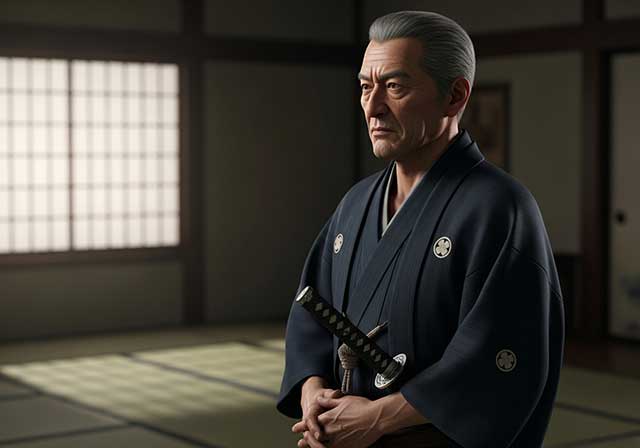
A samurai from Yamato Province, he was born into a family that had been defeated in its struggle against the Tsutsui clan. Muneyoshi first took part in battle at the age of sixteen. Due to circumstances beyond his control, he was forced to enter the service of the Tsutsui house and later served Miyoshi Tōkei. He subsequently came under the command of Matsunaga Hisahide and in time became a vassal first of Oda and later of Toyotomi.
-
Endo Naozune
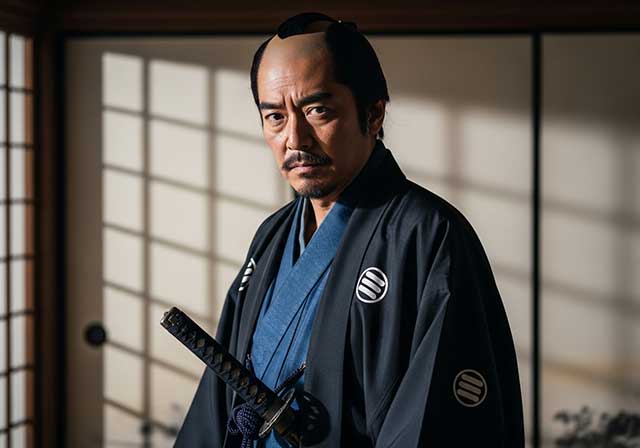
Naozune served under Azai Nagamasa and was one of the clan’s leading vassals, renowned for his bravery and determination. He accompanied Nagamasa during his first meeting with Oda Nobunaga and at that time asked for permission to kill Nobunaga, fearing him as an extremely dangerous man; however, Nagamasa did not grant this request.
-
Hosokawa Sumimoto
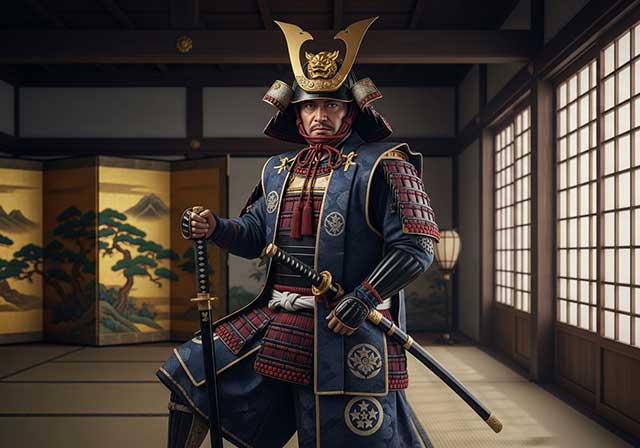
Sumimoto came from the Hosokawa clan: he was the biological son of Hosokawa Yoshiharu and at the same time the adopted son of Hosokawa Masamoto, the heir of Hosokawa Katsumoto, one of the principal instigators of the Ōnin War. Masamoto was homosexual, never married, and had no children of his own. At first he adopted Sumiyuki, a scion of the aristocratic Kujō family, but this choice provoked dissatisfaction and sharp criticism from the senior vassals of the Hosokawa house. As a result, Masamoto changed his decision and proclaimed Sumimoto as his heir, a representative of a collateral branch of the Hosokawa clan that had long been based in Awa Province on the island of Shikoku. Almost immediately after this, the boy became entangled in a complex and bitter web of political intrigue.