


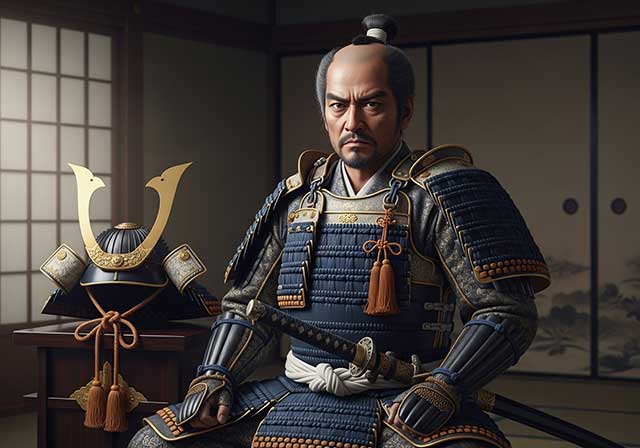
Ōuchi Yoshihiro was the second son of Ōuchi Hiroyo, who headed the Ōuchi clan in the western part of Honshu. In 1363, Shogun Ashikaga Yoshimitsu confirmed the Ōuchi family in the position of shugo of Suō and Nagato Provinces. In his youth, Yoshihiro assisted his father in strengthening the influence of the Northern Court on the island of Kyushu — they served under Imagawa Ryōsun, who had been tasked with subjugating the nine provinces of Kyushu.
After Hiroyo’s death in 1379, Yoshihiro became involved in a conflict with his elder brother. As early as 1380, he defeated his brother’s forces at the Battle of Sakariyama and assumed leadership of the Ōuchi clan. In 1391, Yoshihiro led his army into the regions surrounding the capital, supporting Shogun Yoshimitsu in delivering the final blow to the remaining forces of the Southern Court. For this assistance, he was granted two more provinces. However, Yoshihiro rendered his most valuable service to the Ashikaga in 1392, when he persuaded the emperor of the Southern Court to accept the Ashikaga proposal of alternating succession between the senior and junior imperial lines — a compromise that brought an end to the nearly sixty-year-long War of the Northern and Southern Courts.
In the years following his father’s death, Yoshihiro’s influence grew significantly — both among the feudal lords of western Japan and among the pirates of the Inland Sea, with whom he shared not only the spoils of their raids on China and Korea but also the profits from trade with those countries, which flourished during Yoshimitsu’s rule.
Over time, however, relations between Ōuchi Yoshihiro and Ashikaga Yoshimitsu deteriorated. Yoshimitsu demanded that Yoshihiro build him a residence in Kitayama, a demand that Yoshihiro saw as unprecedented and insulting. In 1399, Yoshihiro rebelled and marched his forces toward the capital region. His rear was secured by the powerful Ōtomo clan, which held the position of shugo over three provinces in Kyushu.
As he advanced westward, Yoshihiro discovered that the lords of Suō, Nagato, Aki, and Bizen were ready to support his uprising. He also managed to gain the favor of the Kantō Kanrei, Ashikaga Mitsukane, and expected to strengthen his army with discontented warriors from the capital provinces.
Nevertheless, lacking accurate information about the shogunate’s troop strength, Yoshihiro chose not to attack Kyoto. Instead, he fortified himself in the coastal city of Sakai, which by that time had already become a major commercial center with a degree of autonomy. This occurred in late autumn of 1399. Preparing for the siege, Yoshihiro surrounded the city with watchtowers (yagura) and ordered wells dug to secure a water supply. From the seaside, he expected aid from pirates, who were supposed to deliver food and maintain communication with Yoshihiro’s allies on Shikoku Island and in Kii Province.
Ashikaga Yoshimitsu attempted to resolve the conflict peacefully by sending the Buddhist monk Zekkai to negotiate. However, Yoshihiro firmly refused to surrender, and Zekkai returned empty-handed. Yoshimitsu then gathered the troops of his most powerful allies — the Hatakeyama, Hosokawa, and Chiba (Shiba) clans — and laid siege to Sakai. Yoshihiro hoped that with pirate support he could break the blockade, but Yoshimitsu succeeded in bribing the pirates over to his side. Unfortunately for Yoshihiro, the forces he had raised in Iwami and Izumi Provinces proved poorly trained and unreliable. Furthermore, Ashikaga Mitsukane betrayed him and failed to send the promised Kantō troops.
Surrounded by land and sea, Yoshihiro became trapped. The fortifications he had built in Sakai were strong, and for several weeks the fighting brought no decisive advantage to either side. But in the middle of the twelfth month of 1399, taking advantage of a strong north wind, the bakufu troops managed to set the city on fire. The blaze destroyed most of the merchant districts and the warehouses filled with goods. Soon the flames reached Yoshihiro’s stronghold in central Sakai, after which the shogunate’s forces launched an assault. Seeing no way to escape, Yoshihiro took his own life.
See also
-
Tokugawa Iemochi
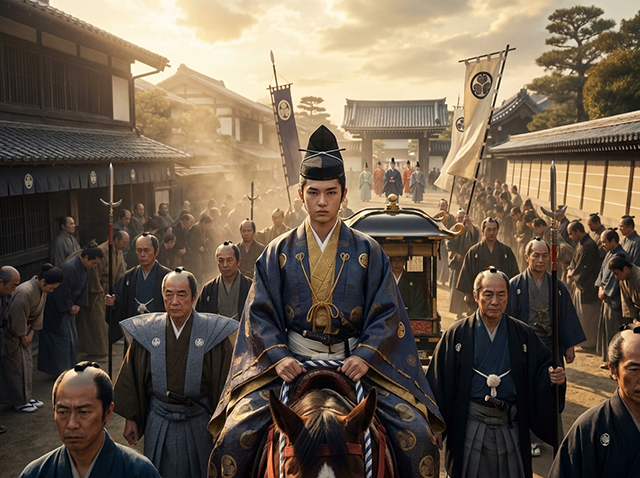
Tokugawa Iemochi (1846–1866) was the fourteenth shōgun of the Tokugawa shogunate and ruled from 1858 until his death. His reign came during the turbulent final years of the shogunate, when Japan faced growing Western pressure and serious internal political conflict.
-
Tokugawa Ienari
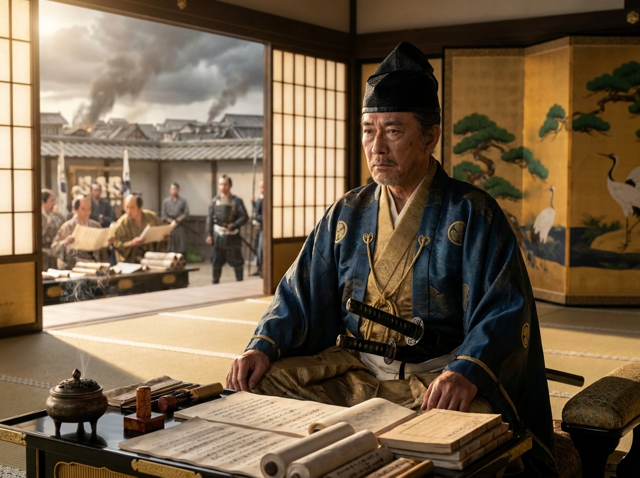
Tokugawa Ienari (1773–1841) was the eleventh shōgun of the Tokugawa shogunate and ruled from 1787 to 1837, making him the longest-serving Tokugawa shōgun. He was a great-grandson of the eighth shōgun, Tokugawa Yoshimune.
-
Matsudaira Nobuyasu
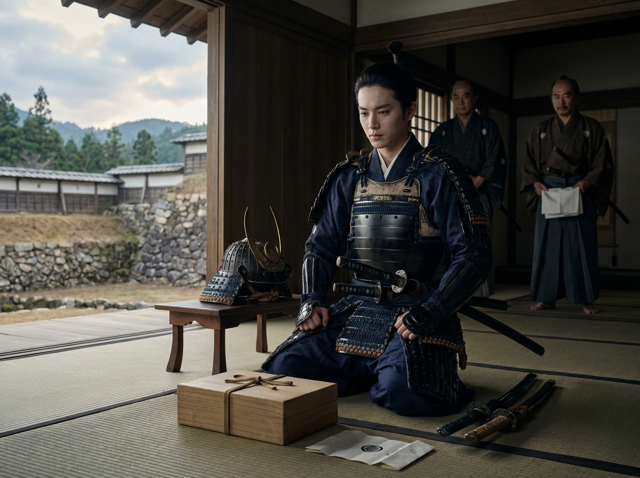
Matsudaira Nobuyasu was only twenty years old when his father ordered him to commit seppuku. The reason was not a defeat in battle, but a crisis inside the Tokugawa family that had become too dangerous to ignore.
-
Yamagata Masakage
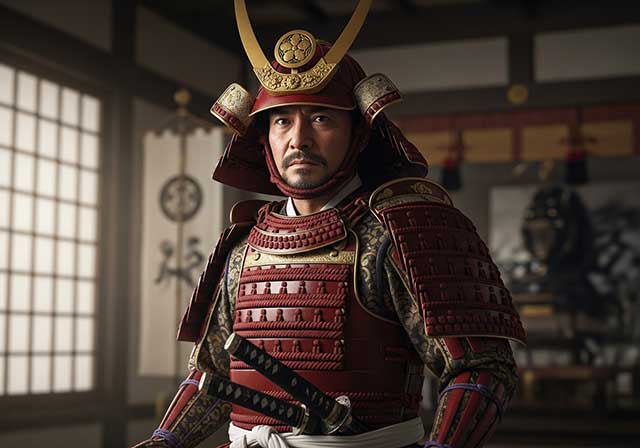
Masakage was one of Takeda Shingen’s most loyal and capable commanders. He was included in the famous list of the “Twenty-Four Generals of Takeda Shingen” and also belonged to the inner circle of four especially trusted warlords known as the Shitennō.
-
Yagyu Munenori
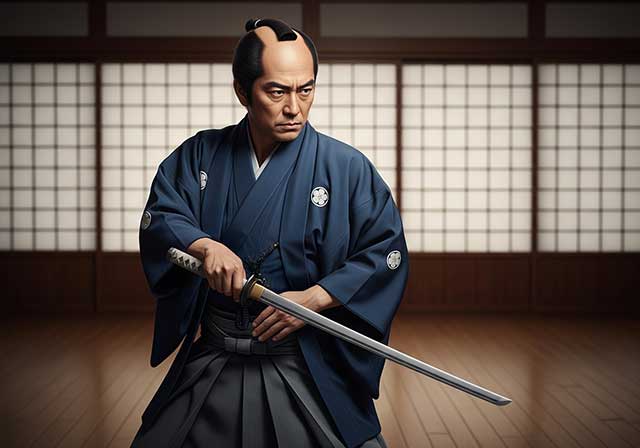
Yagyū Munenori began his service under Tokugawa Ieyasu while his father, Yagyū Muneyoshi, was still at his side. In 1600, Munenori took part in the decisive Battle of Sekigahara. As early as 1601, he was appointed a kenjutsu instructor to Tokugawa Hidetada, Ieyasu’s son, who later became the second shogun of the Tokugawa clan.
-
Yagyu Muneyoshi
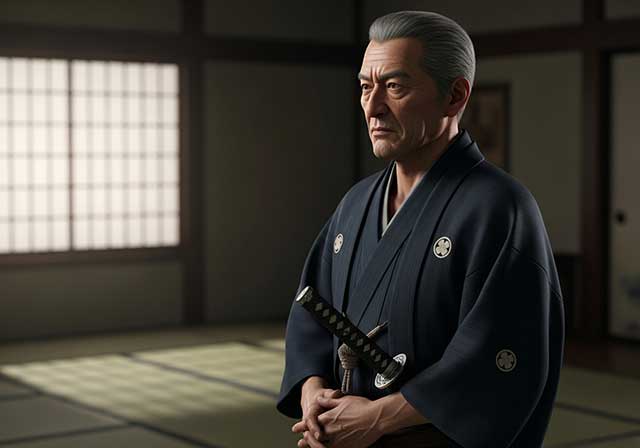
A samurai from Yamato Province, he was born into a family that had been defeated in its struggle against the Tsutsui clan. Muneyoshi first took part in battle at the age of sixteen. Due to circumstances beyond his control, he was forced to enter the service of the Tsutsui house and later served Miyoshi Tōkei. He subsequently came under the command of Matsunaga Hisahide and in time became a vassal first of Oda and later of Toyotomi.
-
Endo Naozune
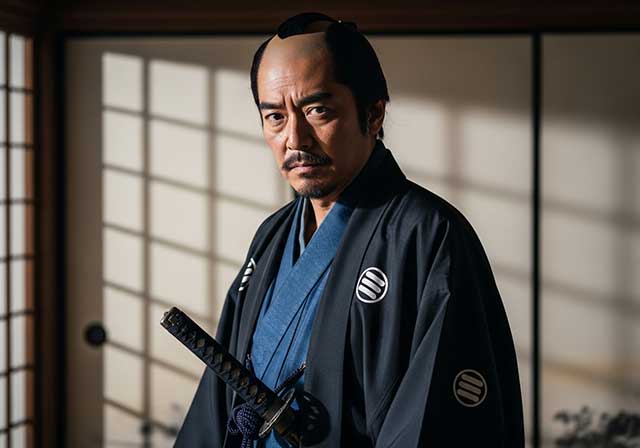
Naozune served under Azai Nagamasa and was one of the clan’s leading vassals, renowned for his bravery and determination. He accompanied Nagamasa during his first meeting with Oda Nobunaga and at that time asked for permission to kill Nobunaga, fearing him as an extremely dangerous man; however, Nagamasa did not grant this request.
-
Hosokawa Sumimoto
Sumimoto came from the Hosokawa clan: he was the biological son of Hosokawa Yoshiharu and at the same time the adopted son of Hosokawa Masamoto, the heir of Hosokawa Katsumoto, one of the principal instigators of the Ōnin War. Masamoto was homosexual, never married, and had no children of his own. At first he adopted Sumiyuki, a scion of the aristocratic Kujō family, but this choice provoked dissatisfaction and sharp criticism from the senior vassals of the Hosokawa house. As a result, Masamoto changed his decision and proclaimed Sumimoto as his heir, a representative of a collateral branch of the Hosokawa clan that had long been based in Awa Province on the island of Shikoku. Almost immediately after this, the boy became entangled in a complex and bitter web of political intrigue.