



Masako was one of the most influential and powerful political figures of the era of military rule in Japan. She was the daughter of Hōjō Tokimasa and the wife of Minamoto no Yoritomo.
After the death of her husband Yoritomo, who from 1192 had been the first shogun of the Minamoto clan, Masako took Buddhist vows, donned monastic robes, and received ordination from the priest Gyōyū in 1199. This, however, by no means signified her withdrawal from state affairs: on the contrary, she continued to take an active part in political life and assisted her father in maintaining the power of the Hōjō clan in Kamakura.
Masako’s first major step was the creation of a council of “elders” (shukuro), whose main purpose was to restrain the authority of her own son—the second shogun, Yoriie—who was known for his willful nature. These measures enraged Yoriie, and he decided to seek support from the Hiki clan, which at that time was the principal political rival of the Hōjō.
According to the chronicle Azuma Kagami, Masako happened to overhear a conversation involving Yoriie, from which she concluded that he had entered into a conspiracy with the Hiki with the aim of killing Hōjō Tokimasa. She immediately informed her father of this. Whether this story is entirely accurate or whether the information reached Tokimasa by some other means is difficult to determine, but the outcome is clear: Tokimasa struck first and in the fall of 1203 eliminated the leadership of the Hiki clan.
Deprived of his allies, Yoriie was exiled to Izu Province, where he was later killed. He was succeeded by the eleven-year-old Sanetomo, and it was at this point that the beginning of a rift between Masako and Tokimasa became evident. Tokimasa took Sanetomo into his own household, even though the boy had previously lived with Masako, and soon became the most powerful individual in the Kamakura government.
He established the administrative office known as the mandokoro, from which he exercised de facto control over the state as regent to the young shogun. However, this period of his dominance did not last long. Masako, together with her brother Yoshitoki, overthrew Tokimasa, accusing him of plotting against Sanetomo. Yoshitoki himself, despite continuing to suffer from the consequences of the unjust accusation and destruction of the Hatakeyama clan on charges of treason, publicly declared his support for Sanetomo and considered it wisest to withdraw temporarily from active political life.
Once again, Masako proved indispensable, assisting her brother just as effectively as she had previously assisted their father. In 1218 she was sent to Kyoto with the mission of proposing to Emperor Go-Toba that one of his sons be given up for adoption as the heir to the childless Sanetomo.
The following year Sanetomo was assassinated, and the emperor refused to recognize the proposed heir and in 1221 attempted to restore the former imperial authority, but this attempt ended in failure. Yoshitoki died in 1224, and his death inspired a secret conspiracy by the Iga family, who hoped, with the support of the powerful Miura Yoshimura, to overthrow the Hōjō clan and replace them in Kamakura.
Upon learning of this threat, Masako personally hurried to meet with Yoshimura and succeeded in extracting assurances of his loyalty to the Hōjō, thereby skillfully thwarting the conspiracy before it could be carried out. The regency passed smoothly to her brother Yasutoki, and Masako herself died the following year at the age of sixty-nine. Masako remains in history as an outstanding and iconic figure: her power and influence within the Kamakura government were so great that she earned the nickname Ama-shōgun, the “Nun Shogun.”
See also
-
Takeda Nobuyoshi
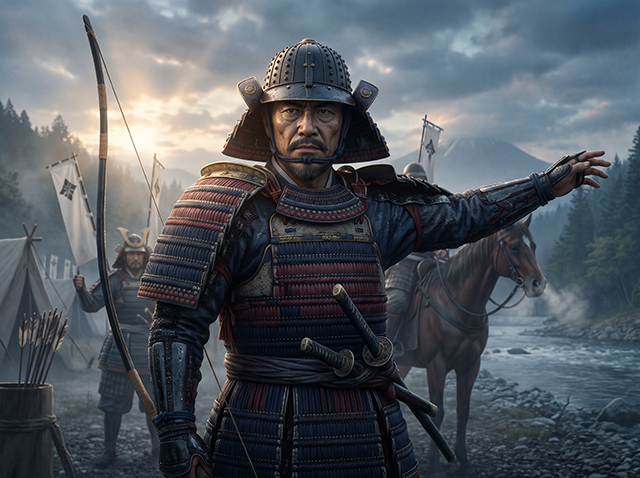
Takeda Nobuyoshi (1128–1186 or later) was a prominent Japanese samurai lord of the late Heian and early Kamakura periods and the founder of the Takeda clan.
-
Tokugawa Iemochi
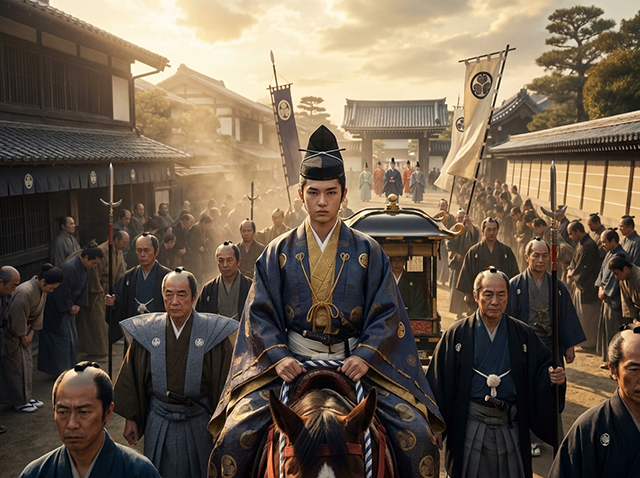
Tokugawa Iemochi (1846–1866) was the fourteenth shōgun of the Tokugawa shogunate and ruled from 1858 until his death. His reign came during the turbulent final years of the shogunate, when Japan faced growing Western pressure and serious internal political conflict.
-
Tokugawa Ienari
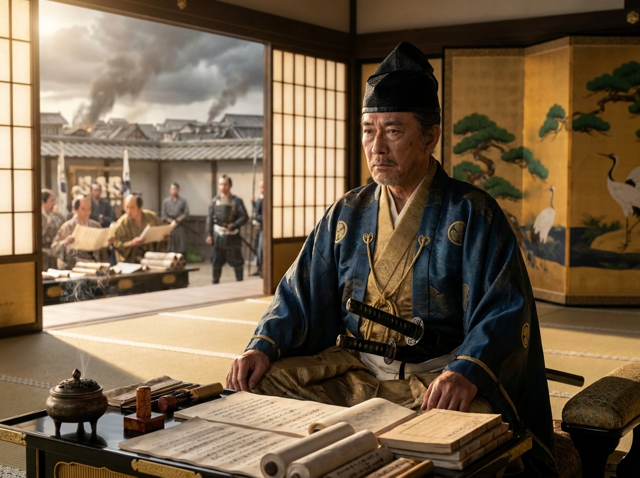
Tokugawa Ienari (1773–1841) was the eleventh shōgun of the Tokugawa shogunate and ruled from 1787 to 1837, making him the longest-serving Tokugawa shōgun. He was a great-grandson of the eighth shōgun, Tokugawa Yoshimune.
-
Matsudaira Nobuyasu
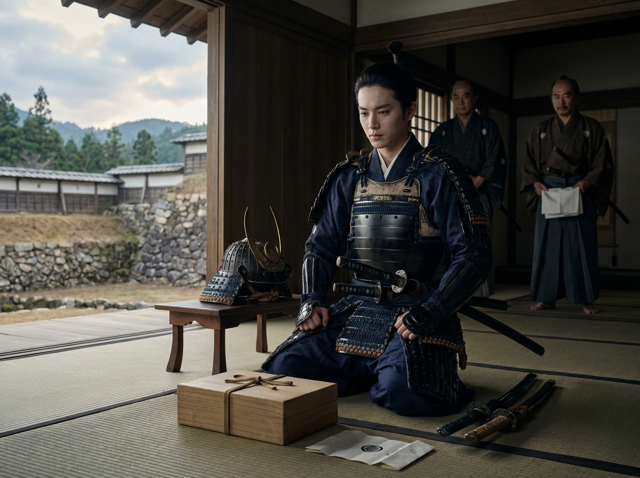
Matsudaira Nobuyasu was only twenty years old when his father ordered him to commit seppuku. The reason was not a defeat in battle, but a crisis inside the Tokugawa family that had become too dangerous to ignore.
-
Yamagata Masakage
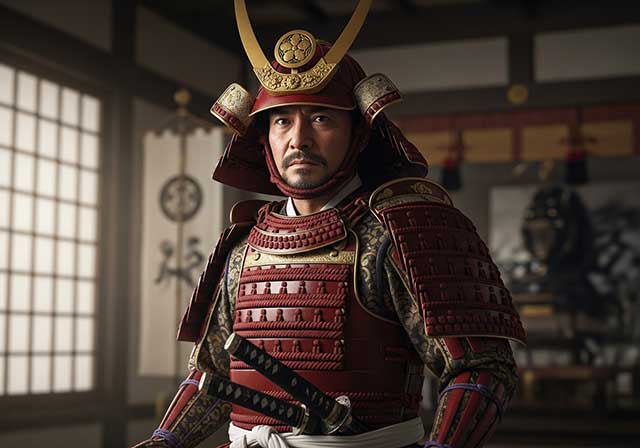
Masakage was one of Takeda Shingen’s most loyal and capable commanders. He was included in the famous list of the “Twenty-Four Generals of Takeda Shingen” and also belonged to the inner circle of four especially trusted warlords known as the Shitennō.
-
Yagyu Munenori
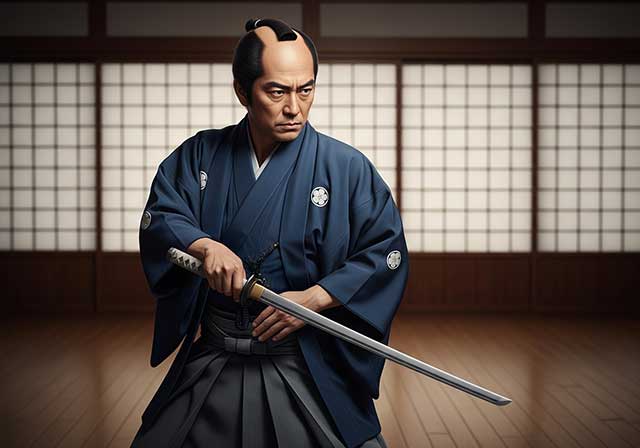
Yagyū Munenori began his service under Tokugawa Ieyasu while his father, Yagyū Muneyoshi, was still at his side. In 1600, Munenori took part in the decisive Battle of Sekigahara. As early as 1601, he was appointed a kenjutsu instructor to Tokugawa Hidetada, Ieyasu’s son, who later became the second shogun of the Tokugawa clan.
-
Yagyu Muneyoshi
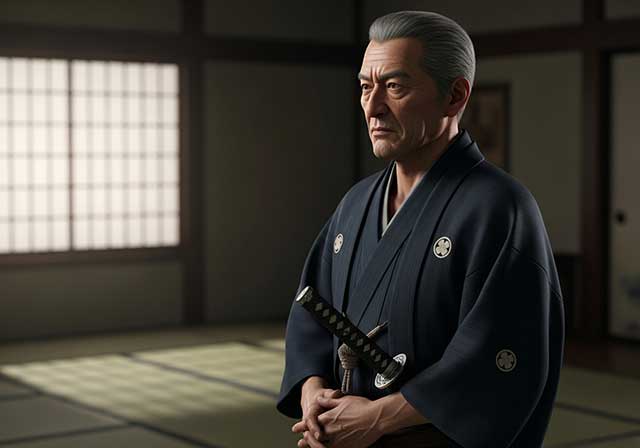
A samurai from Yamato Province, he was born into a family that had been defeated in its struggle against the Tsutsui clan. Muneyoshi first took part in battle at the age of sixteen. Due to circumstances beyond his control, he was forced to enter the service of the Tsutsui house and later served Miyoshi Tōkei. He subsequently came under the command of Matsunaga Hisahide and in time became a vassal first of Oda and later of Toyotomi.
-
Endo Naozune
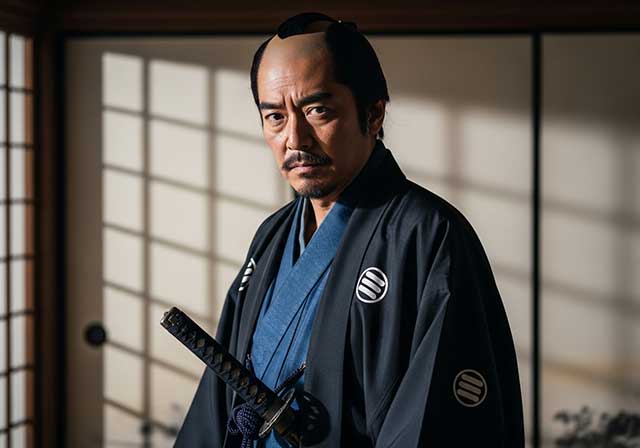
Naozune served under Azai Nagamasa and was one of the clan’s leading vassals, renowned for his bravery and determination. He accompanied Nagamasa during his first meeting with Oda Nobunaga and at that time asked for permission to kill Nobunaga, fearing him as an extremely dangerous man; however, Nagamasa did not grant this request.