


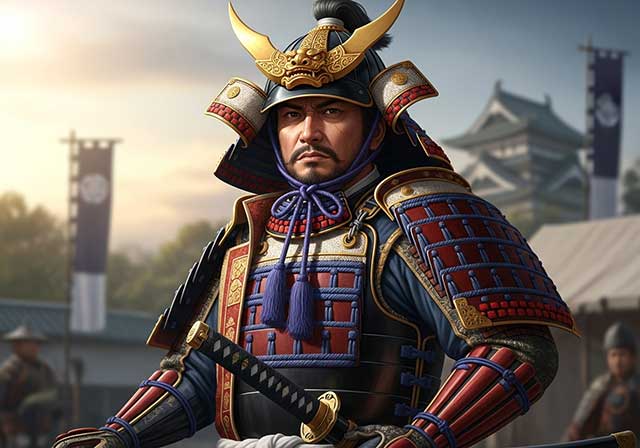
Hatano Hideharu was the eldest son of Hatano Harumichi, the head of the Hatano clan. However, in childhood he was adopted by his uncle, Hatano Motohide, and was therefore formally regarded as Motohide’s heir. From the time of Hideharu’s grandfather, Hatano Tanemichi, the Hatano clan had been a vassal of the powerful Miyoshi house, which exerted considerable influence over the Ashikaga shoguns and effectively shaped the political situation in the region. Early in his career, Hideharu served Miyoshi Nagayoshi and, judging by surviving records, held a fairly high position within his lord’s hierarchy, as he was among the select group invited to the enthronement ceremony of Emperor Ōgimachi in 1557.
In 1564, Miyoshi Nagayoshi was killed during an attack on Yakami Castle in Tanba Province, which led to a sharp weakening of his house’s central authority. Taking advantage of this situation, Hideharu declared independence and made Yakami Castle his residence, especially since the castle had been built in 1508 by his relative Hatano Motokiyo and was traditionally regarded as a stronghold of the clan. The Hatano base was located in close proximity to Kyoto, and its existence therefore posed a serious threat to Oda Nobunaga’s campaign to seize the capital. Recognizing this danger, Nobunaga ordered his general Akechi Mitsuhide to attack Yakami Castle. After a series of armed clashes, Hideharu was forced to surrender to Mitsuhide and swear an oath of vassalage to Oda Nobunaga, formally acknowledging his supreme authority.
However, in 1576 Hideharu once again declared independence and refused to carry out Nobunaga’s orders, thereby openly challenging him. In response, Nobunaga again sent Akechi Mitsuhide against him, but this time Hideharu had carefully prepared for a siege and managed to hold the castle for a year and a half. During this campaign, Mitsuhide’s forces also attacked Kuroi Castle, and during its assault one of the Hatano clan’s most influential vassals, Akai Naomasa, was killed, dealing a serious blow to the clan’s defenses.
There are several versions of how the siege of Yakami Castle ended and what events followed. The only fact beyond dispute is that Hideharu was ultimately taken to Oda Nobunaga at Azuchi Castle and executed in 1579 on the grounds of Jionji Temple. According to one version, Akechi Mitsuhide allegedly agreed to leave his mother as a hostage at Yakami as a guarantee of Hideharu’s life; however, after Hideharu’s execution, his supporters killed Mitsuhide’s mother, which is said to have become one of the reasons for Mitsuhide’s rebellion against Nobunaga in 1582.
Another version attributes the death of Mitsuhide’s mother to the execution of Hideharu’s own mother, who, according to this account, had been sent as a hostage to Nobunaga, prompting retaliatory actions. Most modern scholars tend to regard such stories as fictional, dating their emergence to the Edo period, when attempts were made retroactively to explain the motives behind Akechi Mitsuhide’s betrayal. Today, the more likely version is that Hideharu surrendered under pressure from his own vassals, who were dissatisfied with his decision to continue resisting Oda Nobunaga and threatened to hand their lord over to Mitsuhide if he did not capitulate voluntarily.
After Hideharu’s execution, none of his relatives assumed leadership of the family, and as a result the Hatano clan ultimately ceased to exist.
See also
-
Tokugawa Ienari
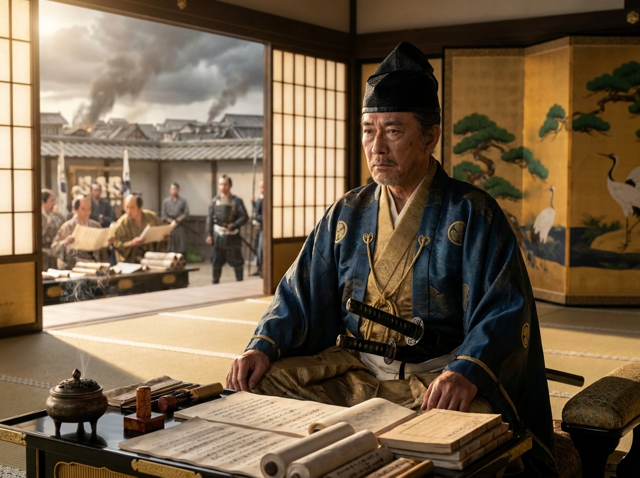
Tokugawa Ienari (1773–1841) was the eleventh shōgun of the Tokugawa shogunate and ruled from 1787 to 1837, making him the longest-serving Tokugawa shōgun. He was a great-grandson of the eighth shōgun, Tokugawa Yoshimune.
-
Matsudaira Nobuyasu
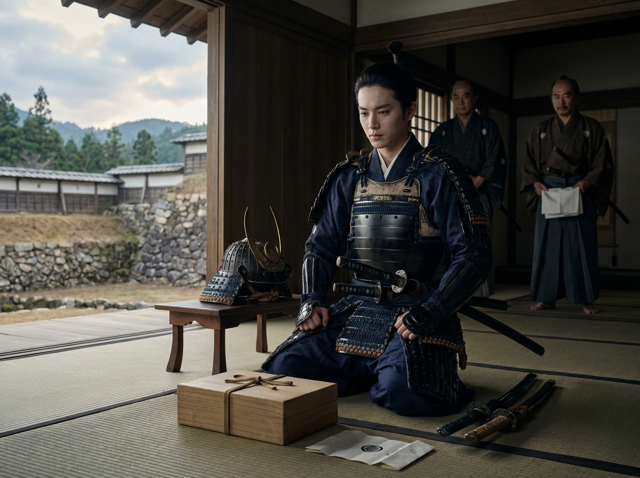
Matsudaira Nobuyasu was only twenty years old when his father ordered him to commit seppuku. The reason was not a defeat in battle, but a crisis inside the Tokugawa family that had become too dangerous to ignore.
-
Yamagata Masakage
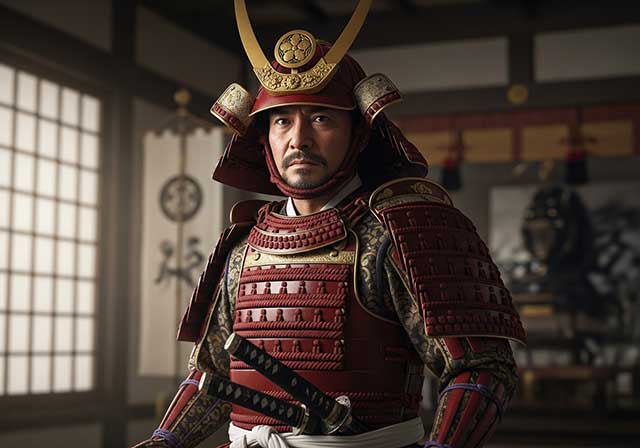
Masakage was one of Takeda Shingen’s most loyal and capable commanders. He was included in the famous list of the “Twenty-Four Generals of Takeda Shingen” and also belonged to the inner circle of four especially trusted warlords known as the Shitennō.
-
Yagyu Munenori
Yagyū Munenori began his service under Tokugawa Ieyasu while his father, Yagyū Muneyoshi, was still at his side. In 1600, Munenori took part in the decisive Battle of Sekigahara. As early as 1601, he was appointed a kenjutsu instructor to Tokugawa Hidetada, Ieyasu’s son, who later became the second shogun of the Tokugawa clan.
-
Yagyu Muneyoshi
A samurai from Yamato Province, he was born into a family that had been defeated in its struggle against the Tsutsui clan. Muneyoshi first took part in battle at the age of sixteen. Due to circumstances beyond his control, he was forced to enter the service of the Tsutsui house and later served Miyoshi Tōkei. He subsequently came under the command of Matsunaga Hisahide and in time became a vassal first of Oda and later of Toyotomi.
-
Endo Naozune
Naozune served under Azai Nagamasa and was one of the clan’s leading vassals, renowned for his bravery and determination. He accompanied Nagamasa during his first meeting with Oda Nobunaga and at that time asked for permission to kill Nobunaga, fearing him as an extremely dangerous man; however, Nagamasa did not grant this request.
-
Hosokawa Sumimoto
Sumimoto came from the Hosokawa clan: he was the biological son of Hosokawa Yoshiharu and at the same time the adopted son of Hosokawa Masamoto, the heir of Hosokawa Katsumoto, one of the principal instigators of the Ōnin War. Masamoto was homosexual, never married, and had no children of his own. At first he adopted Sumiyuki, a scion of the aristocratic Kujō family, but this choice provoked dissatisfaction and sharp criticism from the senior vassals of the Hosokawa house. As a result, Masamoto changed his decision and proclaimed Sumimoto as his heir, a representative of a collateral branch of the Hosokawa clan that had long been based in Awa Province on the island of Shikoku. Almost immediately after this, the boy became entangled in a complex and bitter web of political intrigue.
-
Honda Masanobu
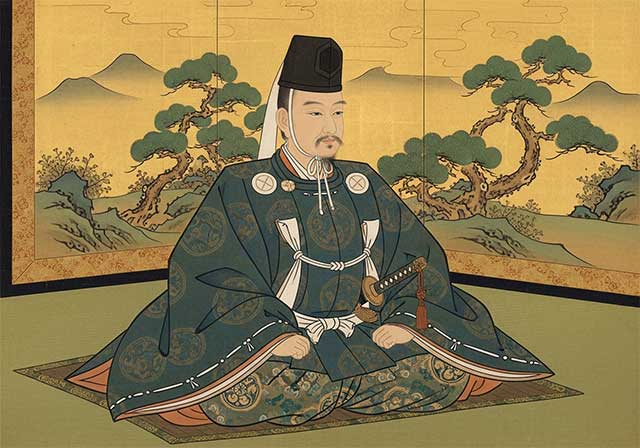
Masanobu initially belonged to the retinue of Tokugawa Ieyasu, but later entered the service of Sakai Shōgen, a daimyo and priest from Ueno. This shift automatically made him an enemy of Ieyasu, who was engaged in conflict with the Ikkō-ikki movement in Mikawa Province. After the Ikkō-ikki were defeated in 1564, Masanobu was forced to flee, but in time he returned and once again entered Ieyasu’s service. He did not gain fame as a military commander due to a wound sustained in his youth; nevertheless, over the following fifty years he consistently remained loyal to Ieyasu.