


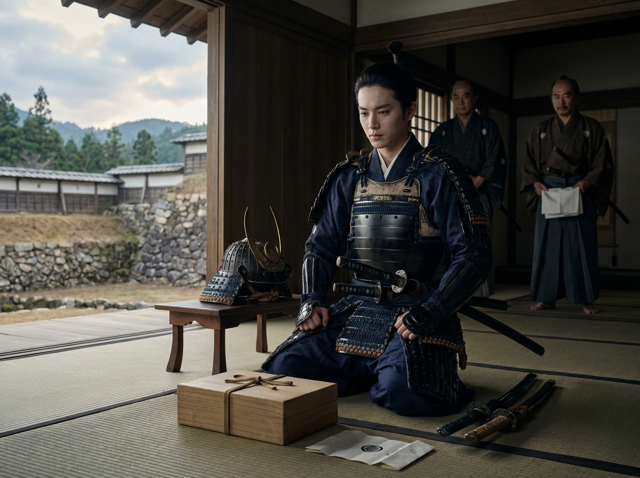
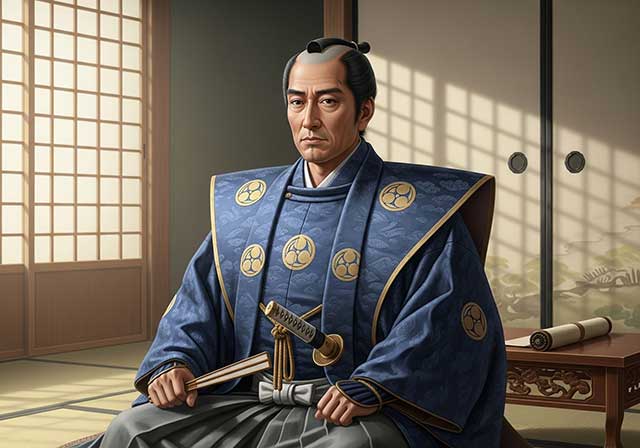
Matsudaira Nobuyasu was only twenty years old when his father ordered him to commit seppuku. The reason was not a defeat in battle, but a crisis inside the Tokugawa family that had become too dangerous to ignore.
Nobuyasu was born on April 13, 1559, the eldest son of Matsudaira Ieyasu and Lady Tsukiyama, daughter of Imagawa Yoshimoto. His childhood name was Takechiyo.
As a boy, he was sent to Sunpu, the Imagawa capital, as a hostage.
Later, his position changed dramatically.
In 1570, Nobuyasu became lord of Okazaki Castle in Mikawa, the birthplace of his father. Because of this, he was also known as Okazaki Saburō. Five years later, he took part in the Battle of Nagashino.
By then, Nobuyasu was married to Lady Tokuhime, daughter of Oda Nobunaga.
But relations inside the household were difficult.
According to the account, Tokuhime and Nobuyasu’s mother, Lady Tsukiyama, did not get along. It was believed that Tsukiyama may have resented the attention her son gave to his young wife.
In 1579, the conflict became far more serious.
Tokuhime wrote a letter to her father, Oda Nobunaga, accusing Lady Tsukiyama of involvement in a treasonous plot with the Takeda clan.
Nobunaga passed the accusations to Ieyasu.
The consequences were severe.
To remove suspicion and protect his alliance, Ieyasu confined Lady Tsukiyama and later had her executed.
But the crisis did not end with her death.
Nobuyasu himself was confined, first at Ohama and then at Futamata Castle.
According to the account, Ieyasu understood that his son might not have taken part in any treason and might not even have known about such a plot. But another danger remained.
Nobuyasu might feel obligated to avenge his mother.
For Ieyasu, that possibility was an unacceptable threat to the security of the clan.
He therefore sent his son an order to commit seppuku.
On October 5, 1579, Matsudaira Nobuyasu obeyed.
Later stories portrayed him as cruel and unpopular, even claiming that he killed people for trivial reasons. But these legends are believed to have appeared in later generations and may have been created to justify the decision that ended his life.
See also
-
Tokugawa Ienari
Tokugawa Ienari (1773–1841) was the eleventh shōgun of the Tokugawa shogunate and ruled from 1787 to 1837, making him the longest-serving Tokugawa shōgun. He was a great-grandson of the eighth shōgun, Tokugawa Yoshimune.
-
Yamagata Masakage
Masakage was one of Takeda Shingen’s most loyal and capable commanders. He was included in the famous list of the “Twenty-Four Generals of Takeda Shingen” and also belonged to the inner circle of four especially trusted warlords known as the Shitennō.
-
Yagyu Munenori
Yagyū Munenori began his service under Tokugawa Ieyasu while his father, Yagyū Muneyoshi, was still at his side. In 1600, Munenori took part in the decisive Battle of Sekigahara. As early as 1601, he was appointed a kenjutsu instructor to Tokugawa Hidetada, Ieyasu’s son, who later became the second shogun of the Tokugawa clan.
-
Yagyu Muneyoshi
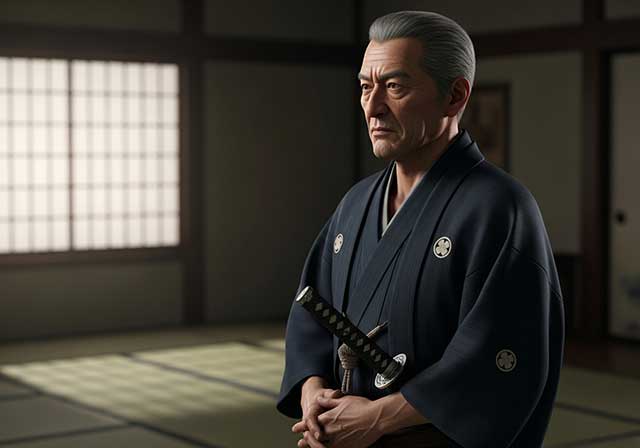
A samurai from Yamato Province, he was born into a family that had been defeated in its struggle against the Tsutsui clan. Muneyoshi first took part in battle at the age of sixteen. Due to circumstances beyond his control, he was forced to enter the service of the Tsutsui house and later served Miyoshi Tōkei. He subsequently came under the command of Matsunaga Hisahide and in time became a vassal first of Oda and later of Toyotomi.
-
Endo Naozune
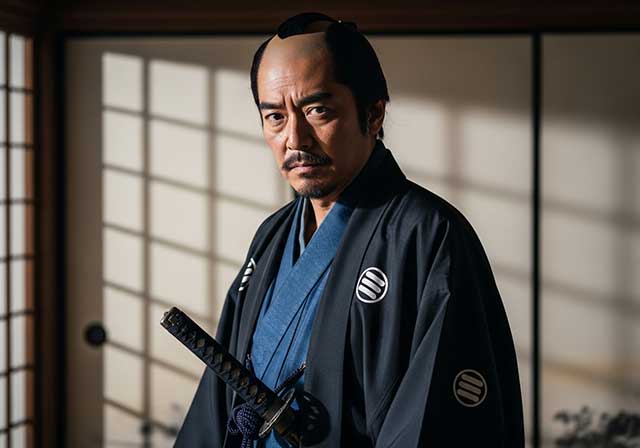
Naozune served under Azai Nagamasa and was one of the clan’s leading vassals, renowned for his bravery and determination. He accompanied Nagamasa during his first meeting with Oda Nobunaga and at that time asked for permission to kill Nobunaga, fearing him as an extremely dangerous man; however, Nagamasa did not grant this request.
-
Hosokawa Sumimoto
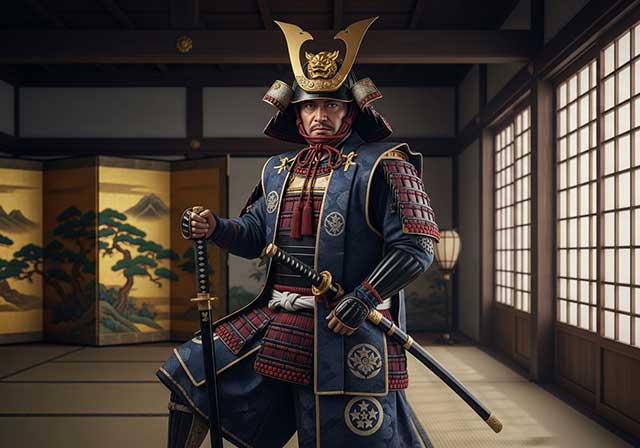
Sumimoto came from the Hosokawa clan: he was the biological son of Hosokawa Yoshiharu and at the same time the adopted son of Hosokawa Masamoto, the heir of Hosokawa Katsumoto, one of the principal instigators of the Ōnin War. Masamoto was homosexual, never married, and had no children of his own. At first he adopted Sumiyuki, a scion of the aristocratic Kujō family, but this choice provoked dissatisfaction and sharp criticism from the senior vassals of the Hosokawa house. As a result, Masamoto changed his decision and proclaimed Sumimoto as his heir, a representative of a collateral branch of the Hosokawa clan that had long been based in Awa Province on the island of Shikoku. Almost immediately after this, the boy became entangled in a complex and bitter web of political intrigue.
-
Honda Masanobu
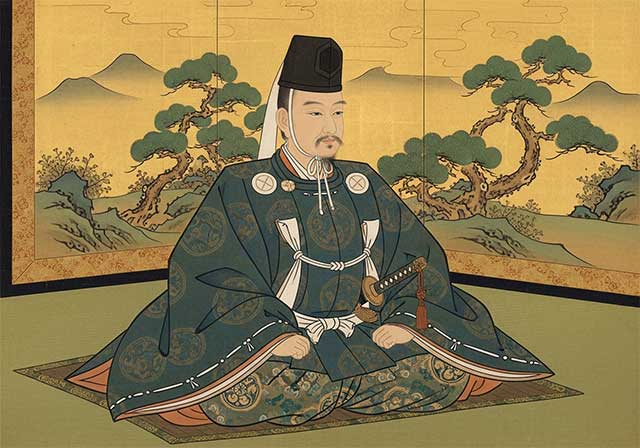
Masanobu initially belonged to the retinue of Tokugawa Ieyasu, but later entered the service of Sakai Shōgen, a daimyo and priest from Ueno. This shift automatically made him an enemy of Ieyasu, who was engaged in conflict with the Ikkō-ikki movement in Mikawa Province. After the Ikkō-ikki were defeated in 1564, Masanobu was forced to flee, but in time he returned and once again entered Ieyasu’s service. He did not gain fame as a military commander due to a wound sustained in his youth; nevertheless, over the following fifty years he consistently remained loyal to Ieyasu.
-
Honda Masazumi
Masazumi was the eldest son of Honda Masanobu. From a young age, he served Tokugawa Ieyasu alongside his father, taking part in the affairs of the Tokugawa house and gradually gaining experience in both military and administrative matters. At the decisive Battle of Sekigahara in 1600, Masazumi was part of the core Tokugawa forces, a clear sign of the high level of trust Ieyasu placed in him. After the campaign ended, he was given a highly sensitive assignment—serving in the guard of the defeated Ishida Mitsunari, one of Tokugawa’s principal enemies—an obligation that required exceptional reliability and caution.